
By Clint Sanchez · Published · Updated · 10 min read
Quick answer
Digital marketing for plumbers is nine things done in order: a fast mobile site, a claimed Google Business Profile, local SEO built around your service area, Google Local Services Ads for same-day leads, a review engine, service content that answers real questions, email to past customers, short video, and follow-up that answers the phone.
Key takeaways
- Plumbing marketing serves two buyers. Emergency work is won on speed and star rating. Planned work is won on content, photos and reputation.
- Google publishes the speed targets: Largest Contentful Paint within 2.5 seconds, INP at or under 200 milliseconds, CLS at or under 0.1, measured on mobile at the 75th percentile.
- BrightLocal's 2026 survey found 31% of consumers will only use a business rated 4.5 stars or better, up from 17% a year earlier.
- Recency now decides as much as rating: 74% look for reviews from the last three months and 32% want them from the last two weeks.
- Local Services Ads charge per lead and reward answer rate, so a missed call costs placement as well as the job.
- The Bureau of Labor Statistics projects plumbing employment up 7 percent from 2025 to 2035, so the constraint is capacity, not demand. Market for the jobs you want, not for volume.
- Start with the Business Profile and review requests. Both move results before anything else has had time to.
A Baton Rouge plumber's two markets show up on the same January morning: a burst pipe in Denham Springs that will be booked in four minutes, and a Livingston Parish repipe that will be researched for three weeks. Proximity is weighted heavily in the map pack, so reviews from Walker, Watson and Gonzales customers are worth more than any heading you write on a service-area page.

Want this handled instead of DIY?
A 15-minute call, no script, no pressure. You leave with a plan either way.
Digital marketing for plumbers is nine things done in order: a fast mobile site, a claimed Google Business Profile, local SEO built around your service area, Google Local Services Ads for same-day leads, a review engine, service-page content that answers real questions, email to past customers, short video, and lead follow-up that answers the phone. Emergency work is won on speed. Planned work is won on trust.
Why plumbing marketing is two jobs, not one
Most trades sell one thing to one kind of buyer. A plumbing company sells two, and they behave nothing alike.
Emergency work is a panic purchase. A water heater fails at 6am, the homeowner searches on a phone, and the first business that looks credible and answers gets the job. Nobody reads your About page. The entire decision runs on load speed, star rating, proximity and how fast a human picks up.
Planned work is the opposite. A repipe, a bathroom remodel or a commercial fit-out gets researched for days or weeks. Multiple quotes. Photos of past jobs. License checks. Somebody asking a neighbor. Content, portfolio and reputation carry that sale, and speed barely matters.
A marketing plan that only serves one of those two markets leaves the other on the table. The nine strategies below are ordered so the emergency channels come first, because they pay back fastest, and the trust-building channels follow, because they compound.
The market you are competing in
Before the tactics, one piece of context that changes how you should budget.
The Bureau of Labor Statistics counts 510,600 plumbers, pipefitters and steamfitters employed in 2025, with employment projected to grow 7 percent from 2025 to 2035 and about 42,000 openings a year over the decade. Median pay is $63,800.
Read that as a demand signal and a labor constraint at the same time. Demand for plumbing work is not the problem. Capacity is. Which means the goal of your marketing is not volume, it is selective volume: more of the jobs you want, in the parishes you actually serve, at the margin you need. A campaign that fills the schedule with $95 drain calls forty minutes away is a losing campaign even when the lead count looks good.
1. A website that loads before they give up
The emergency customer is on a phone, on cellular data, probably in a laundry room with water on the floor. Your website has a few seconds to be useful.

Google publishes the actual targets, so there is no need to guess. The Core Web Vitals thresholds on web.dev are Largest Contentful Paint within 2.5 seconds, Interaction to Next Paint at 200 milliseconds or less, and Cumulative Layout Shift of 0.1 or less, measured at the 75th percentile of page loads and split by device. Test mobile separately. Desktop numbers will flatter you.
Beyond speed, four things belong above the fold on every page:
- A tap-to-call phone number as a real link, not an image. Ours is (225) 505-3834, and yours should behave the same way.
- The service area named in text. "Baton Rouge, Denham Springs, Walker, Livingston Parish" beats a map widget that has to load.
- Your license number and your emergency hours.
- One star rating with a review count, pulled from the profile customers will check anyway.
Everything else can wait. Our breakdown of what a plumbing website needs to get more leads goes deeper, and 100 plumbing websites worth studying is the fastest way to see what good looks like in this trade.
2. Claim and work your Google Business Profile
For a local service business the Business Profile does more work than the website on emergency searches, because it is what appears in the map pack above the organic results.
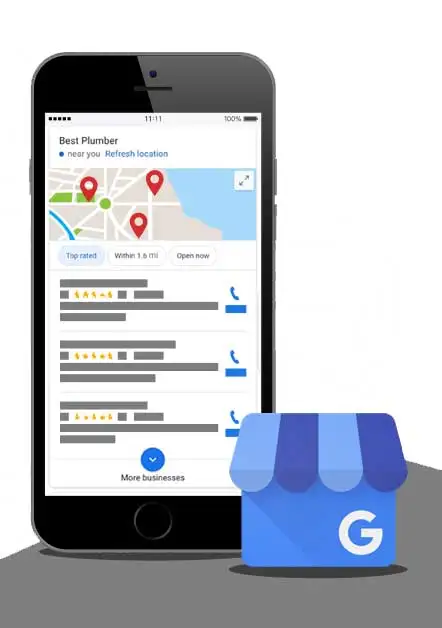
The profile rewards maintenance rather than one-time setup. Work through this list and then revisit it quarterly:
- Primary category set to Plumber, with secondary categories only for services you genuinely perform.
- Service area defined by the parishes and cities you will actually drive to, not an optimistic radius.
- Hours accurate, including the emergency hours, and holiday hours set in advance.
- Real photographs of your trucks, your crew and finished jobs. Stock imagery is obvious and it costs you clicks.
- Services and pricing ranges filled in, because that is what the profile shows people comparing three companies.
- Questions and answers seeded with the questions you get on the phone every week.
Our guides to Google Business Profile optimization and to earning free backlinks through your profile cover the parts most plumbing companies skip.
Plumbing marketing serves two buyers. Emergency work is won on speed and star rating. Planned work is won on content, photos and reputation.
3. Local SEO built around service areas
Ranking for "plumber" is not the goal. Ranking for "water heater replacement Denham Springs" is, because that phrase has a job attached to it.
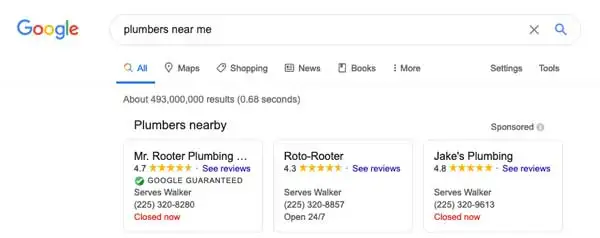
The structure that works is a page per service crossed with a page per real service area, and each page has to earn its existence. A Walker page that is the Denham Springs page with the city name swapped is a doorway page, and Google treats it as one. A Walker page that names the neighborhoods, references the water quality issues locals actually have, and shows two jobs you did there is a real page.
Three things matter more than keyword density:
- Consistent name, address and phone across your site, your profile and every directory. Mismatches are the most common reason a legitimate company underperforms locally.
- Proximity you cannot fake. Google weights distance heavily in the map pack. If you want to rank in Gonzales, work in Gonzales and collect reviews from Gonzales customers.
- Reviews that mention the service and the town. A review saying "replaced our water heater in Watson" does more for that page than any heading you write.
Our post on why SEO matters for plumbing businesses covers the compounding side of this, which is real but slow.
4. Google Local Services Ads for same-day leads
If you need calls this week rather than this quarter, Local Services Ads are the most direct route, and they sit above the map pack.
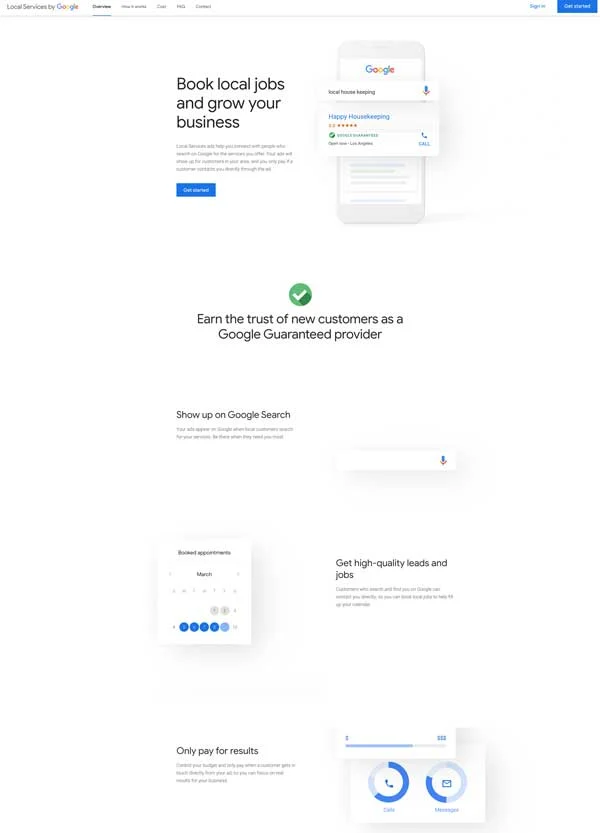
The model is different from regular search ads. Google's own Local Services documentation says you pay only for leads related to the services you offer, and the customer has to actively pick your profile to contact you. Getting the verified badge requires business license documentation, background screening, review thresholds in some categories, and billing set up.
Two operational notes decide if this channel is profitable. First, dispute bad leads. Wrong-area calls and out-of-service requests can be reported, and companies that never dispute overpay. Second, answer rate drives placement. Google rewards responsiveness, so a missed call is worse here than in any other channel. If your team cannot answer during a job, missed-call recovery is not a nice-to-have.
Standard search ads still have a role for high-value planned work like repipes and commercial contracts, where the lead is worth far more than a drain call. Our pay-per-click work covers when each one makes sense.
5. Build a review engine, not a review habit
Reviews are the single highest-leverage thing on this list, and the bar has risen sharply.
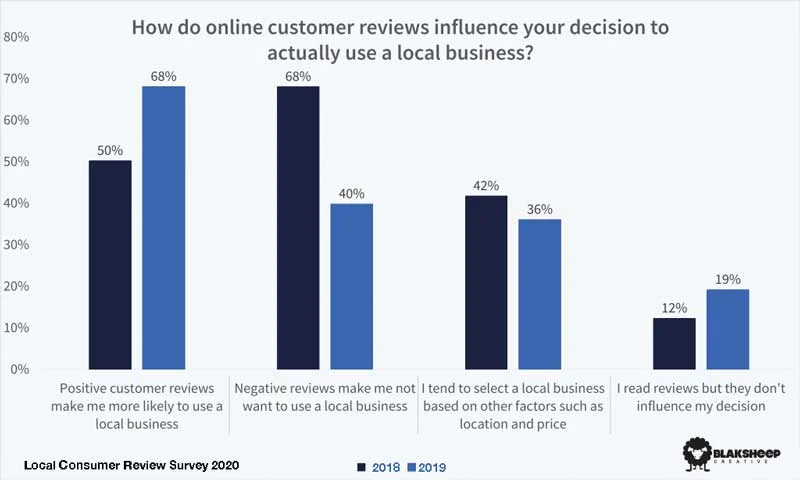
BrightLocal's 2026 Local Consumer Review Survey of 1,002 US adults found 97% read reviews for local businesses and 41% now always read them, up from 29% the year before. On ratings, 31% will only use a business rated 4.5 stars or higher, nearly double the 17% who said so a year earlier. On recency, 74% look for reviews from the last three months and 32% want them from the last two weeks.
That recency figure is the one plumbing companies underrate. Forty reviews collected two years ago read as a company that has stopped working. Six reviews from the last six weeks read as a company that is busy. The fix is a request that goes out automatically the day a job closes, from the technician's name, with a direct link.
Respond to every review, especially the bad ones, in public, without arguing. Prospects read the response more carefully than the complaint. Our reputation management work exists mostly to make this consistent rather than heroic.
“I had the pleasure of seeing Mr. Sanchez give a talk at a local Livingston Parish Chamber event recently. His passion shined through and was very generous with his time after the talk. Highly recommend.”

6. Content that answers what people actually ask
Content is how you win the planned-work customer, and how you get cited when somebody asks an AI assistant about a plumbing problem.
The mistake is writing for the industry instead of the homeowner. Nobody searches "hydro jetting solutions". They search "why does my drain gurgle when the washing machine runs". Your service calls are the keyword research: every question a customer asked this month that you had to explain twice is a page.
Three formats do the heavy lifting for plumbers:
- Diagnostic posts. Symptom in the title, honest triage in the body, including the cases where the homeowner can fix it themselves. That last part is what builds the trust the paid pages cannot.
- Cost pages. Real ranges for the work you do in your market. Refusing to publish numbers does not stop the search, it just sends it to a competitor.
- Job write-ups. A before, a problem, a solution and photographs. These convert planned work better than anything else on the site.
Our content marketing guide for plumbers covers the workflow, and ten plumbing blog post ideas is a starting list if the blank page is the obstacle.
7. Email to the customers you already won
The cheapest plumbing lead is a customer you served two years ago who has forgotten your name. Email is how you stop that from happening.
Keep it to a small number of sends that are genuinely useful rather than a newsletter nobody asked for:
- A maintenance reminder tied to the equipment you installed, timed to its service interval.
- A seasonal note before the first hard freeze, which in Louisiana is the one email a year that reliably generates calls.
- A short follow-up after a large job, asking for the review and offering the maintenance plan.
- A yearly note to commercial accounts, because those contacts change jobs and take your number with them.
Segment by job type. A homeowner who had a water heater replaced and a property manager with twelve units are not the same list.
8. Short video on the pages that sell
Video is how a stranger decides you are somebody they would let into the house, which is most of the planned-work decision.
Keep it short and keep it educational. Wistia's 2026 State of Video report, drawn from more than 13 million videos and 79 million hours of viewing, found videos under a minute average a 52% engagement rate, and that educational and tutorial content holds engagement better than almost any other type across lengths.
Four videos cover most of what a plumbing company needs: a sixty-second introduction to the owner, a walkthrough of what happens on a service call, one explainer per major service, and a handful of job clips shot on a phone. Nothing here needs a production crew. It needs decent light and somebody who can talk plainly about the work.
BrightLocal's 2026 survey found 31% of consumers will only use a business rated 4.5 stars or better, up from 17% a year earlier.
9. Social media and the follow-up that closes
Social media does not generate emergency calls, and treating it as a lead channel is why most plumbing companies quit it. Its actual job is proof.
A local Facebook page with job photos, a named crew and consistent posting is what a homeowner checks after they get your quote and before they sign. Neighborhood groups matter more than follower counts, and a recommendation thread where three people name your company is worth more than a month of scheduled posts. Our six steps to social media success for plumbers covers the realistic version of this.
The last strategy is the one that makes the other eight pay: follow up fast, every time. A lead that waits an hour is often a lead that has already called somebody else. Text back if you cannot answer, quote in writing the same day, and put every inquiry in one place instead of across three phones and a notepad.
What to do first if you are starting cold
Nine strategies is not a first-month plan. This is the order that gets a plumbing company from nothing to a working pipeline.
| Stage | Do this | Why first |
|---|---|---|
| Weeks 1 to 2 | Claim and complete the Google Business Profile, fix tap-to-call and mobile speed | Cheapest visibility available, and nothing else works without it |
| Weeks 3 to 4 | Turn on review requests for every closed job | Ratings and recency gate everything downstream |
| Month 2 | Local Services Ads in your two best parishes, with lead disputes turned on | Fastest path to booked emergency work |
| Months 2 to 4 | Service pages and service-area pages, one at a time, written properly | Compounds, and it is what ranks for planned work |
| Months 4 to 6 | Email to past customers, four videos, job write-ups | Raises close rate on the leads the earlier steps produce |
If you would rather not run that sequence yourself, that is the whole of our digital marketing for plumbers work, and it usually starts with a plumbing website that can carry the traffic. Either way, start with the profile and the reviews. Those two move the needle before anything else has had time to.

We build this for plumbers.
Fixed quote before we start, and you talk to the people who do the work.
About the author

Founder & Lead Developer · Denham Springs, LA
Clint has built and marketed websites for 26 years, since founding BlakSheep Creative in 2000. He is also a 29-year firefighter and a 23-year member of IAFF Local 557, which is where the bias toward plain answers over sales copy comes from.
- Veteran-owned
- Firefighter-owned
- IAFF Local 557
Common Questions About Digital Marketing for Plumbers
Short answers to the questions that come up most on this topic.
How much should a plumbing company spend on digital marketing?
What is the fastest way for a plumber to get leads online?
Do plumbers need a blog?
How many Google reviews does a plumbing company need?
Should a plumber build separate pages for each city served?
Does social media generate plumbing leads?

Your next step, without the guesswork
No surprises, clear next steps, and a fixed price before anything starts.