
By Clint Sanchez · Published · Updated · 8 min read
Quick answer
The best plumbing blog post ideas come from the questions customers already ask: why a faucet drips, how to avoid frozen pipes, what hard water does to appliances. Round that out with emergency plumbing guides, plumbing myths debunked, ways to save on water and sewer bills, fixture buyer's guides, seasonal plumbing news, personal stories, a behind-the-scenes look at the company, and posts about the local community you serve.
Key takeaways
- Turn the questions you answer on every service call into individual blog posts, and add FAQ or How-To schema so they can appear as rich results.
- Emergency plumbing posts are not read during the emergency; they are read beforehand, so your name is the one remembered when the toilet overflows.
- A single debunked myth rarely reaches 300 words, so publish a list of plumbing myths instead of one myth per post.
- Buyer's guides for faucets, toilets, and showerheads reach homeowners at the moment they are planning a change and choosing an installer.
- Seasonal news, like a record freeze cracking pipes, is a ready-made post with a built-in how-to on insulating and thawing lines.
- Personal stories, staff photos, and shop tours build trust before a customer ever meets you, and the same photos strengthen your Google Business Profile.
- Local community posts that name the parishes and cities you serve tell search engines you are a local business for plumber near me searches.
For a plumber in Denham Springs, Walker, or Baton Rouge, the seasonal post writes itself: the January freeze that bursts pipes in uninsulated attics, the August storms that back up drains, and the hard, mineral-heavy water that wrecks ice makers across Livingston Parish. Name the parishes you serve in those posts; that is what a plumber near me search matches on.

Want this handled instead of DIY?
A 15-minute call, no script, no pressure — you leave with a plan either way.
Don’t get stuck! Learn some plumbing blog ideas.
Is your plumbing business suffering from a clogged-up blog?
If you’re a single-man operation or a full-scale operation, consistently blogging for your plumbing company can be difficult.
Perhaps you’ve started a blog for your company but ran out of topic ideas. Or, maybe you’re suffering from a plumbing version of writer’s block.
The good news is that this post is here to help you get those creative pipes back to flowing freely. And your plumbing blog should be a major part of your plumbing content marketing strategy.
In this post, we’re going to give you 10 blog ideas for plumbing businesses that you can use to form the entire body of your blogging calendar. All you’ll need to do is adapt them to your specific company and your customers.
But, before you hit publish on your next plumbing blog, learn from one business that got it all wrong. Our SEO audit of a dumpster blog reveals what not to do with your content. See the SEO dumpster fire in action.
If you’d rather hire a professional to write your blog posts for your plumbing company, contact us, and let’s discuss how we can help.
Ready? Let’s get started.
Ideas for Plumbing Company Blog Posts
Start with the questions your customers already ask, then work through the list below.
1) Most frequently asked plumbing questions.
Let’s face it, with the amount of content available on Youtube these days, anyone with a high-speed internet connection can learn how to change a flat – or rewire a house.
Want this handled for you? We build and market websites for Louisiana businesses, and we will tell you honestly if you do not need us.
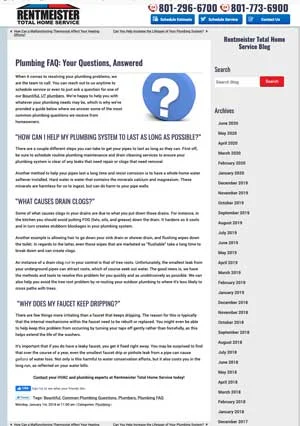
As a professional plumber, you can make sure that they learn the right way to do things by answering frequently asked questions and providing solutions to common plumbing problems.
Consider some of the following plumbing blog topics:
- Why is my faucet dripping?
- How do I avoid having frozen pipes?
- What’s the difference between soft and hard water?
You probably already know the questions you get asked over and over again.
Now, just turn the answers to the questions into blog posts. Explain to your website’s visitors how they can keep damage from occurring in their homes or business. Teach them how to fix minor problems on their own.
Pro tip: Have your website developer insert FAQ or How-To Schema JSON-LD on your blog posts to increase your chance of showing up on Google’s Rich Snippets.
People are going to be typing their questions into search engines. If you provide the answers on blog posts optimized for search engine optimization (SEO), the more likely the people needing your services will end up on your website.
Google exists to answer searchers’ questions.
Don’t worry about if you’re answering their questions too well and working yourself out of a job. Chances are, they’ll fail and call you to bail them out.
2) Emergency plumbing solutions
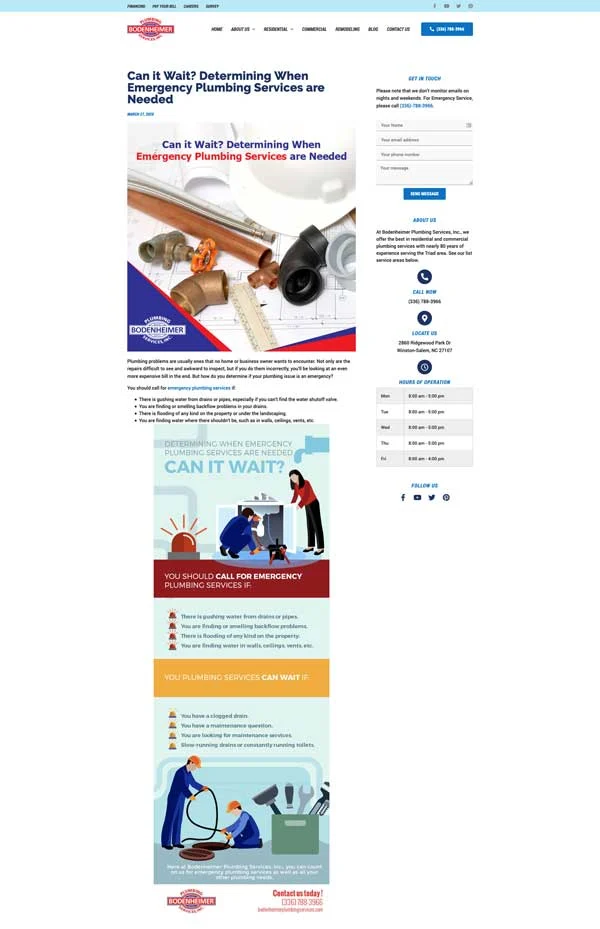
It’s highly unlikely that a homeowner with a blocked toilet overflowing onto their bathroom floor is going to stop to read your blog post.
However, your emergency-plumbing solution blog post wasn’t written for right-now emergencies. Plumbing blog topics don’t always have to be written for the user right now.
Most of the time, significant plumbing issues start small. Perhaps, your reader knows that they have a problem that they need to fix but can’t afford to fix it right now. Maybe they simply lack the time or resources.
But maybe they’re researching what to do if the worst happens or just learning what the repair will entail.
By providing answers to their plumbing emergencies, your name will already be in mind when the $%&t hits the floor.
3) Plumbing Truths
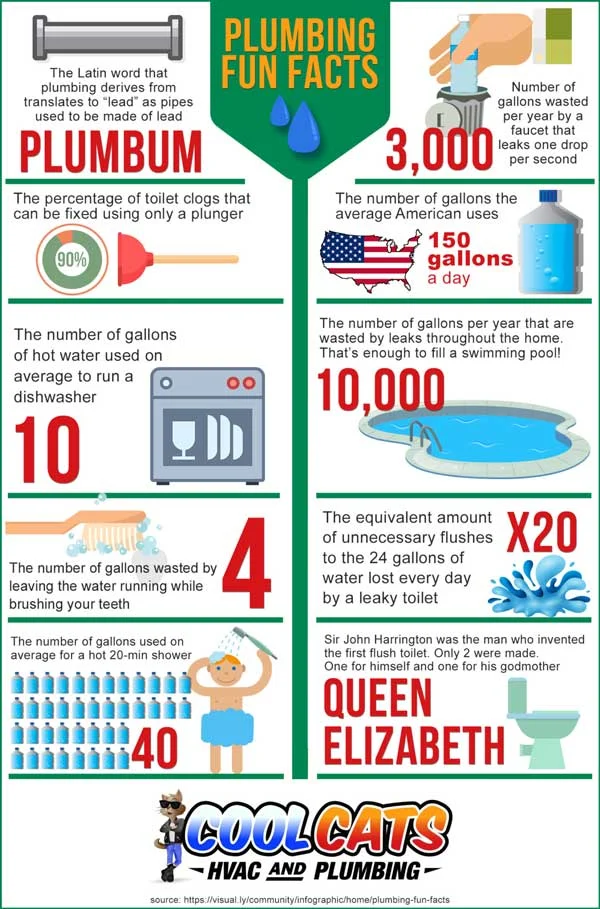
Do you see home and business owners dealing with a particular problem frequently? Perhaps in your community, hard water is an issue; for example:
High mineral content in water is causing frequent damage to equipment, such as ice-makers.
You can write a blog post detailing the causes and consequences of hard water. Inside the post, you can provide tips and advice on how your readers can prevent problems from occurring. You can also give tricks of the plumbing trade to fix issues that have already happened.
Your plumbing tips post can be technical or can focus on legal or economic issues that homeowners (and business owners) can use to learn.
By sharing plumbing tips and tricks, you establish yourself as an honest professional that your readers can trust.
4) Plumbing Myths
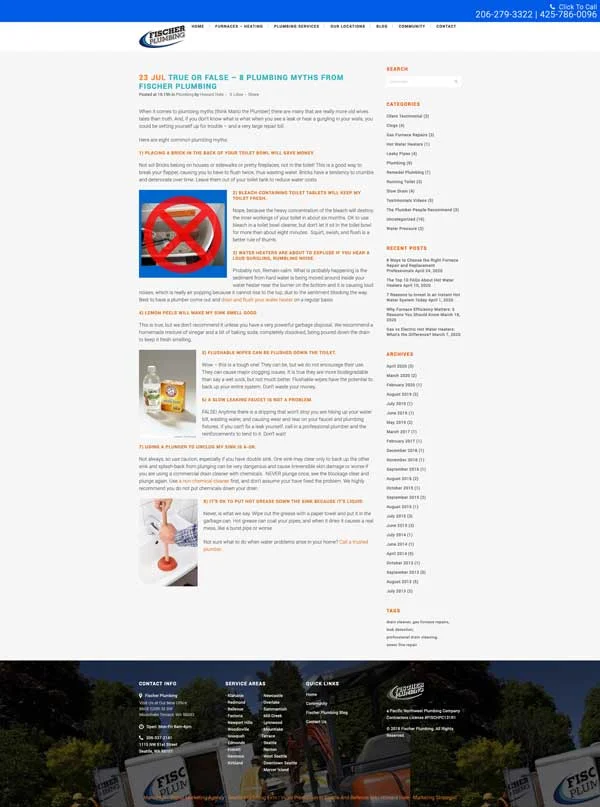
Your pipes can’t properly do their job if tree roots have grown in them, right?
As a plumbing professional, you’ll know this, but there’s a strong possibility that many homeowners won’t.
Take some common misconceptions that you’ve experienced and dispel them via your blog posts.
Explain the myth and then debunk it.
Resist the urge to do just one myth unless you can generate 300 words for your post. Anything less than that won’t gain favor with Google and other search engines.
Instead, create a list of plumbing myths, such as a list of plumbing myths busted or this article debunking the top ten plumbing myths.
5) Ways to save money on plumbing
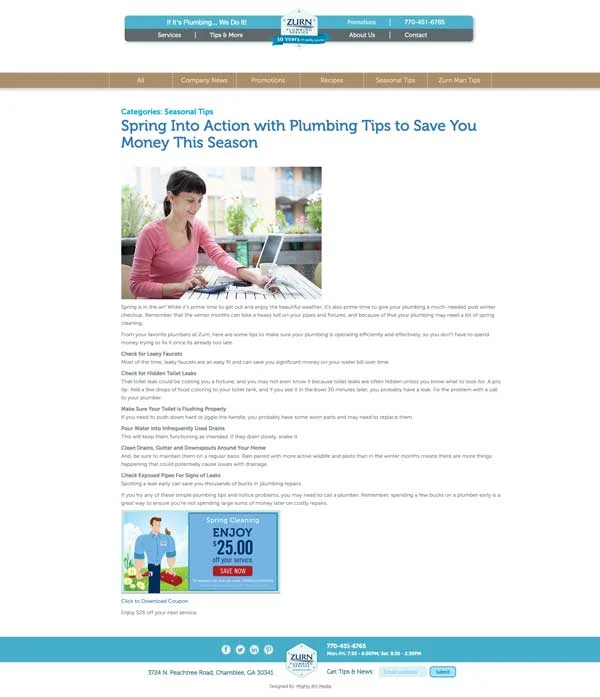
Can switching to a low-flow showerhead save you money?
With all of the economic uncertainty with this COVID-19 pandemic, homeowners and business owners are looking for ways to save money in any way possible.
Help your customers (and prospective customers) by giving them tips, advice, and strategies that they can use to reduce their water, power, and sewer costs.
Explain how the changes you suggest can not only help them save their house or business from a plumbing disaster but can protect their bank balance at the same time.
Again, the value you provide to your readers will show that you’re a trustworthy expert that they can rely on in their time of need.
6) Plumbing Equipment Buyer’s Guide
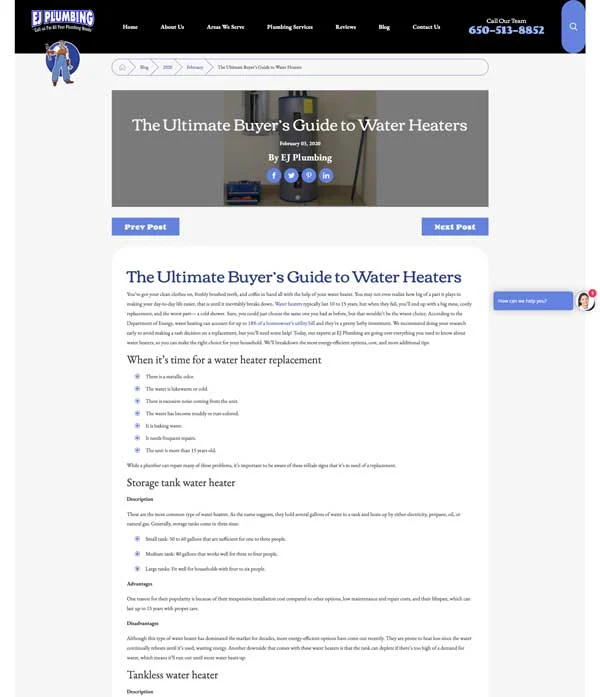
Help your readers select and purchase the right fittings and fixtures that they need for their homes.
Think of the most common fixtures that you install every day and their various options.
For someone who isn’t as experienced as you, selecting the right faucets, toilets, or showerheads can be intimidating.
This type of post will help you catch potential customers right at the stage where they are looking to make changes to their homes.
By giving them helpful guidance and offering them real-world advice on saving money, you help them make educated decisions and be on their mind when it’s time for installation. Remember, you’re a part of the plumbing industry; they’re not.
7) Plumbing News
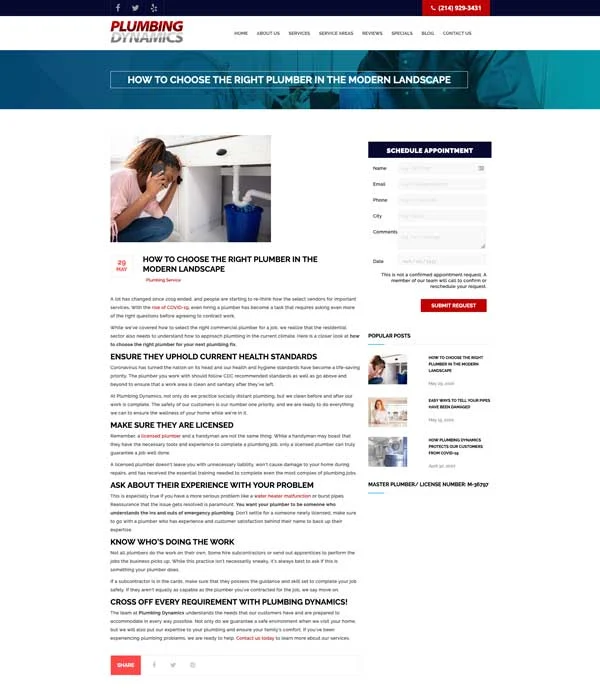
Because you’re a professional plumber, chances are you will tune in to plumbing-related news.
Think of something in the media that caught your attention recently. Would your readers be interested in it?
This news could be severe, or it could be comical.
For example, say it’s wintertime. You could write about recent record-breaking low temps and how they have caused damage to pipes. In this post, you can offer solutions about how to insulate pipes from freezing and how to unfreeze them if frozen.
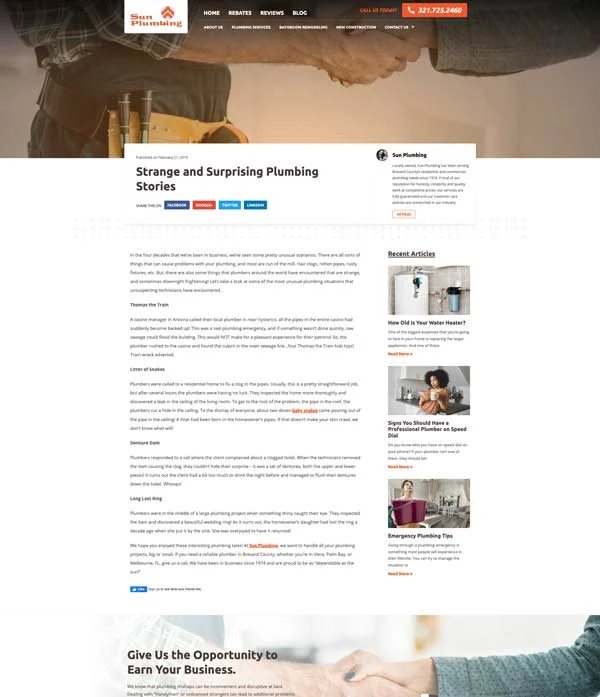
Your posts could also be funny, such as this article about weird things that plumbers have found in people’s pipes.
Humor-filled stories add humanity to your company and provide humor for your readers. Not to mention humor-filled posts are subject to going viral on social media, which works wonders for your SEO.
8) Personal Stories and Anecdotes
Your plumbing blog doesn’t have to be only about giving answers to problems. It should also be about your brand connecting to its’ readers on a more personal level.
Include blog posts about your company, its’ employees, and some of the experiences you’ve had during your plumbing career.
Tell stories about some of the jobs that you’ve done, people you’ve met, and mistakes you’ve made.
Connect with your readers. Give them a chance to know you:
- Why did you become a plumber?
- What’s your dog’s name?
- What’s your wife’s name?
- How many kids do you have?
Small details like these help people relate to you and your company. And these personal posts will build trust, and they’ll love you before even meeting you.
9) A Behind the scene look of your plumbing company
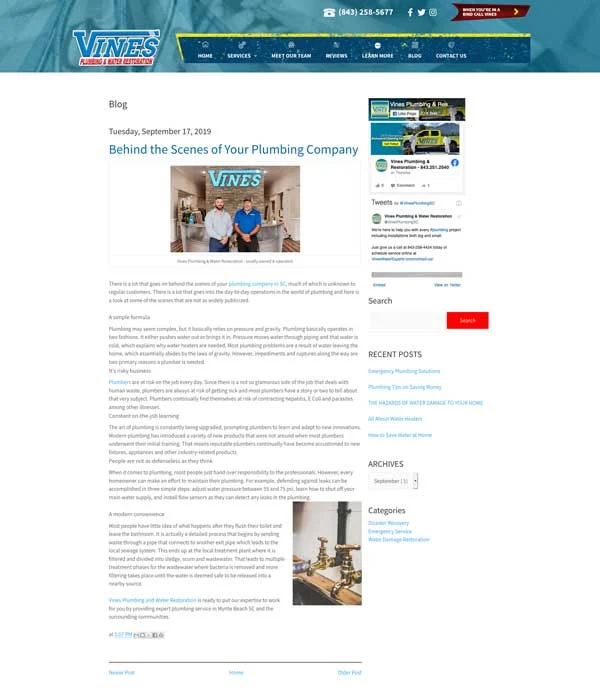
Another way to build trust with your readers is to show people how your business operates day-to-day.
Take photos of your staff and your store/workshop/service vehicles.
Pro tip: Make sure to include these photos on your website as well as your Google Business Profile page. Google loves this, and it will work wonders with your local SEO efforts. Learn more about Local SEO.
Consider highlighting a staff member or a recent client.
This human factor will interest your website’s visitors and are an excellent way to build your brand while showcasing your professionalism and experience.
10) Talk about your local community
What’s special and unique about your community? What do you love best about your state?
As a local business, you’ll probably be trying to attract customers from your local region.
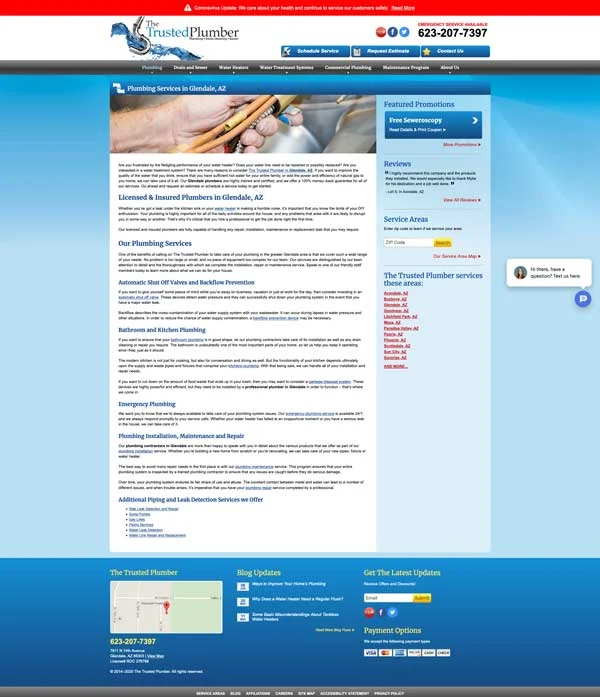
In order for them to find you, you’ll need to include some content that focuses on your local area and includes names and cities of the counties (we call them Parishes in Louisiana) that you serve.
Write about news, events, tourist attractions, and anything else unique to your locale. If at all possible, relate it to plumbing, but don’t force it. The goal is to provide valuable information to your community while letting search engines know you’re a local business.
When people search for “Plumber near me,” search engines will remember the geographically optimized content on your website, and you’ll show up higher in search results.
Now grab your tool belt and get to work!
Feel free to experiment with any (or all) of these blog post ideas for plumbers.
Test which ones get the most views and what type you prefer to write.
It’s essential to enjoy blogging. When you enjoy the writing process, this extends to the reader, and you’ll see an increase in engagement.
What blog post ideas do you have? Did we miss anything? What other items could you use on your professional plumber’s blog?
Feel free to reach out to us or leave a comment. We’d love to get your input and hear your success stories. And be sure to visit our digital marketing services for plumbers page to learn how we can help you grow your business.
Looking for a real conversation about your business, no sales pitch, no commitment? Book a free 15-minute Discovery Call.
About the author

Founder & Lead Developer · Denham Springs, LA
Clint has built and marketed websites for 26 years, since founding BlakSheep Creative in 2000. He is also a 29-year firefighter and a 23-year member of IAFF Local 557, which is where the bias toward plain answers over sales copy comes from.
- Veteran-owned
- Firefighter-owned
- IAFF Local 557
Common questions about plumbers
What should a plumber write about on a blog?
How long should a plumbing blog post be?
Does blogging help a plumber rank on Google?
Will teaching customers to fix plumbing problems cost a plumber jobs?
How does a plumbing blog help local SEO?
Where can a plumber get blog post ideas when stuck?

Your next step, without the guesswork
No surprises, clear next steps, and a fixed price before anything starts.