
By Clint Sanchez · Published · Updated · 15 min read
Quick answer
The most common mistakes an agency sees in web design, SEO, digital marketing, and email are owners who stay out of their own site's design, boilerplate templates, typos, stock photos, copied content, pixelated images, whole-sentence anchor links, clients and agencies who misunderstand SEO, misused headings, images without alt text, fake RE: subject lines, clickbait, repeated identical emails, strategies with no revenue value, follower-count obsession, and inactive social pages.
Key takeaways
- According to a MarketingExperiments A/B test, a real photo of the company converted nearly 35% better than a stock photo.
- Business owners know their customer avatar better than any designer, so they have to take an active role in the design.
- Typos and grammar errors cost both search ranking and customers; a site with errors is like staff showing up in a tattered uniform.
- Each page gets one H1, H2s for major sections, and H3s for sub-sections; misused headings confuse visitors and search engines.
- Every image needs alt text, or screen readers announce only image and the site is closed to blind and low-vision users.
- Use RE: only for a real reply, avoid clickbait, and send one follow-up instead of the same email three times.
- Followers do not equal leads; only a defined strategy turns an audience into customers.
Type any trade plus Baton Rouge into Google and the pattern shows: three plumbing sites on the same template with the same stock handshake photo, and a Denham Springs contractor whose About page still reads like the demo content. In a market this small, the first business that fixes those basics looks like the professional one, and the map-spam law firm offering plumbing in the tweet above is not far from home.

Want this handled instead of DIY?
A 15-minute call, no script, no pressure — you leave with a plan either way.
4 Biggest Pet Peeves about Website Design & Development, Digital Marketing, and SEO
“What is your biggest pet peeve about website design and development, digital marketing, and SEO?” I hear this question all the time. It’s a difficult question to answer because many things can be annoying when you work in these industries. With that being said, we decided to compile a list of our most common pet peeves in Digital Marketing.
Our Website Pet Peeves
Seven things we see on business websites every week, starting with the owner who was never in the room when the site was designed.
Lack of Customer Involvement in the Design Process
A professional website is a company’s best way of reaching the world. If business owners aren’t active in their site’s creation, they don’t know who to reach out to and, therefore, do not have an effective website to help them grow as a brand!
Business owners often think their website is just a tool to showcase products and services. While it’s true that this can be the case for some companies, if you don’t take time to understand your target market, then you’ll likely have an unsuccessful site because not everyone will understand your product or service offerings.
If someone happens upon your page without any background knowledge of what you offer, how would they know?
It’s imperative for all business owners who want success from their websites to have them answer two key questions foremost:
- Who am I trying to reach?
- What feeling do I want my viewers/customers to experience when visiting me online?”
This way, both customers and potential clients get information about what kind of company you are.
Because you know your company and customer avatar better than your website designer, it’s essential that you take an active role in the design of your website.
Boilerplate Websites and Templates
Make your website with a little more pizzazz! Color can be used to create hierarchy, while fonts are one of the most essential design elements.
Headers and links, in particular, should catch the eye, so use colors that will draw attention, as well as pick some bold or exciting fonts.
Additionally, when your website designer uses a template, it’s essential to use the customization features to fit your brand (not the other company that they made a similar site for).
Websites that are too plain or just don’t fit your company brand can be frustrating for both customers and potential clients!
Remember, a site that looks like every other one isn’t helping you get noticed in the digital world. Learn how to choose a web design company in our recent article.
Tired of cookie-cutter website templates that blend into the background? Discover why custom website designs are the key to standing out and thriving in our detailed guide on cookie-cutter website templates:
Typos, Grammatical Errors, and Misspelled Words
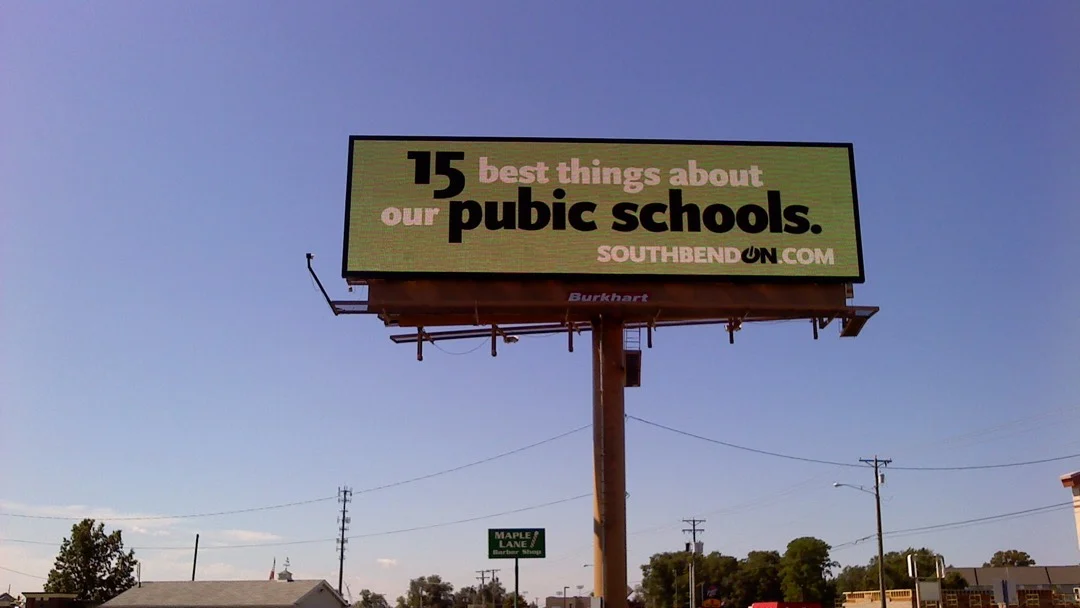
We live in a world where the squiggly red line is always watching. You know that when it pops up, something’s wrong. You just have to fix what needs fixing!
Agencies reading this: when the build queue is the bottleneck, we take on white label web development under your brand.
Want this handled for you? We build and market websites for Louisiana businesses, and we will tell you honestly if you do not need us.
Remember, your website is a representation of your business. When it has typos, grammatical errors, and misspelled words. It’s like letting your employees show up to work in a tattered uniform.
Read our recent post to learn about the effects of social media spelling and grammar errors on your brand.
Do you want your business represented that way?
We believe so strongly in having a website free from typos, errors, and misspellings that we’ll look at your complete website and show you what needs to be corrected for free.
Typos, Grammatical Errors, and Misspelled words can cost you SEO
Typos, grammatical errors, and misspelled words can cost you in search engine ranking. If your content is hard to read or understand because of these mistakes, or the site takes too long for a web crawler to index it, you won’t rank well with Google. And that means potential customers will never see you!
Typos, Grammatical Errors, and Misspelled Words can cost you customers.
When a potential customer finds what they’re looking for on your site, the little things can make or break their decision. If there are typos, grammatical errors, and misspelled words. Chances are they’ll leave before you have an opportunity to convert them into customers.
So make sure your website’s textual content is as polished and professional as you are! That way, it won’t let anything stand between you and the success of your business.
Stock Images
(I know the image in this section is a stock image; it’s being used as an illustration of how cheesy they can look).
Using stock images on your website is a great way to save time and money, but it can also make your website feel unoriginal or untrustworthy.
Internet-based research lab Marketing Experiments has done a real photo vs. stock photo A/B test on one of their client’s web pages in which an actual photograph of the company against one with other top-performing photographs from the same category was tested to see how it would fare as a marketing tool for conversion rates, and found that they are nearly 35% higher when there is indeed an authentic photograph up instead of just using stock photos.
When trust is low, so are sales!
Instead, use original photos of your products, business, customers, and anything else you want to showcase.
This way, your website will be more unique and authentic (and, of course, trustworthy).

Copy and Pasted Content
it’s a pet peeve when I go to three different websites and see the same content. Not only is it bad for search engine optimization (SEO), but it doesn’t set your agency apart.
We’ve all been there before: when you’re browsing the internet and come across a website that reads exactly like another site.
You think to yourself, “Hmm, seems like I’ve heard that before.”
Yes, it’s frustrating to be in this situation because duplicate content on your pages adversely affects your website’s SEO and gives off an unoriginal vibe about your agency.
You might think that it doesn’t matter if people see the same content because you’ve done your research and know the ins and outs of SEO.
But Search Engines also catch your copied and pasted content.
This can result in a lower ranking for your website on organic search results pages.
So, what’s the solution to this problem?
Stop copying and pasting content! You’ve been warned.
What you should do instead is spend time researching new things that are happening within SEO and digital marketing so that if someone stumbles upon your site (which they will if you have a solid SEO strategy), they’ll actually read it.
Don’t copy-paste.
Grainy or Pixelated Photos
It might just be a pet peeve, but I don’t like it when companies post pictures of their pixelated products or have weird grain.
For me, the photographs make me think they do not care about the people in them as much as they should, and they also make for an ugly viewing experience.
It’s frustrating to see these kinds of photos on social media, too. You can tell how unprofessional they are, yet small agencies are trying very hard to build themselves up with no care whatsoever going into what is quite literally; often, all there is one photograph!
Instead, use high-definition photography and make sure your website is using the best resolution possible.
Also, properly optimize your photo sizes for a faster-loading website. And don’t forget to include ALT tags for your visually impaired visitors.
The customer will appreciate it, I promise!
Poor Anchor Links
Linking a whole sentence instead of only the action words. For example, “Amazon revealed that 81 percent of shoppers research products online before purchasing” should be “Amazon has revealed how many people spend time researching their purchase beforehand.”
(Those links aren’t broken, just set to a # hyperlink for illustration)
Those above are just a few of the things that we stumble upon on the web that get our blood boiling. And now on to some of our biggest SEO peeves.
Our SEO Pet Peeves

Clients who don’t understand SEO
Business owners think someone is sitting at a desk at Google updating rankings. That’s not the case.
Google uses algorithms to provide the most relevant results for each search, which happens billions of times per day and is global in reach. Their primary objective is not to reward or punish websites but to provide accurate information as efficiently as possible. People are more likely to be satisfied enough by what they find on one site (Google) than ever to venture elsewhere online again.
Agencies that don’t understand SEO
It’s unfortunate, but plenty of agencies out there claim to know SEO but don’t.
The problem is that they’re not doing it right and will continue to fail if we do nothing about it collectively.
It doesn’t matter how good a designer you are or how great your website looks, if search engines cannot find the site because of a lack of knowledge of proper SEO, then the hard work you put into it will have been for nothing.
We’ve seen too many times where clients would come to us after being let down by an agency that promised them SEO services but didn’t deliver on those promises, and this is unacceptable.
Some blackhat SEO somewhere forgot to change the dummy text on their fake lead generating site so now apparently this “law firm” offers plumbing services. #StopCrapOnTheMap pic.twitter.com/c4wOaidHhH
, Joy Hawkins (@JoyanneHawkins) October 25, 2018
It’s not just about websites – it’s also about delivering results.
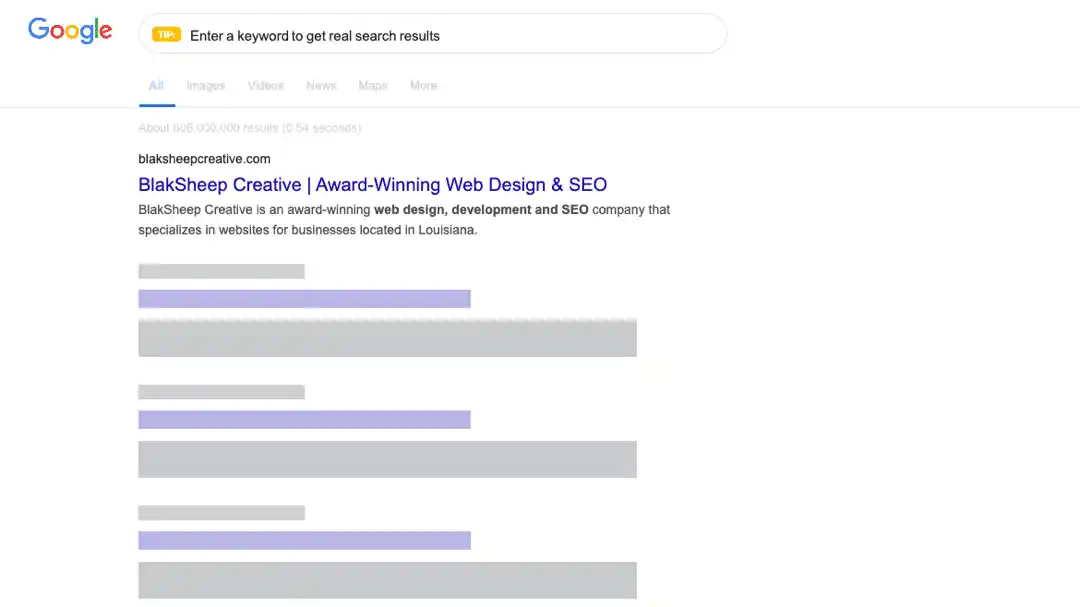
Here’s a tip: Search for an SEO agency on Google. If the agency isn’t on page one of the search results, you should be wary.
This problem is rampant in the industry, especially when SEO is sold as a simple add-on to another service, like web design. While some designers are also SEO experts, it’s critical to make sure they have a separate, deep understanding of SEO strategy and aren’t just “throwing it in” with the build.
The digital marketing industry needs to do better. If we want our businesses to succeed in an increasingly digital world, we need to start putting SEO as a priority and stop taking shortcuts by promising clients success without delivering it.
And that starts with the agency. Don’t sell what you don’t know.
Improperly Used Headings
Headings are essential to any website. It’s a great way to group content so that visitors can find the information they’re looking for easily and quickly, not to mention how important headings are for search engine optimization (SEO).
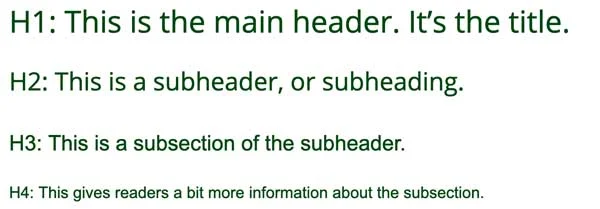
Headings should be used correctly:
- Each page should have 1 Heading 1 <h1> and only one Heading Level One on the page.
- Heading Level Two <h2> should be reserved for significant sections of your content, like chapters in a book. The heading can start with larger font size and bold text to distinguish it from other headings on the site.
- Heading Three <h3> is used for sub-sections or supporting information when needed.
Far too often, inexperienced website designers misuse headings, which frustrates visitors trying to navigate the site.
A website should be designed so that it’s as easy for visitors to find what they’re looking for, not just pictures. Headings can help make this happen by providing navigation points; without them, your content could even sound like gibberish.
Images Without ALT Text
ALT text is a short description that’s used to describe an image when it can’t be seen. Images are often used as a replacement for words; without alt text, they could make the site inaccessible to someone who is blind or has low vision.
A website should always have ALT text on its images.
Alt-text is also what screen readers read aloud when they come across an image. If a screen reader comes across an image without ALT text, the screen reader will either say “image” or “graphic,” but it won’t tell the user anything about what’s in that image.
Screen readers are essential for people with visual impairments and other disabilities, as they’re often used when browsing the web. By not having them, you’re not making the web accessible to a lot of people.
They may be able to use the web, but they’re not getting as much out of it.
Is your website accessible? Read our recent article on why accessibility is important for your website.
Our Email Marketing Pet Peeves

Using RE: in a Subject Line
First, let’s discuss when we should use RE:, which is only when it really does mean “replying to an existing thread.” Otherwise, there will be some confusion on both ends, and people will get upset because they think they messed up or something.
That said, what do you guys prefer? Should future emails not mention a reply at all (maybe just add this sentence)?
For now, though, please don’t include “RE:”
Here’s the deal with RE: in a subject line. It might seem like you are trying to trick me into opening your email by using it, but that is not true, and instead of replying, I would prefer if we used different wording for our emails.
Clickbait
Clickbait is a type of digital media used to draw attention, typically with an exaggerated or misleading title.
In my opinion, the problem with clickbait is that it starts off any conversation on a dishonest note. I’m not going to waste any time reading what you have to say if, in the first sentence of your email, you are trying to trick me into clicking on a link that doesn’t match up with what it says is in the article or video title.
This type of digital media feels like deception because it misleads people about the discussed topic.
Some people say that clickbait is necessary because it’s an easy way to get someone to read your content. But I think this type of digital media should be avoided at all costs.
If you want readers to be interested enough in what you have to say, the work has to speak for itself, not through deception and dishonesty.
Agency owners: Clickbait can be an issue for your agency’s reputation and should not be used.
I hate the fact that McAfee has to use clickbait emails just to try and get another subscription from people pic.twitter.com/JGKT2ziWFb
, Huntai.EXE (@TheHunting109) April 3, 2020
Sending the Same Email Over and Over
You’re probably doing this, so I wouldn’t be surprised if you stopped reading. It hurts to think about it too. But here goes: We might have sent the same email to some of our customers over and over again, hoping to see different results.
It’s not that we think our customers are stupid or can’t tell the difference between a one-time email and an automated spam campaign. We just feel it is time for serious action if they don’t respond to the first letter.
Unfortunately, this isn’t usually successful. Instead, we often end up with many angry, upset customers who have to tell us that we’ve sent them the same email three times. It’s easy for this to happen, and it can be difficult to avoid it from happening again in the future.
Instead, if you don’t get the desired response from your first email, you can try a follow-up email. A follow-up is just like it sounds; you send an additional email to your customer after the first one has gone unanswered.
And then stop sending the same email!
Our Digital Marketing Pet Peeves
Three marketing habits that burn budget: strategy with no revenue behind it, chasing follower counts, and social pages left to go quiet.
Strategy That Doesn’t Provide Value
Marketers: If you can’t demonstrate how your idea will drive value or revenue for your company or client, it’s not worth doing.
Sure, we could build an app that lets people swap their pet’s face with our brand to drive engagement by working with influencers to create a web series about a particular niche. But at the end of the day, what are you really doing if nobody is actually paying for it?
Yes, Zips is a real iPhone app available at the app store.
All you can do on it is zip and unzip a zipper. To think that someone paid money to have this app developed.
You can look at some other pointless apps over on PCMag.com.
Back to marketing strategies.
Instead, develop a marketing strategy that will provide value to your customers and drive revenue for you.
Some examples of such marketing strategies are:
- Driving traffic to your company website by partnering with companies in the same industry. Take advantage of the experience of others.
- Setting up an email list where you can send personalized messages and promotions. But don’t just go and troll around in Facebook groups and grab people’s email addresses and send them emails. That’s unethical, and you will get banned. Plus, it violates GPDR policies.
- Offer educational resources by providing how-to articles such as “How To Write A Blog Post.” Remember, the goal is to provide value to customers and prospective customers alike.
The above list is just an example of some marketing strategies that provide value to your target audience. But, there is no one-size-fits-all approach to digital marketing.
Here at BlakSheep Creative, we custom-tailor your digital marketing based on the needs of your business, your customer avatar, what’s working for your competition, and digital marketing trends.

Digital Marketers With Too Much Focus on Followers and Numbers
We see it all the time, agencies and companies boasting about the number of likes, followers, and page views they have. During our time in the industry, we’ve seen so many companies promote their follower counts as a way to validate themselves for digital marketing services.
But here’s the thing: followers don’t always equal engaged customers and leads (the whole point of social media optimization). No matter where they enter your marketing funnel, followers can only convert to customers if you have a well-defined digital strategy in place.
This is why SEO and social media marketing are so important: they’re the bridge between all of your other online efforts and lead generation. We often see this happen with our clients, once they implement an effective digital strategy into their marketing funnel.
Remember, more followers don’t mean higher conversion rates.
Inactive social media pages and poor social media marketing
Your social media profile is a reflection of your brand. If you are not regularly posting and interacting with followers, you look lazy to potential customers or prospects who may be turned off by the lack of interest in what they have to say.
A few minutes every morning can make all the difference when it comes to how people see your business online!
Social media is constantly changing and evolving, but one thing that remains constant is consumers’ expectations. Brands need to be consistent with their posts to reach out to more potential customers on social media platforms like Facebook or Instagram.
To help you stay organized, here are a few tips:
- Create a schedule beforehand so your feed looks as polished as possible every day- it helps make posting easier when you’re not scrambling at the last minute!
- Post consistently to give your followers confidence in what they see from your brand. This will lead them to become loyal fans who will love seeing new updates about products/services frequently.
- Provide value in your social media posts to help your followers engage with your message and feel as if they’re part of a community.
- Tailor your post to the social media platform you’re posting to so it’s as relevant as possible. For example, Pinterest is a visually focused platform where it’s more about visual content, so make sure your posts are engaging on that level.
On Facebook, you may want to use a photo because people scroll through their feeds fast and might not read something without an image.
On Instagram, remember to include hashtags for easy discovery of what others like you have posted.
Use hashtags sparingly and strategically- they help promote your post and get in front of people who are interested in the same topics you write about but don’t overdo it or hashtag irrelevant words because this will lead followers to unfollow you.
Well, there you have it, our Biggest Pet Peeves about Website Design & Development, Digital Marketing, and SEO.
If you’ve read this article and found yourself nodding along to the things we mentioned, let us know. We love helping companies take their marketing initiatives up a notch by applying what they’ve learned here to their current strategy.
If it is SEO or digital marketing that needs work, our team of experts can help! Send your company name and contact information over, and we’ll get back to you as soon as possible with an actionable plan for success.
Wondering if your SEO is actually getting traction, or where to focus next? Let’s diagnose it in a 15-minute Discovery Call.

Ready to put this to work?
Talk to the people who would actually build it.
About the author

Founder & Lead Developer · Denham Springs, LA
Clint has built and marketed websites for 26 years, since founding BlakSheep Creative in 2000. He is also a 29-year firefighter and a 23-year member of IAFF Local 557, which is where the bias toward plain answers over sales copy comes from.
- Veteran-owned
- Firefighter-owned
- IAFF Local 557
Common questions about digital marketing
Why should a business owner be involved in the website design?
Do typos on a website really affect SEO?
Are stock photos bad for conversions?
How should headings be used on a web page?
Why does every image need alt text?
Is it bad to put RE: in a marketing email subject line?

Your next step, without the guesswork
No surprises, clear next steps, and a fixed price before anything starts.