
By Clint Sanchez · Published · Updated · 10 min read
Quick answer
AI tools draw on your website, directory listings, and reviews when they recommend local businesses. A Semrush study of 5 million AI-cited URLs found Organization, Article, and BreadcrumbList schema appear most often on cited pages. The fix takes about 30 minutes: standardize your name, address, and phone across ten directories, add Organization schema to the homepage, add Article schema to three key pages, turn on breadcrumbs, and confirm LSA reviews live in Google Business Profile.
Key takeaways
- AI Overviews now trigger on nearly half of tracked Google queries, up 58% in a year, per BrightEdge data reported by Search Engine Journal in March 2026.
- A Semrush study of 5 million AI-cited URLs found Organization, Article, and BreadcrumbList schema turn up most often on cited pages. Semrush notes that is a correlation, not proof that schema causes citations.
- Inconsistent name, address, and phone listings make it harder for AI tools to tell which business is yours.
- Organization schema with a sameAs array connects a website to its social and Google profiles in a format machines can read.
- Since July 11, 2025, Local Services Ads reviews are managed inside Google Business Profile, according to Google.
- In Seer Interactive data from 2025, brands cited in an AI Overview got 35% higher organic CTR than on AI Overview queries where they were not cited.
- Track results in Search Console’s Generative AI performance report and by asking ChatGPT the questions your customers ask.
Nearly half of consumers have now asked an AI tool for a local business recommendation, per BrightLocal’s 2026 survey. For a Louisiana service business, accurate listings, reviews, and basic schema are the cheapest way to give those tools correct information about you.

Want this handled instead of DIY?
A 15-minute call, no script, no pressure. You leave with a plan either way.
Published June 2, 2026. Written by Clint Sanchez, founder of BlakSheep Creative.
A customer in your service area asked ChatGPT for the best plumber, HVAC tech, or lawyer in town this morning. ChatGPT named three businesses. Yours wasn’t one of them.
That used to be a Google problem. Now it’s an AI problem, and the two don’t behave the same way. AI Overviews now trigger on nearly half of tracked Google queries, up 58% in a year (BrightEdge data reported by Search Engine Journal, March 2026), and 45% of consumers say they have asked an AI tool for a local business recommendation, up from 6% a year earlier (BrightLocal Local Consumer Review Survey, March 2026). If you’re not in the answer, you’re not in the conversation.
The good news? The fix isn’t another social media calendar. It’s about 30 minutes of schema and listing cleanup. Let’s get into it.
The Bottom Line – AI Overviews show on nearly half of tracked Google queries (BrightEdge, 2026), and brands cited in them see 35% higher organic CTR while overall organic CTR on those queries fell by nearly two-thirds (Seer Interactive, 2025). – 45% of consumers now ask AI tools for local recommendations (BrightLocal, 2026). – The fix is five schema and citation steps, total time around 30 minutes. – You don’t need a developer. You need a checklist and a coffee.
Why “Just Post More on Social” Doesn’t Fix This
Here’s the contrarian take, and it’s going to ruffle some agency feathers. Most marketing advice given to local SMBs in 2026 is still built for 2019: post three times a week, run a boost, hope for the best. That advice doesn’t move the dial on AI citation. Not even a little.
ChatGPT doesn’t crawl your Instagram Reels to decide who to recommend. Per BrightLocal’s 2026 research, AI answers can draw on reviews, local directories, business websites, social media, and other third-party sources. A study of 5 million URLs cited by ChatGPT Search and Google AI Mode found Organization, Article, and BreadcrumbList to be the three schema types that turn up most on cited pages (Semrush, January 2026).
If you’ve got two hours a week for marketing, spend 30 minutes of it here. A social post scrolls away in a day or two. Accurate listings and schema stay put.
Citation capsule: A 5-million-URL study of ChatGPT Search and Google AI Mode citations found Organization schema on 25% of ChatGPT-cited pages and 34% of AI Mode ones, with Article and BreadcrumbList next (Semrush, January 2026). Semrush is clear that this is a correlation, not proof that schema causes citations, so treat schema as one part of the job, not the whole fix.
The 30-Minute Fix: Five Steps That Actually Work
Each step below has a check, a fix, the reason it matters for AI, and a realistic time estimate. Read the whole thing first, then run it.
Step 1: Audit Your NAP Across the Top 10 Directories (5 minutes)
NAP consistency, your business Name, Address, and Phone number, is one of the citation signals local SEO has always relied on. AI tools pull from directories too, so mismatched listings make it harder for them to tell which business is yours. If AI can’t tell which “ABC Plumbing” you are, it may go with one it can.
What to check:
Pull up your business on these ten directories and look for exact-match listings.
- Google Business Profile
- Bing Places
- Apple Maps
- Yelp
- Better Business Bureau
- Facebook Business
- LinkedIn Company
- Nextdoor (if local services)
- Your top industry directory (Avvo for lawyers, HomeAdvisor for trades, Healthgrades for medical, Controller for aviation)
- Your chamber of commerce or local trade group
How to fix it:
Pick one canonical version of your NAP and standardize. “St” or “Street.” “Ste 201” or “Suite 201.” Pick one. Update everywhere it’s wrong. The free version of Moz Local will scan and flag inconsistencies in under two minutes, and BrightLocal’s free citation audit does the same.
Why it matters for AI: Entity disambiguation. ChatGPT can’t recommend you if it isn’t sure you exist as one consistent business.
Step 2: Add Organization Schema to Your Homepage (10 minutes)
Organization schema describes your business in a format machines can read: who you are, where you operate, what you do, and where else you appear online. Google says no special schema is required for its AI features, but this is still a sound basic, and it is the schema type Semrush found most often on AI-cited pages.
What to add:
Paste this in your homepage <head> tag, or add it through your SEO plugin’s schema settings or a code snippets plugin. Edit the values to match your business.
<script type="application/ld+json">
{
  "@context": "https://schema.org",
  "@type": "Organization",
  "name": "Your Business Legal Name",
  "alternateName": "Your DBA or Brand Name",
  "url": "https://yourbusiness.com",
  "logo": "https://yourbusiness.com/logo.png",
  "telephone": "+1-225-555-0100",
  "email": "hello@yourbusiness.com",
  "foundingDate": "2014-03-12",
  "founder": {
    "@type": "Person",
    "name": "Your Founder Name"
  },
  "address": {
    "@type": "PostalAddress",
    "streetAddress": "123 Main Street, Suite 201",
    "addressLocality": "Denham Springs",
    "addressRegion": "LA",
    "postalCode": "70726",
    "addressCountry": "US"
  },
  "areaServed": [
    {
      "@type": "City",
      "name": "Denham Springs"
    },
    {
      "@type": "City",
      "name": "Baton Rouge"
    }
  ],
  "knowsAbout": [
    "Residential HVAC",
    "Commercial HVAC",
    "Emergency AC Repair"
  ],
  "sameAs": [
    "https://www.facebook.com/yourbusiness",
    "https://www.linkedin.com/company/yourbusiness",
    "https://www.instagram.com/yourbusiness",
    "https://g.page/yourbusiness"
  ]
}
</script>
Why it matters for AI: The sameAs array lists your official profiles, so anything reading your site can match it to your Google, Facebook, and LinkedIn pages.
Step 3: Add Article Schema to Your Top Three Pages (5 minutes)
Article schema tells AI that your content has a real author, a publish date, and a recent update. Article schema shows up on roughly a fifth to a quarter of AI-cited pages (Semrush, 2026).
What to add:
Apply Article schema to your three highest-value pages. Your main services page. Your best-converting blog post. Your About page.
<script type="application/ld+json">
{
  "@context": "https://schema.org",
  "@type": "Article",
  "headline": "Page or Post Title",
  "author": {
    "@type": "Person",
    "name": "Author Name",
    "url": "https://yourbusiness.com/about"
  },
  "publisher": {
    "@type": "Organization",
    "name": "Your Business Name",
    "logo": {
      "@type": "ImageObject",
      "url": "https://yourbusiness.com/logo.png"
    }
  },
  "datePublished": "2026-01-15",
  "dateModified": "2026-05-30"
}
</script>
Why it matters for AI: Authorship and dates. Keep dateModified honest and only change it when you actually update the page.
Step 4: Add BreadcrumbList Schema to All Pages (5 minutes)
BreadcrumbList schema gives AI a clean map of your site structure. It’s a small thing that pays off, and most modern SEO plugins will add it automatically.
How to add it:
In Yoast SEO, go to Yoast SEO, then Settings, then Advanced, then Breadcrumbs, and turn on breadcrumbs for your theme. In Rank Math, go to Rank Math SEO, then General Settings, then Breadcrumbs, and enable the breadcrumbs function (switch to Advanced Mode if you don’t see it). That’s it. Verify with Google’s Rich Results Test by pasting in any page URL.
Why it matters for AI: Site hierarchy. A clean breadcrumb trail shows where each page sits: “this is the HVAC services page, which is under residential, which is part of this business.”
Step 5: Check Your LSA Reviews in Google Business Profile (5 minutes)
If you run Local Services Ads, check this. As of July 11, 2025, all LSA reviews are managed inside Google Business Profile, not the LSA dashboard (Google Business Profile Help). Google also said it would check existing reviews against its review policies and remove the ones that don’t comply.
What to do:
Log into your Google Business Profile and open the reviews tab to confirm your reviews are there. From now on, ask customers for reviews with your Business Profile review link. Google’s notice says star ratings and the total number of reviews can affect your ranking in Local Services Ads.
Why it matters for AI: Reviews are one of the sources AI tools draw on, per BrightLocal, and Google says Business Profile information helps your services show up in its AI responses. Keep your reviews in the one place you control.
What Should You Track After You’re Done?
Set a 30-day reminder. After 30 days, three things to check. Search Console for AI Overview impressions, your Google Business Profile insights for mention and call volume, and ChatGPT itself with a direct prompt.
Citation capsule: Across 3,119 search terms and 25.1M organic impressions, brands cited in an AI Overview saw 35% higher organic CTR than on AI Overview queries where they weren’t cited, while overall organic CTR on AI Overview queries fell from 1.76% to 0.61% (Seer Interactive, November 2025). The fastest way to know if your schema fix worked is to open ChatGPT and ask, “Who are the best [your service] companies in [your city]?” If you’re in the answer, the work paid off. If not, double back to Step 1.
For Google, you no longer have to guess. The Generative AI performance report in Search Console, rolled out to all websites on August 31, 2026, shows how often your pages appear in AI Overviews and AI Mode. Check it a few weeks after your changes go live, and keep asking ChatGPT the same questions so you can compare.
What This Looks Like in Three Verticals
You can check where you stand in a few minutes. Ask the questions your customers ask, then look at who gets named and which sources the answer leans on.
Aircraft Brokers
Ask ChatGPT for “the best aircraft broker in Dallas,” then ask why it picked those firms. Compare their listings and schema with your own site.
Trash Bin Cleaning
Search “trash bin cleaning service Baton Rouge” in ChatGPT or Perplexity. Note which operators get named and which sources the answer links to. If your details don’t match across those sources, fix that first.
Local HVAC, Plumbing, and Trades
Ask Perplexity for the “best HVAC company in Denham Springs” and open the sources it cites. That list shows which directories and review sites matter in your market.
AI Overviews now trigger on nearly half of tracked Google queries, up 58% in a year, per BrightEdge data reported by Search Engine Journal in March 2026.
Common Questions About Schema and AI Citations
These are the questions owners ask most before adding schema for AI search. The short version: you don’t need a developer, and nobody can promise a timeline.
Do I need a developer to add schema?
No. If you use WordPress, install Yoast SEO or Rank Math, both have built-in schema generators. If you’re on Squarespace or Wix, paste the JSON-LD code into the page’s custom header section. The whole thing takes 10 minutes per page once you’ve got the template.
How long until ChatGPT starts citing my business?
Nobody can promise a timeline. AI tools only see your changes after your pages are crawled again, and no one outside those companies controls who gets cited. Check the Generative AI performance report in Search Console, and ask ChatGPT the same questions each month so you can see if anything moves.
Will adding schema hurt my Google rankings?
No, as long as it’s accurate. Schema helps pages qualify for rich results in Google. Keep it matching what’s visible on the page, which Google lists as a best practice for its AI features too. Markup that misdescribes a page can do more harm than good.
Is this different from regular SEO?
Not much. Google says optimizing for its generative AI features is still SEO. You still want good content, fast pages, and real backlinks. AEO, answer engine optimization, is a useful name for focusing on how AI tools find and describe your business, but the work underneath is the same.
What if I have no time to do this myself?
Then either delegate it to a tech-friendly team member with this article as the playbook, or hand it to an agency that actually does AEO. Just confirm they’re touching schema, NAP, and reviews. If they want to sell you another social calendar, walk away.
Final Word: Don’t Sleep on This One
If your business hasn’t shown up in an AI Overview in the last 90 days, these five things are a good place to start. Not your logo. Not your messaging. The plumbing under the hood. AI tools are recommending real businesses to real customers right now, and the gap between “cited” and “invisible” is structural, not creative.
Spend the 30 minutes. Run all five steps. Set the calendar reminder for day 30. If nothing else, you’ll find out exactly where your business stands in AI search, and you’ll have closed a gap most of your competitors haven’t even noticed yet.
Clint Sanchez is the founder of BlakSheep Creative, a veteran and first-responder owned digital marketing and AI automation agency based in Denham Springs, Louisiana, serving service businesses across the US.
Want this handled for you? We build and market websites for Louisiana businesses, and we will tell you honestly if you do not need us.
Ready to put this to work?
Talk to the people who would actually build it.
About the author
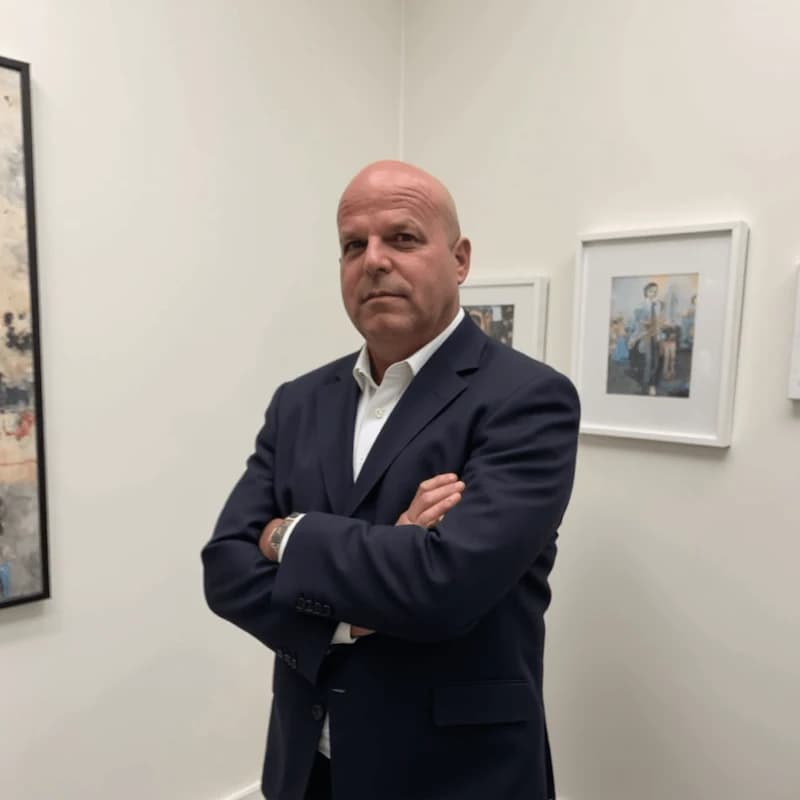
Founder & Lead Developer · Denham Springs, LA
Clint has built and marketed websites for 26 years, since founding BlakSheep Creative in 2000. He is also a 29-year firefighter and a 23-year member of IAFF Local 557, which is where the bias toward plain answers over sales copy comes from.
- Veteran-owned
- Firefighter-owned
- IAFF Local 557
More Questions About Schema and AI Citations
Short answers to the questions that come up most on this topic.
What is NAP consistency and why does AI care about it?
Which schema types matter most for AI citations?
Which pages should get Article schema first?
How do I check that my schema is working?
Where do Local Services Ads reviews show up now?
Which directories should a service business check first?
Your next step, without the guesswork
No surprises, clear next steps, and a fixed price before anything starts.