
By Clint Sanchez · Published · Updated · 6 min read

Quick answer
A business blog earns its keep when it answers questions your customers are already typing into Google. Done that way it brings in search traffic that compounds, gives your sales team something to send, supplies your email and social channels, and earns links no advertising budget can buy. Done badly it is a folder of posts nobody reads.
Key takeaways
- Ahrefs studied about 14 billion pages and found 96.55% get zero traffic from Google, with the top cause being no search demand for the topic.
- The useful question is not if you should have a blog but which customer questions you can answer better than whatever currently ranks.
- A blog captures demand service pages cannot, compounds over years, arms sales with links to send, supplies every other channel, and earns backlinks.
- A blog will not produce fast leads, will not fix a site that does not convert, and will not work at one post a quarter.
- Your three topic sources, in order: questions customers actually asked you, Search Console queries with impressions and no clicks, then keyword research.
- CMI's 2026 B2B research of 1,015 marketers ranks creating content that converts (40%) and resource constraints (39%) as the top two challenges.
- Publish on your own domain in a subfolder. Impressions move in 4 to 12 weeks, clicks in 3 to 6 months, earned links in 6 to 18.
A Baton Rouge contractor or Denham Springs clinic that answers real customer questions on a blog, like what a foundation repair costs after a wet spring or how to file a hurricane roof claim, ends up ranking for searches no service page ever will. Those posts are also what get shared in parish Facebook groups when a neighbor asks who to call.

Want this handled instead of DIY?
A 15-minute call, no script, no pressure — you leave with a plan either way.
A business blog earns its keep when it answers questions your customers are already typing into Google. Done that way it brings in search traffic that compounds, gives your sales team something to send, supplies your email and social channels, and earns links no advertising budget can buy. Done badly it is a folder of posts nobody reads.

Start with the uncomfortable number
Most articles about business blogging skip the base rate, which makes every benefit below sound automatic. It is not.
Ahrefs studied roughly 14 billion pages in its index and reported that 96.55% of them get zero traffic from Google, with another 1.94% getting between one and ten visits a month. The single biggest cause it identifies is not competition or bad writing. It is that nobody was searching for the topic in the first place.
That reframes the question. "Should my business have a blog" is the wrong one. The right one is "which questions do my customers ask that I can answer better than what currently ranks." Everything else on this page follows from that.
What a business blog actually does for you
When the topic choice is right, a post does several jobs at once, and the jobs stack rather than compete. Here are the ones that hold up in practice.
- It captures demand your service pages cannot. A service page targets "plumber in Denham Springs." A post can target "why is my water heater making a popping noise," which is the same customer three days earlier.
- It compounds. An ad stops the day the card declines. A post that ranks keeps working, and a two-year-old article is often the best performer on a site.
- It arms sales. The best use of a blog in a small business is a link you send after a call. "Here is what that repair usually involves and what it costs." That single link shortens more deals than a month of social posting.
- It supplies every other channel. One 1,200-word post is a newsletter, five social posts, a short video script, and an answer you paste into a quote email.
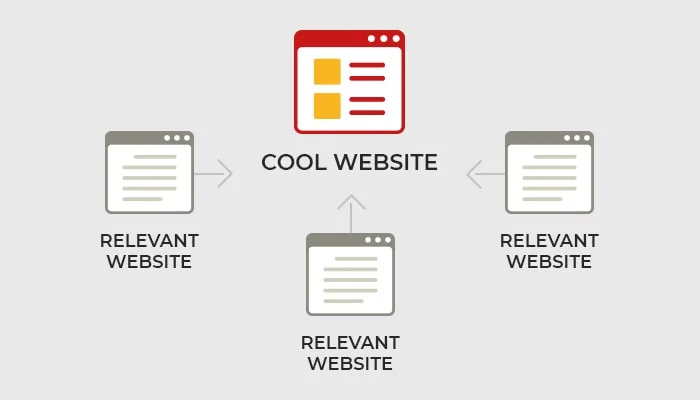
- It earns links. Nobody links to a services page. People link to the guide, the data, the checklist, and the honest explanation of how pricing works.
- It is the record you control. Your listing, your social profiles, and your reviews are on other people's platforms. The blog is on your domain, and it stays yours.
- It is what assistants read. When someone asks an AI which contractor to call, the material it draws on is written content on the open web. A site with no explanatory content gives it nothing to work with.
What a blog will not do
Being straight about the limits saves you from quitting in month four for the wrong reason.
A blog will not produce leads quickly. Search results take months to settle, and the first six posts on a new site usually produce nothing measurable. It will not fix a site that does not convert, since traffic landing on a page with no clear next step is just traffic. It will not rescue a business with a service problem, because more people finding you faster is bad news if the reviews are bad.
It also will not work at one post a quarter. Consistency is not a virtue here, it is a mechanical requirement: you need enough posts covering enough of the question space for any of them to rank.
How to pick topics that are worth writing
Topic selection is where the 96.55% gets decided, so give it more time than the writing. Three sources, in this order.
First, the questions you already answer on the phone. Write down every question a customer asked you this month. Those have guaranteed demand because a real person asked them, and you already know the answer better than any competitor writing from research.
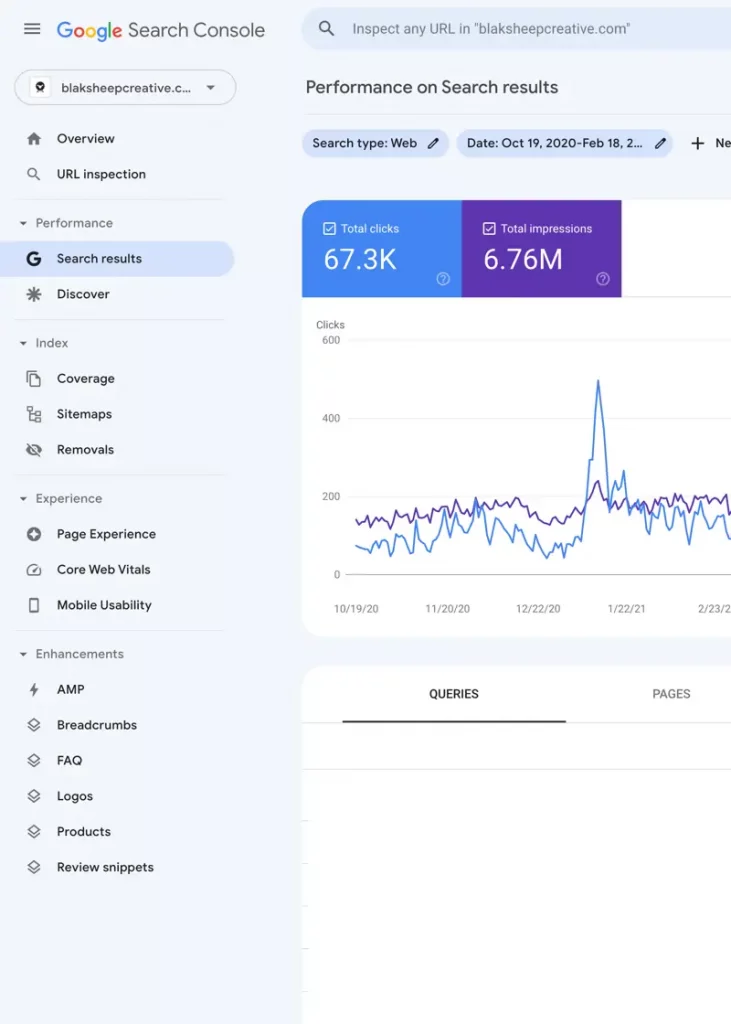
Second, Google Search Console. It shows the phrases already putting your site in front of people, including ones you never targeted. A query with impressions and no clicks is a page waiting to be written. That is the cheapest topic list in existence and most businesses never open it.
Third, formal keyword research to size the demand and find the phrasing people actually use. Volume tools are estimates, so treat them as direction rather than truth.

Then apply one filter before you write: could a competitor have written this post without knowing anything about the trade? If yes, it will not rank and it would not deserve to. Real prices, real failure modes, real photographs, and real opinions are what separate a post from filler. That is the standard we set out in how to write a blog post people finish.
Ahrefs studied about 14 billion pages and found 96.55% get zero traffic from Google, with the top cause being no search demand for the topic.
A cadence a small business can hold
The trap is planning for the version of yourself that has a free Friday. Build the schedule for a bad month, then over-deliver in a good one.
Two solid posts a month, held for a year, beats eight in January and nothing after. It is also the cadence we commit to in writing for clients, because it is the one that survives contact with real weeks. The Content Marketing Institute's 2026 B2B research, based on 1,015 marketers surveyed between June and August 2025, ranks resource constraints as the second-biggest challenge in the field at 39%, behind creating content that converts at 40%. Under-resourcing is the normal failure, not the exceptional one.
A workable rhythm looks like this: pick the month's two topics from your phone-question list on the first Monday, draft each in one sitting rather than across five, publish on a fixed day, and spend twenty minutes linking the new post to the older ones it relates to. A content calendar exists to remove the decision, not to add ceremony.
Where to put the blog
Put it on your own domain, in a subfolder, at yourdomain.com/blog. That single decision matters more than the platform choice, because the search value accrues to your site rather than to somebody else's.
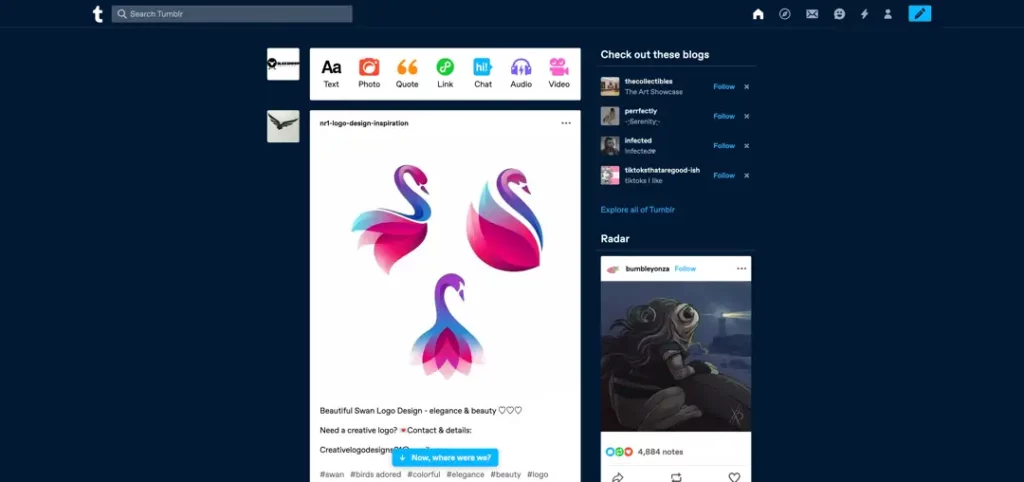

Hosted platforms such as Blogger and Tumblr are free and quick, and the traffic they build belongs to the platform. Publishing on Medium has the same problem in a nicer suit, which we worked through in the case for and against Medium as a business blog. Use them for distribution if you like, but the canonical version lives on your site.
Beyond that, the requirements are unremarkable: you can add a post without a developer, the pages load fast on a phone, headings and images are editable, and you can put a form or a phone link near the end. If your current site fails any of those, the blog is not the first problem to solve; the site itself is.
How to tell it is working
Judge a blog on a quarterly cycle and on the right numbers, or you will kill it before it has had time to do anything.
| Signal | Where to find it | When it moves |
|---|---|---|
| Impressions on new queries | Google Search Console | 4 to 12 weeks |
| Clicks and average position | Search Console | 3 to 6 months |
| Pages per session and form fills | Analytics | Once traffic exists |
| Posts sent by your sales team | Ask them | Immediately |
| Referring domains earned | Any backlink tool | 6 to 18 months |
Impressions are the leading indicator worth watching monthly. They move before clicks do, and they tell you Google has started to understand the page. If a post has impressions but no clicks after three months, that is a title and description problem, not a content problem. If it converts poorly once it does get traffic, the fixes are in improving how a blog post converts.
How to start this month
Write down the ten questions customers asked you this month. Open Search Console and note the queries with impressions and no clicks. Pick the two that overlap, and write those first, answering each in the first two sentences. Publish on your own domain, link the posts to the relevant service page, then do it again next month.
If the honest answer is that nobody in the business has time, that is a resourcing decision rather than a failure of will, and it is the gap our content marketing work fills. Two search-focused articles a month is the only thing we guarantee, and it is deliberately the number a business can hold to.
About the author

Founder & Lead Developer · Denham Springs, LA
Clint has built and marketed websites for 26 years, since founding BlakSheep Creative in 2000. He is also a 29-year firefighter and a 23-year member of IAFF Local 557, which is where the bias toward plain answers over sales copy comes from.
- Veteran-owned
- Firefighter-owned
- IAFF Local 557
Common questions about digital marketing
Is blogging still worth it for a small business?
How often should a business publish blog posts?
How long before a business blog produces leads?
Should I put the blog on my own site or on Medium?
What should a business blog write about?
How do I measure if a business blog is working?

Your next step, without the guesswork
No surprises, clear next steps, and a fixed price before anything starts.