
By Clint Sanchez · Published · Updated · 5 min read

Quick answer
A blog post fails when its title ignores search intent, its headers carry no keyword structure, its text runs in dense walls, it lacks visuals and schema, its calls to action sit only at the bottom, its technical SEO is weak, its tone replaces value with metaphors, its links are generic, its layout ignores mobile, it is never promoted, and its author label reads Web Dev. The audited dumpster rental post did all eleven.
Key takeaways
- A title has to reflect what people actually search for and state the promise; clever headlines that skip high-volume terms are invisible.
- Headers are semantic signals for search engines as well as signposts for readers, so they should use question phrasing and long-tail keyword variations.
- The audited post's Rich Results Test showed only a basic Article schema, with no FAQ, HowTo, or Breadcrumb markup.
- Calls to action belong at the beginning, middle, and end of a post, linked directly to a relevant product or service.
- The post had 45 internal links, mostly navigation-level with generic anchors, and its only 8 external links pointed to social profiles and Google Maps.
- The post showed a SEMrush rank of 8.16 million, no Google index entry, and zero backlinks: content that is never promoted does not exist.
- An author label reading Web Dev at the bottom of a post undercuts E-E-E-A-T; replace it with the real author's name, role, and credentials.

Want this handled instead of DIY?
A 15-minute call, no script, no pressure — you leave with a plan either way.
By BlakSheep Creative | Digital Marketing & SEO Experts
When a blog post about dumpsters becomes a dumpster fire itself, business owners should take notice. We recently audited a blog article that aimed to explore “unconventional uses” for roll-off containers and found it failing across multiple strategic dimensions: SEO, UX, conversion, and credibility. Below are eleven key lessons your business must heed to make sure your content doesn’t go up in flames.
Here’s the blog post for you to follow along:
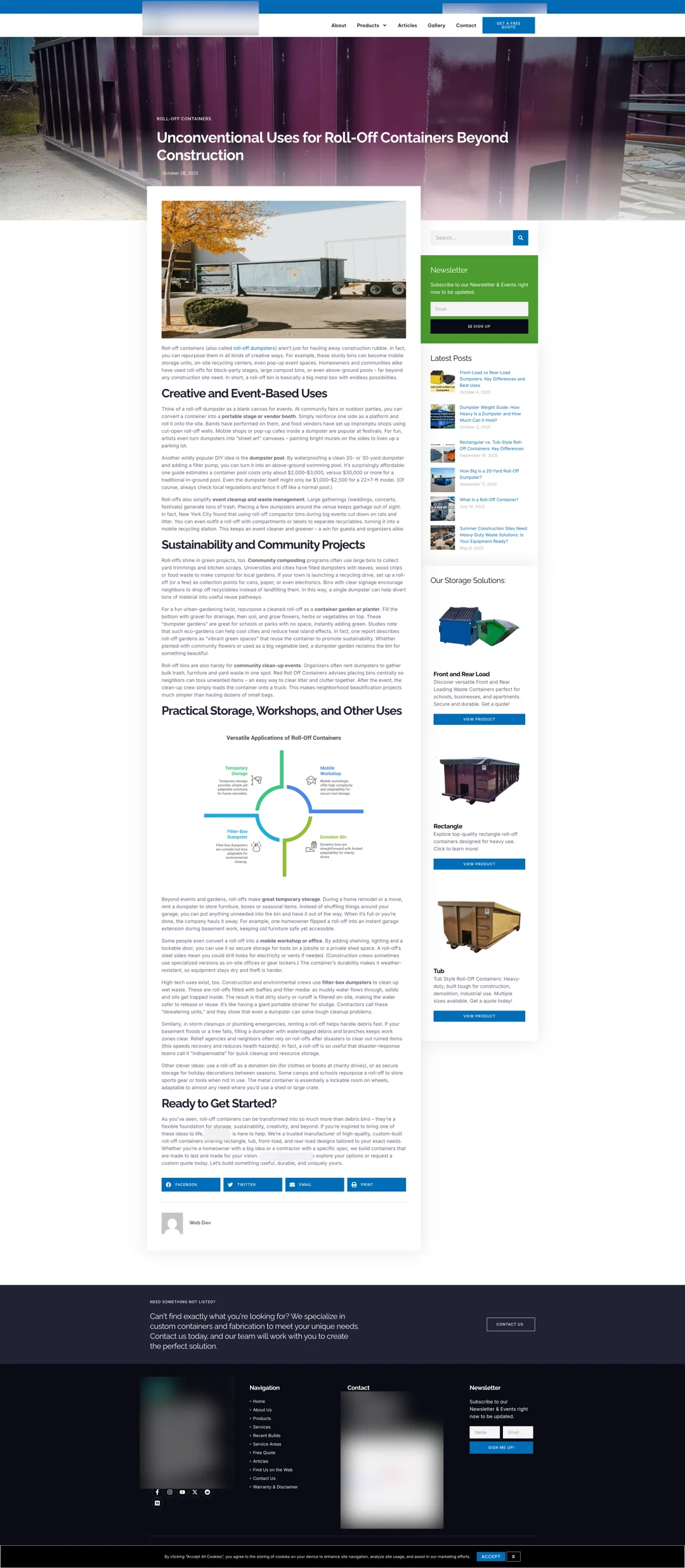
Lesson 1: If Your Title Doesn’t Match Search Intent, You’re Invisible
A strong title must do two things: reflect what a user is actually searching for and clearly communicate your promise. In the blog under review, the headline tried to be clever but failed to capture high-search volume terms like “creative dumpster uses” or “roll-off container ideas for events.”
Takeaway for your business: Start with keyword research, choose a clear and descriptive title, and craft a URL slug that supports both readability and SEO.
Lesson 2: Headers Matter Not Just for Readability, But for Ranking
Headers serve as signposts for readers and semantic signals for search engines. A well-structured H1-H2-H3 hierarchy helps clarity. In the blog we audited, the headers were present but lacked a strategic structure. They did not employ question-based phrasing, did not use long-tail keywords, and didn’t enable voice search capture.
Takeaway: Use headers that reflect user queries, maintain logical hierarchy, and incorporate variations of your focus keyword.
Lesson 3: Walls of Text Kill Engagement
Even the best concept fails if readers bounce quickly. The post suffered from long, dense paragraphs, minimal spacing, no bullet points, a lack of emphasis on key takeaways, and few visual breaks. This can lead to reader fatigue, especially on mobile devices.
Takeaway: Break your content into digestible chunks. Use formatting to help scanning and keep readers moving down the page.
Lesson 4: Visuals Aren’t Decorative, They’re Essential
Visual content is no longer optional. In the blog we reviewed, the only image was a pixelated diagram that didn’t enhance the content or engagement. A high-quality screenshot of the Rich Results Test revealed only a basic article schema, lacking FAQ, HowTo, and breadcrumb enhancements.
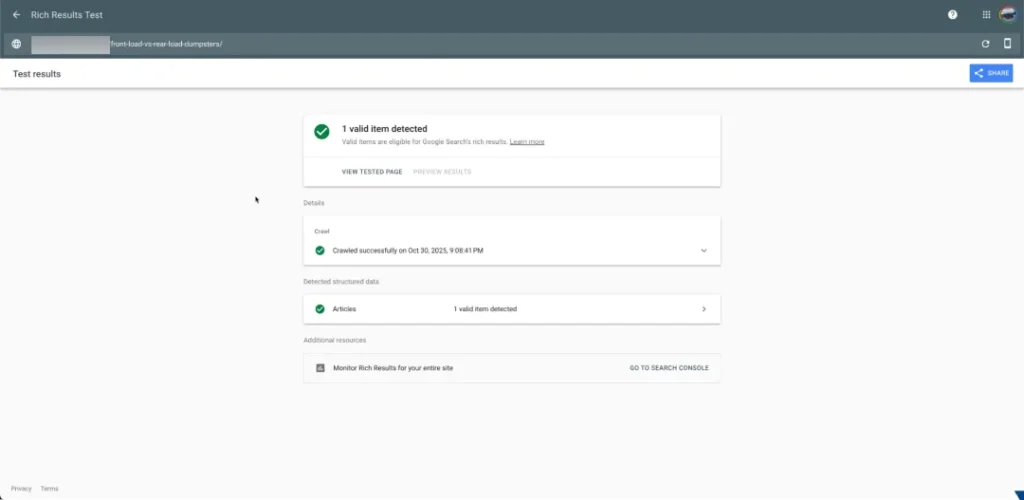
What the image shows: Only one valid structured data type detected.
How to fix it: Implement the FAQ page, Breadcrumb List, and, if applicable, the Product schema.
A title has to reflect what people actually search for and state the promise; clever headlines that skip high-volume terms are invisible.
Lesson 5: Without Conversion Strategy, You’re Leaving Money on the Table
Content should serve a purpose beyond education. In the audited blog, calls-to-action were generic and placed only at the end of the content. There were no embedded forms, interactive CTAs, or service links.
Takeaway: Insert CTAs at the beginning, mid-path, and end. Make them visual, benefit-driven, and link directly to a relevant product or service.
Lesson 6: Technical SEO Mistakes Are Silent Growth Killers
Even well-written content won’t perform if the technical foundation is weak. A second screenshot revealed improper heading structure, a poor text-to-HTML ratio, and missing microformat/schema markup.
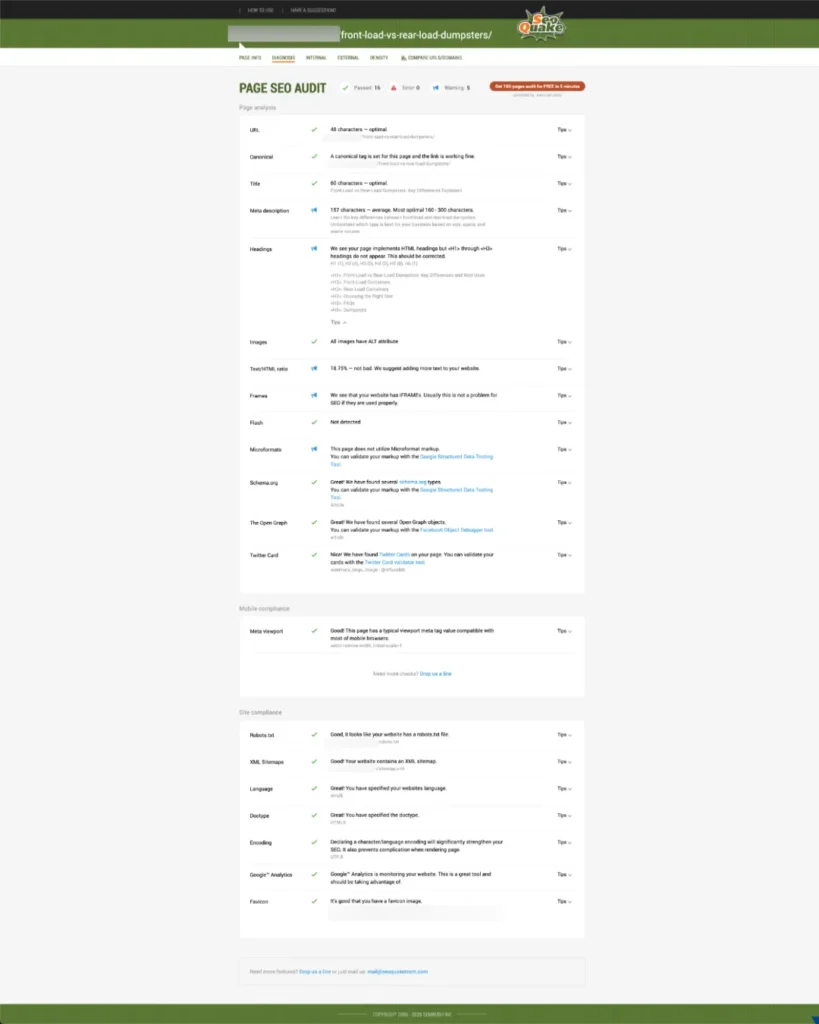
What the image shows: Headings not appropriately structured, meta description suboptimal, microformats not in use.
Want to see what this looks like when it’s done right? Explore our Clean Slate Dumpsters website and local brand launch.
How to fix it: Apply structured data using JSON-LD, improve meta tags, and follow a consistent header hierarchy.
Lesson 7: Tone Must Match Your Audience and Your Business Goals
A casual tone can work, but only when it doesn’t undermine authority. In the case we examined, vague metaphors replaced real value. Phrases like “giant metal bin with endless possibilities” lacked clarity and direction.
Takeaway: Speak in a tone appropriate for your target audience. Use confident, clear, benefit-oriented language.
“Look no further if you are looking for a badass company for your website and SEO needs. This is a business that will excel your expectations. Suppose you don't believe me; check out Red White & Badass Brew page. Super stoked to have them on my side. Keep up the great work, guys.”

Lesson 8: Internal and External Links Build the Highway Your Content Travels On
Multiple crawl reports revealed an internal linking structure that was packed with navigation-level links, but lacked topic-relevant, keyword-optimized anchor text.
What the images show: 45 internal links, most pointing to home, about, or product pages with generic anchors.
How to fix it: Link to related blog posts or service pages with keyword-rich anchor text. Reduce generic sitewide links inside blog bodies.
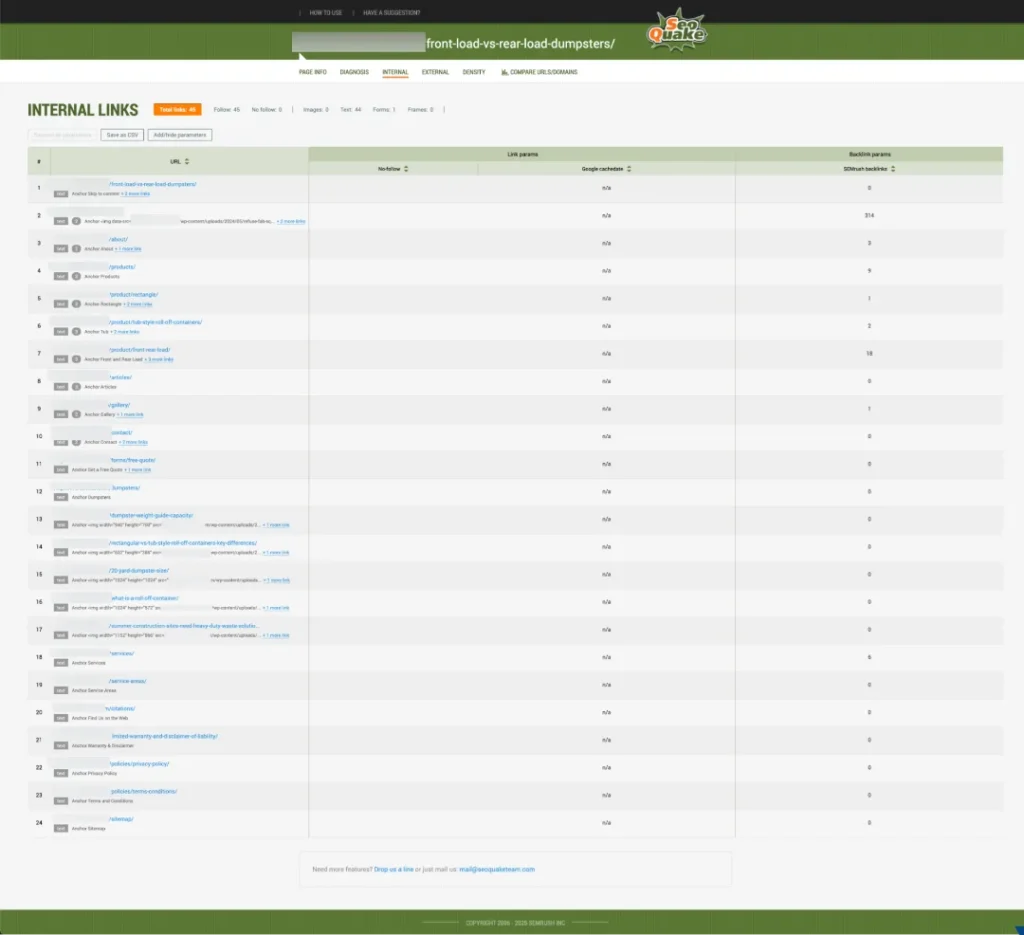
Another report showed that external links pointed only to social profiles and Google Maps.
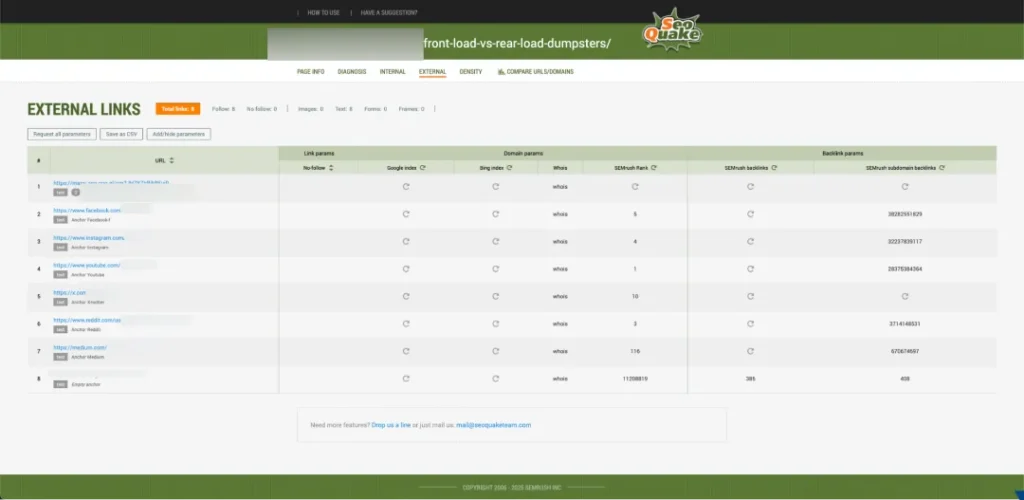
What the image shows: 8 external links to social and location pages.
How to fix it: Add links to authoritative third-party sources (.gov, .edu, or industry-specific .org) to support claims and build trust.
Lesson 9: Audience Experience (UX) Matters as Much as SEO
The blog layout was dense and outdated. There were no mobile-friendly adjustments, sticky navigation, or visual flow. Combined with visual fatigue and a lack of CTA support, this led to a poor user experience.
Takeaway: Use a mobile-first layout, include anchor navigation for longer posts, and make sure CTAs are visually prominent.
Lesson 10: Content Doesn’t Exist Until It’s Promoted and Maintained
One final screenshot confirmed the absence of backlinks, a Google index, and poor performance data.
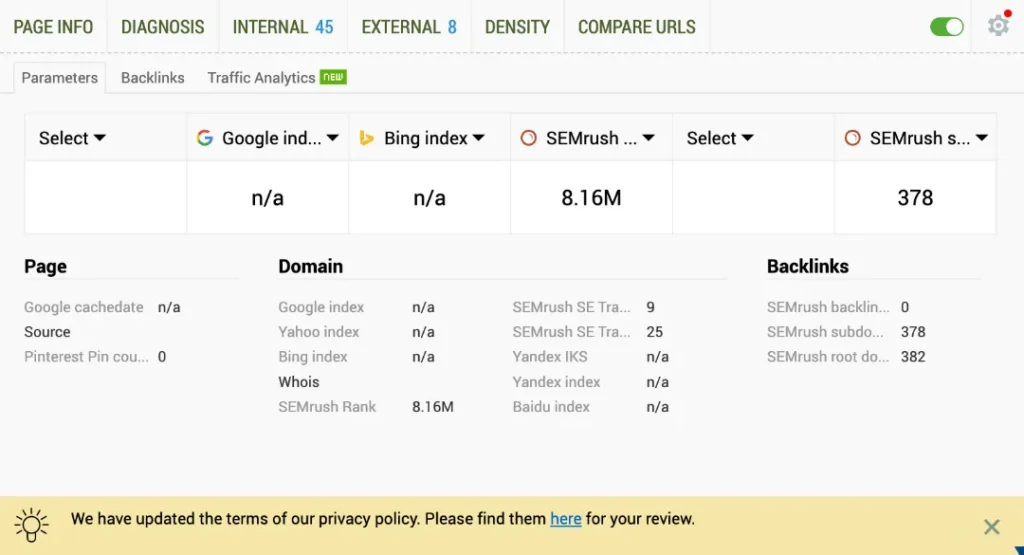
What the image shows: SEMrush rank of 8.16M, no Google indexing, zero backlinks.
How to fix it: Submit the blog to Google Search Console, promote it via email and social media, build backlinks through outreach, and refresh content regularly.
Lesson 11: Misleading Author Labels Erode Credibility
When readers scan a blog for expertise, they often look to bylines, author boxes, or credibility cues to assess if the content was created by someone qualified. In the reviewed blog, a small author label at the bottom simply read “Web Dev”.
While likely referring to the person who built the site or added the content to the CMS, this label creates confusion, and worse, it sends the wrong signal.
What it looks like:
A div at the bottom of the blog post shows “Web Dev” in a spot readers might expect to see “Written by [Expert Author Name]” or “SEO Strategist at [Company].”
Why it’s a problem:
- It suggests the article was written by a developer, not a subject-matter expert.
- It undercuts perceived authority and trust, especially in industries where E-E-A-T (Experience, Expertise, Authoritativeness, and Trustworthiness) matters.
- It may reduce conversions if potential customers (and search engines) doubt the source’s credibility.
How to fix it:
- Replace generic role-based tags like “Web Dev” with the actual author’s name and role, or remove them if irrelevant.
- Use a styled author bio component with a name, title, headshot, and 1-2 sentence credentials related to the blog’s subject.
- Include structured data (Person, Author, or Organization) so search engines can attribute the content to the correct source.
Takeaway:
Your credibility indicators should reflect expertise, not back-end roles. Misused author labels subtly degrade the trust that content needs to earn clicks and conversions.
When a blog post has a decent concept but fails in every critical area, you end up with a dumpster fire of a blog. For business owners, the lesson is clear: content must be planned, optimized, structured, and continuously maintained to drive value.
At BlakSheep Creative, we help businesses transform content from clutter into a strategic asset. Let us help you build something that ranks, converts, and earns attention for the right reasons.
Visit our content marketing services page to learn more.
About the author

Founder & Lead Developer · Denham Springs, LA
Clint has built and marketed websites for 26 years, since founding BlakSheep Creative in 2000. He is also a 29-year firefighter and a 23-year member of IAFF Local 557, which is where the bias toward plain answers over sales copy comes from.
- Veteran-owned
- Firefighter-owned
- IAFF Local 557
Common questions about dumpster rental companies
What does a blog SEO audit check?
Why does a Web Dev author label hurt a blog post?
What schema should a blog post have beyond Article?
How many internal links should a blog post have, and what kind?
What external links should a business blog include?
What happens if a blog post is never promoted?

Your next step, without the guesswork
No surprises, clear next steps, and a fixed price before anything starts.