
By Clint Sanchez · Published · Updated · 7 min read

Quick answer
A content marketing strategy is a written plan naming who you are publishing for, what you want the content to do, which formats and channels you will use, and how you will know it worked. Build one by auditing what you already have, defining the audience and the goal, setting a production and distribution rhythm you can hold, then measuring and cutting what does not earn its place.
Key takeaways
- A strategy is a set of decisions about what you will not do. A calendar of topics is a schedule, not a strategy.
- Answer eight questions in writing first: audience, goal, problem solved, why you, formats, channels, metrics, and who owns production.
- CMI's 2026 B2B research of 1,015 marketers found 97% now have a documented strategy, so having one is table stakes; 74% of improvers credited refining it.
- Resource constraints were the second-biggest challenge at 39%, so halve the volume you first plan rather than writing a strategy your team cannot staff.
- Google names a warning sign directly: producing lots of content on many topics hoping some performs. Its test is who wrote it, how, and above all why.
- Ahrefs found 96.55% of about 14 billion pages get zero Google traffic, with insufficient search demand the leading cause, so volume does not fix topic choice.
- Review on the right clock: impressions monthly, clicks and assisted conversions quarterly, earned links twice a year, and name what you will stop each time.
Most Louisiana businesses we talk to do not need more content, they need someone to decide which twenty pages matter and update them. The audit usually shows a hundred posts written years ago for topics nobody in Baton Rouge or Livingston Parish searches for, and four pages carrying every inquiry the site produces.

Want this handled instead of DIY?
A 15-minute call, no script, no pressure — you leave with a plan either way.
A content marketing strategy is a written plan naming who you are publishing for, what you want the content to do, which formats and channels you will use, and how you will know it worked. Build one by auditing what you already have, defining the audience and the goal, setting a production and distribution rhythm you can hold, then measuring and cutting what does not earn its place.
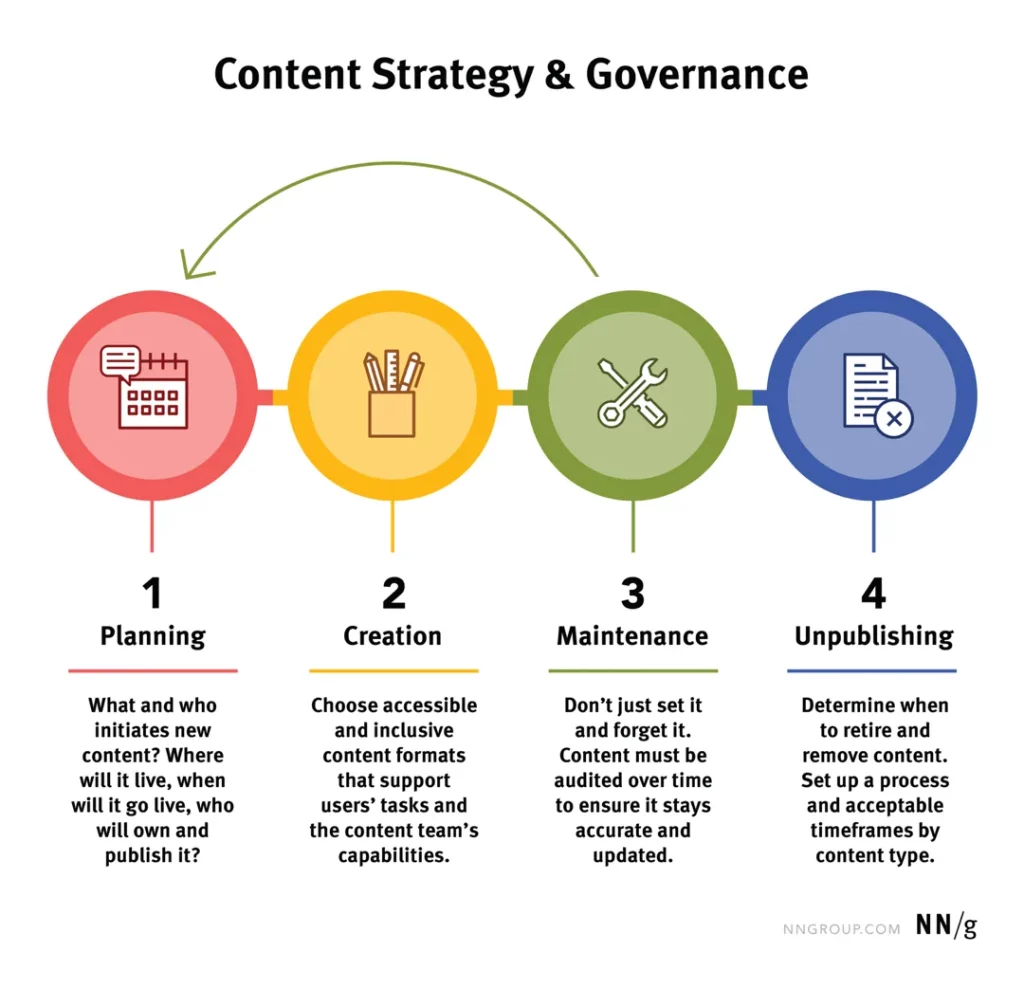
What a content marketing strategy is, and what it is not
A strategy is a set of decisions about what you will not do. A calendar full of topics is not a strategy; it is a schedule. The difference shows up the first time someone suggests a post that has nothing to do with your buyers, and the strategy is the document that says no.
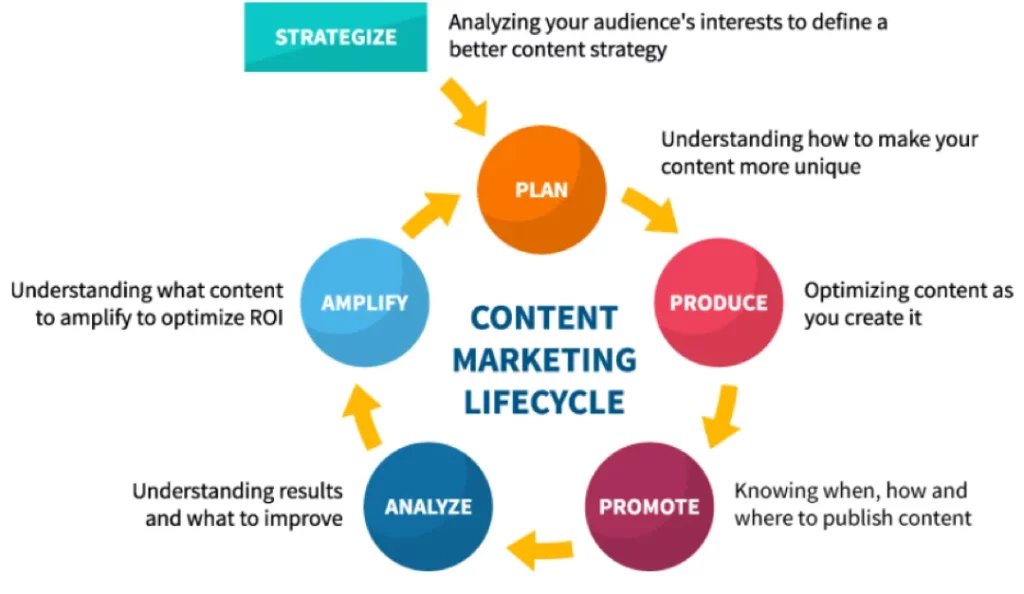
Four decisions make up the core: the audience you are serving, the outcome you want, the topics you intend to own, and the cadence you can actually sustain. Everything else is implementation detail.
It is also not the same as a content plan. The strategy sets direction and constraints and changes maybe once a year. The plan is the quarter's topics, owners, and dates. Confusing the two is where most programs quietly go wrong, and we pulled apart the usual failure modes in where content marketing plans break.
The eight questions to answer first
Write your answers down, in one document, before anything gets commissioned. Anyone briefing a piece of content should be able to read this page and know what to make.
| Question | What a usable answer looks like |
|---|---|
| Who is this for? | A named role or situation, not "small business owners" |
| What should it do? | One primary goal: leads, sales support, retention, or hiring |
| What problem does it solve for them? | A problem they would describe in their own words |
| Why you rather than anyone else? | Data, experience, or access a competitor cannot copy |
| Which formats? | The two or three you can produce well and repeatedly |
| Which channels? | Where the audience already is, not where you have an account |
| How will you measure it? | Named metrics with a review date attached |
| Who owns production? | A person, with hours allocated, not a department |
The fourth question is the hardest and the most valuable. If your answer is "we care more," the content will read like everybody else's. Real prices, real failure modes, real data from your own operation, and a willingness to say what does not work are the things a competitor cannot reproduce from a research doc.
Why writing it down changes the outcome
Documentation is not bureaucracy here. It is what stops the program drifting into whatever the loudest person suggested that week, and it is what makes an honest post-mortem possible.
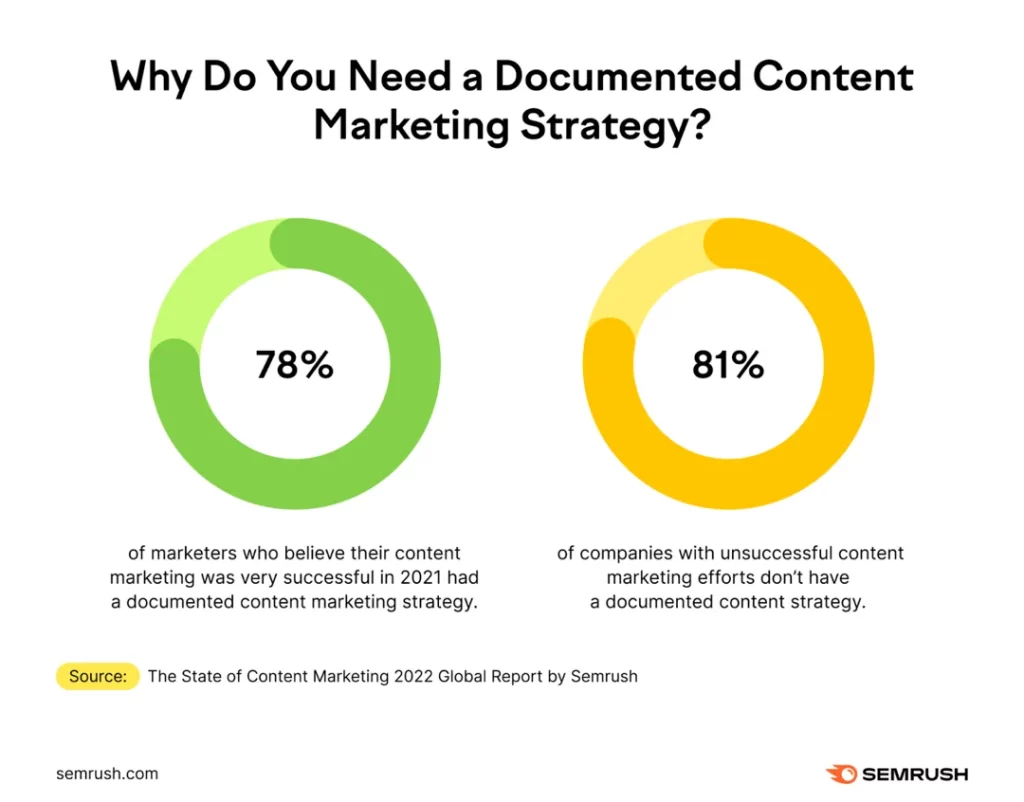
The Content Marketing Institute's 2026 B2B research, based on 1,015 marketers surveyed between June and August 2025, found 97% now report a documented strategy, 61% say theirs improved over the past year, and 74% of those credited refining the strategy as the biggest driver of that improvement. The top challenges were creating content that converts at 40% and resource constraints at 39%.
Read those two figures together and the lesson is specific. Having a document is now table stakes. Reviewing and narrowing it is what moves results, and under-resourcing is the normal failure rather than the exception. A strategy that quietly assumes four articles a month from a team with time for one is not a strategy, it is a wish.
The nine steps to build one
This is the working order. Steps one to four take a week of thinking; five to nine are the machine you run afterwards.
- Audit what exists. Export every URL with its traffic, conversions, and last-updated date. Sort into keep, update, merge, and retire. Most sites find a third of their content earns nothing and never will.
- Research the audience properly. Ten sales calls, your support inbox, and the questions people ask on the phone beat any persona template. Write the questions verbatim.
- Turn that into two or three buyer profiles. Keep them short and behavioral: what triggers the search, what they compare, what stops them buying.
- Set one primary goal with a number. "Thirty qualified inquiries a month from organic" is a goal. "Brand awareness" is not measurable and will not settle an argument.
- Build the editorial plan around topic clusters. One substantial page per major topic, supported by posts answering the questions around it, all linked together. The structural difference is covered in pillar pages compared with landing pages.
- Plan production honestly. Who writes, who edits, who approves, and how long each step takes in real days. Then halve the volume you first thought of.
- Plan distribution before publishing. Every piece needs a named destination: an email send, a social sequence, a sales enablement use, or a paid promotion. Publishing is not distribution.
- Measure against the step-four number. Monthly for leading indicators, quarterly for the goal itself.
- Optimize and prune. Update the pieces close to working, merge the ones competing with each other, and retire the rest.
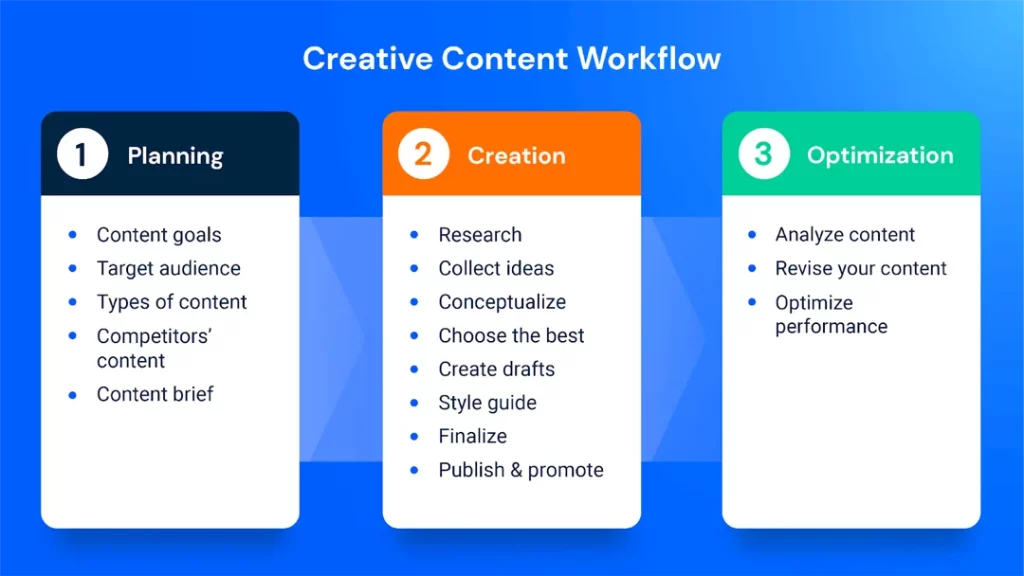
Step nine is where most of the return sits and where nobody wants to spend time. Updating a page that already ranks on page two is usually cheaper and faster than producing a new one, and it works more often.
A strategy is a set of decisions about what you will not do. A calendar of topics is a schedule, not a strategy.
What Google says makes content worth publishing
Before you set a volume target, read Google's own framing, because it argues directly against the strategy most content calendars encode.
Its guidance on creating helpful, reliable, people-first content names a warning sign: "producing lots of content on many different topics in hopes that some of it might perform well in search results." That is a fair description of a lot of published content calendars.
The self-assessment questions are worth putting straight into your brief template. Does the content provide original information, reporting, research, or analysis? Is it the sort of page somebody would bookmark or share? Is it written or reviewed by someone who demonstrably knows the topic? Is it self-evident who authored it? Google frames the whole thing around who, how, and why, with why being the one that matters: content should exist primarily to help people rather than primarily to attract search visits.
The volume argument settles itself against the base rate. Ahrefs studied roughly 14 billion pages and found 96.55% get zero traffic from Google, with insufficient search demand the leading cause. Publishing more of the wrong thing does not improve those odds.
Choosing formats and channels
Pick formats by what you can produce well every month, not by what a trends report says is rising. A mediocre video program loses to a good written one every time.
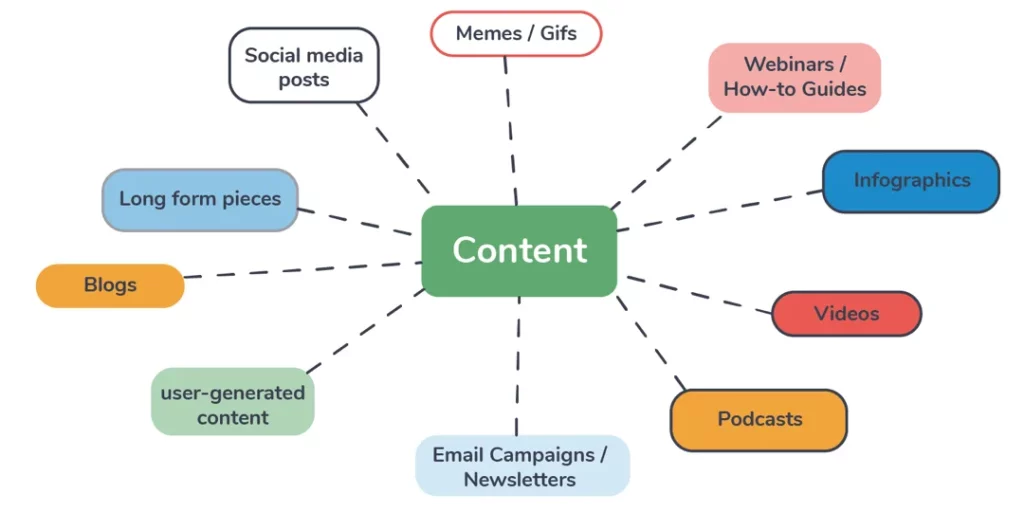
| Format | Best at | Real cost |
|---|---|---|
| Long-form articles | Search demand capture, sales enablement | Time to research, not time to type |
| Case studies | Late-stage objection handling | Getting client approval, usually the bottleneck |
| Short video | Reach and demonstration | Editing hours, and a person willing to be on camera |
| Repeat contact with people who already know you | Low, and the most under-used channel most businesses own | |
| Original data | Earning links and citations | High once, then it works for years |
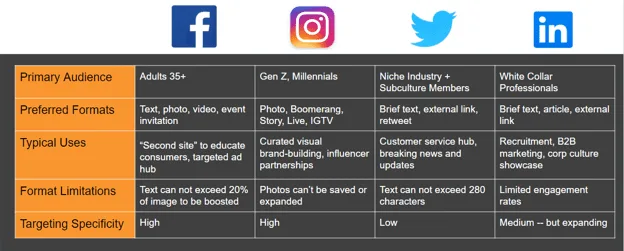
On channels, go where the audience already is and where you keep the relationship. Email is an owned list; social is rented reach that supports it. Search is the compounding one, which is why keyword research belongs at the start of the editorial plan rather than after the topics are chosen.
How to measure a content strategy
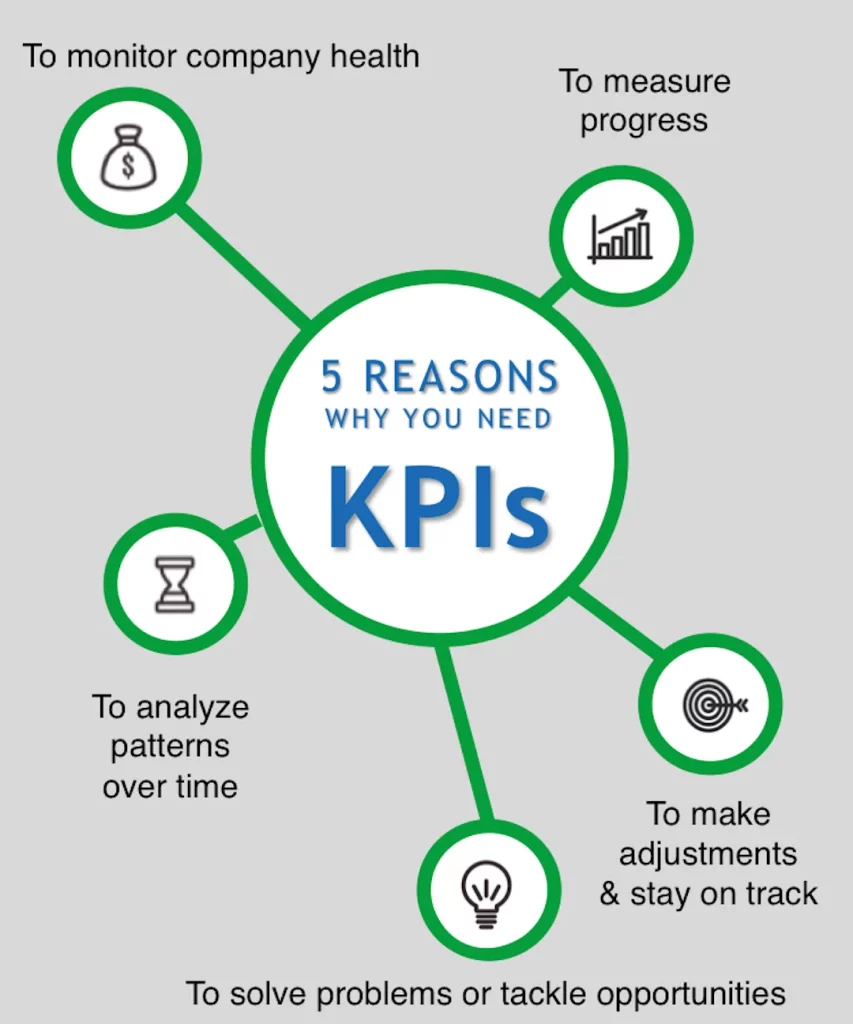
Mismatched timelines kill more content programs than bad writing does. Match each metric to how long it genuinely takes to move, and review on that clock.
| Metric | Review on | What it tells you |
|---|---|---|
| Impressions on new queries | Monthly | Google is starting to understand the pages |
| Clicks and average position | Quarterly | The content is competitive, or it is not |
| Assisted conversions | Quarterly | Content is in the path even when it is not the last click |
| Pieces used by sales | Monthly, by asking | If you are making things people internally need |
| Referring domains earned | Twice a year | If anything you published was worth citing |
Two habits make the review useful. Report on cohorts rather than totals, so you compare what you published in a quarter against the quarter before instead of watching one flattering cumulative line. And name what you will stop doing at every review, because a strategy that only ever adds is how a team ends up publishing four things a month badly.
“Our website build with BlakSheep was the type of experience that you want to share and brag about. Very responsive, organized, to the point with our design. The creativeness of Clint provided us exactly what we wanted and needed. Would definitely use them again and recommend them!”

A realistic first ninety days
Month one is the audit and the eight questions, with no new content published. Month two is the topic clusters, the brief template built from Google's self-assessment questions, and the first two pieces. Month three is two more pieces, the first distribution sequence, and the first review.
That produces four pieces in a quarter, which sounds slow and is roughly what a small team sustains. Two a month, held for a year, is the cadence that compounds; it is also the only volume we guarantee for clients, for the same reason. A content calendar makes it repeatable, and the case for a business blog covers why the articles carry more weight than the rest.
Where to start
Open a blank document and answer the eight questions in one sitting. If any answer takes more than a paragraph or cannot be answered at all, that gap is your actual first project, ahead of any publishing. Once the document exists, the work becomes execution, and execution is the part you can hire out; that is what our content marketing service and web copywriting work handle. A worked example of the finished output is in this content marketing example.
About the author

Founder & Lead Developer · Denham Springs, LA
Clint has built and marketed websites for 26 years, since founding BlakSheep Creative in 2000. He is also a 29-year firefighter and a 23-year member of IAFF Local 557, which is where the bias toward plain answers over sales copy comes from.
- Veteran-owned
- Firefighter-owned
- IAFF Local 557
Common questions about digital marketing
What is a content marketing strategy?
What is the difference between a content strategy and a content plan?
How much content should a small business publish?
How do you measure a content marketing strategy?
Where do you start with a content strategy audit?
What does Google consider good content?

Your next step, without the guesswork
No surprises, clear next steps, and a fixed price before anything starts.