
By Clint Sanchez · Published · Updated · 2 min read
Quick answer
Ethical consumer data collection means being transparent about what data a business collects, how, and why; obtaining consent before collecting it; storing it securely and complying with laws such as GDPR and CCPA; collecting only data that is relevant, accurate, and useful for marketing; giving consumers a clear way to opt out or have their data deleted; and minimizing collection to what is necessary. Doing this builds consumer trust and keeps the data usable.
Key takeaways
- Businesses should tell consumers what data they collect, how they collect it, what it is used for, and if it is shared with third parties.
- Consent should be obtained before any consumer data is collected.
- Consumer data must be stored securely and collected in ways that comply with laws such as GDPR and CCPA.
- Inaccurate or irrelevant data harms the effectiveness of digital marketing campaigns, so usefulness and accuracy matter as much as ethics.
- Consumers should have a clear, straightforward process to opt out of data collection or have their data deleted.
- Collect only the data a marketing effort actually needs; gathering unnecessary data is intrusive and erodes trust.
The Importance of Ethical Data Collection for Online Businesses
In today’s digital age, consumer data is the backbone of successful digital marketing campaigns. However, businesses must recognize the importance of ethical considerations when collecting and utilizing consumer data. Ethical data collection helps build trust with consumers, protect personal privacy, and make sure the usefulness and accuracy of collected data.
Transparency in Data Collection:
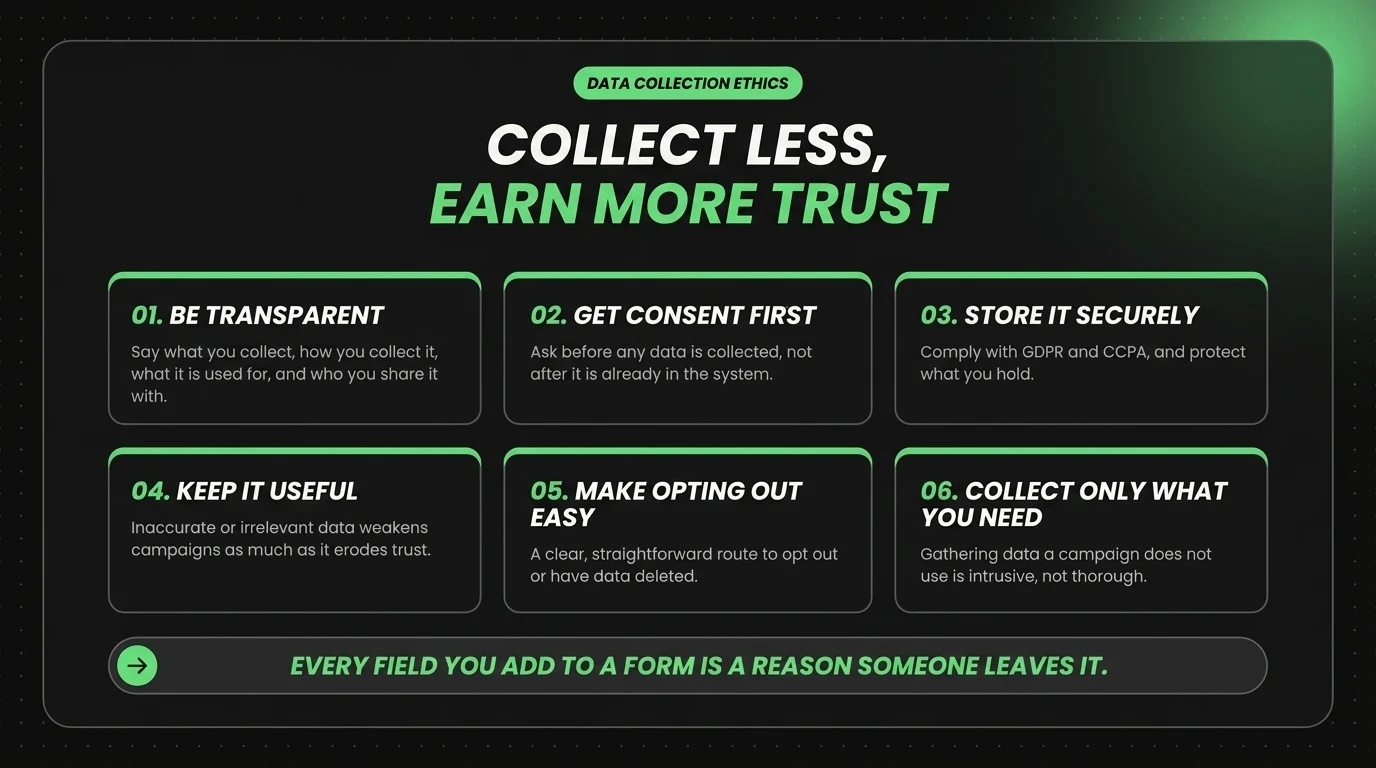
Transparency is a critical ethical consideration when collecting and utilizing consumer data. Businesses should be open about the data they collect, how they collect it, and what they use it for.
Want this handled for you? We build and market websites for Louisiana businesses, and we will tell you honestly if you do not need us.
It is essential to obtain consumer consent before collecting any data. Consumers should be informed about the data collection process, what type of data is collected, how it is used, and if it is shared with third parties.
Respect for Consumer Privacy:
Respect for consumer privacy is another important ethical consideration that businesses must keep in mind when collecting and storing data. Consumer data should be collected and stored securely to protect against breaches that can harm a company’s reputation. Businesses should make sure that data collection methods comply with relevant laws such as GDPR or CCPA and that data is stored securely and protected against unauthorized access.
Usefulness of Collected Data:
Businesses should make sure that the data they collect is beneficial for their marketing efforts and that it is collected in a way that does not infringe on consumers’ privacy. The collected data should be both relevant and accurate, as inaccurate data can harm the effectiveness of digital marketing campaigns.
Businesses should tell consumers what data they collect, how they collect it, what it is used for, and if it is shared with third parties.
Data Deletion and Opt-Out:
Consumers should have the option to opt out of data collection or have their data deleted if they choose to do so. Companies should provide a clear and straightforward process for consumers to opt-out or delete their data, which helps build trust with consumers.
Minimizing Data Collection:
A final ethical consideration is to minimize data collection to only what is necessary for marketing efforts. Collecting unnecessary data can be intrusive and harm consumers’ trust in a business. Companies should be transparent about why they collect specific data and how it is helpful for their marketing efforts.
In conclusion, businesses should prioritize ethical considerations when collecting and utilizing consumer data for digital marketing efforts.
Ethical data collection builds trust with consumers and makes sure that their privacy is respected. At the same time, it makes sure that the data collected is useful, accurate, and collected with transparent.
By prioritizing these ethical considerations, businesses can successfully utilize consumer data ethically and transparently.
Trying to figure out what marketing actually moves the needle for your business? Book a no-pitch Discovery Call and we’ll talk through your specific situation.
About the author

Founder & Lead Developer · Denham Springs, LA
Clint has built and marketed websites for 26 years, since founding BlakSheep Creative in 2000. He is also a 29-year firefighter and a 23-year member of IAFF Local 557, which is where the bias toward plain answers over sales copy comes from.
- Veteran-owned
- Firefighter-owned
- IAFF Local 557
Common Questions About Ethical Data Collection
Short answers to the questions that come up most on this topic.
Why does ethical data collection matter for digital marketing?
What does transparency in data collection look like?
Do small businesses have to comply with GDPR or CCPA?
How should a business handle opt-out and data deletion requests?
How much consumer data should a marketer collect?

Your next step, without the guesswork
No surprises, clear next steps, and a fixed price before anything starts.