
By Clint Sanchez · Published · Updated · 3 min read
Quick answer
The future of SEO in the age of AI keeps the same core: understand and serve site visitors with genuine content. What changes is the page. Organic results are being pushed down by ads, rich snippets, and AI answers, so businesses should reduce dependence on rankings alone, structure content into clear self-contained answers AI systems can reuse, blend organic with paid advertising, and adapt to each update rather than panic.
Key takeaways
- SEO practitioners predict the tenth organic result could soon sit on the third page as ads, rich snippets, and other Google features push organic listings down.
- The core principle of SEO has not changed: understand and serve site visitors first.
- Panic over AI echoes the panic when rich snippets were introduced; adapting is what worked then.
- AI will not be the deciding factor for local services like choosing a dentist, where personal trust still matters.
- AI systems scan for clear, self-contained answers rather than reading a page line by line, so buried or context-dependent information gets ignored.
- Heavy reliance on Google rankings for revenue is a real risk as the first page shifts toward multimedia content.
- Key performance indicators are moving away from rank obsession, and paid advertising belongs in the mix alongside organic.
Comments and insights curated by BlakSheep Creative
In the world of digital marketing and search engine optimization, change is the only constant. With Google’s frequent algorithm updates and technological advancements, SEO specialists are perpetually on their toes. A recent wave of comments on a social media platform showcased a gamut of perspectives and concerns about where SEO is headed, especially in the age of Artificial Intelligence (AI). Let’s get into some of these insights.
1. The Changing Landscape of Search Results
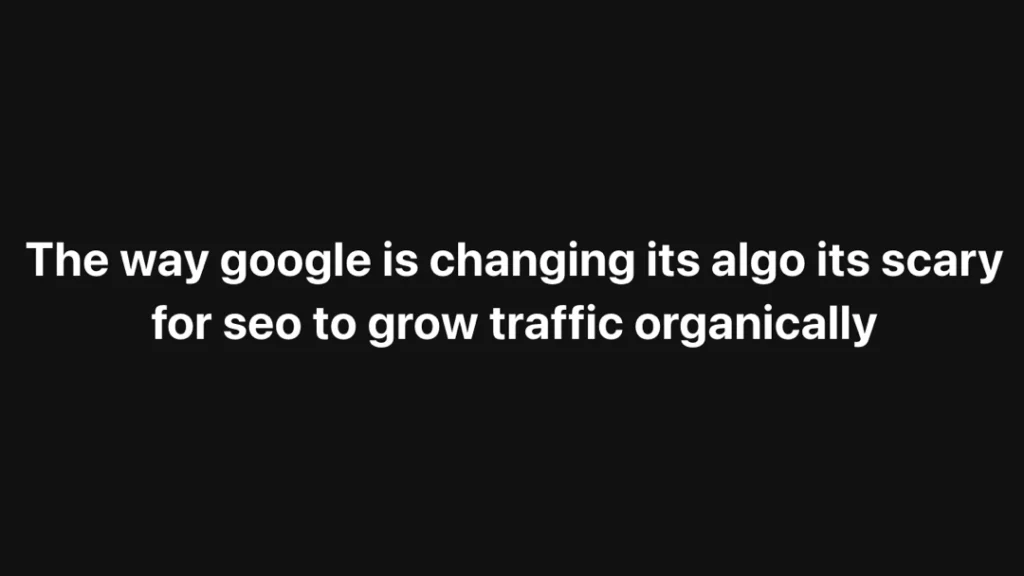
Jeff Rogyom voiced a concern that many share – the decreasing visibility of organic search results. The prediction is that in a few years, the 10th search result could be pushed to the third page. The rise of paid ads, rich snippets, and a variety of other Google features means organic visibility is under threat.

2. The Timeless Core of SEO
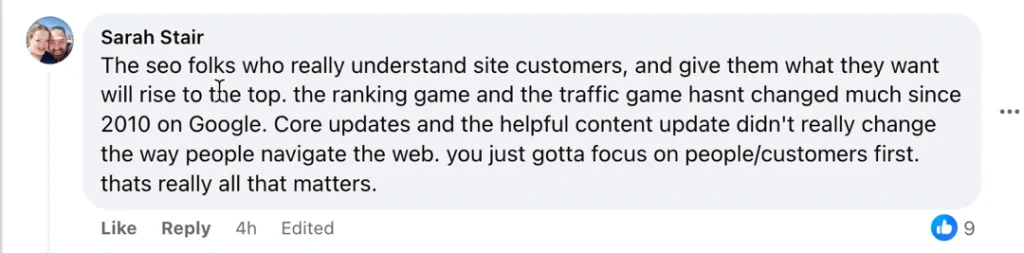
Sarah Stair emphasizes that despite changes in the algorithm, the core principle remains the same – understanding and serving site visitors. It’s all about focusing on the customers first. Likewise, Donna Blackwood believes that prioritizing the business and its customers by creating genuine content will always win Google’s favor.
Want this handled for you? We build and market websites for Louisiana businesses, and we will tell you honestly if you do not need us.
3. Navigating Fear and Change
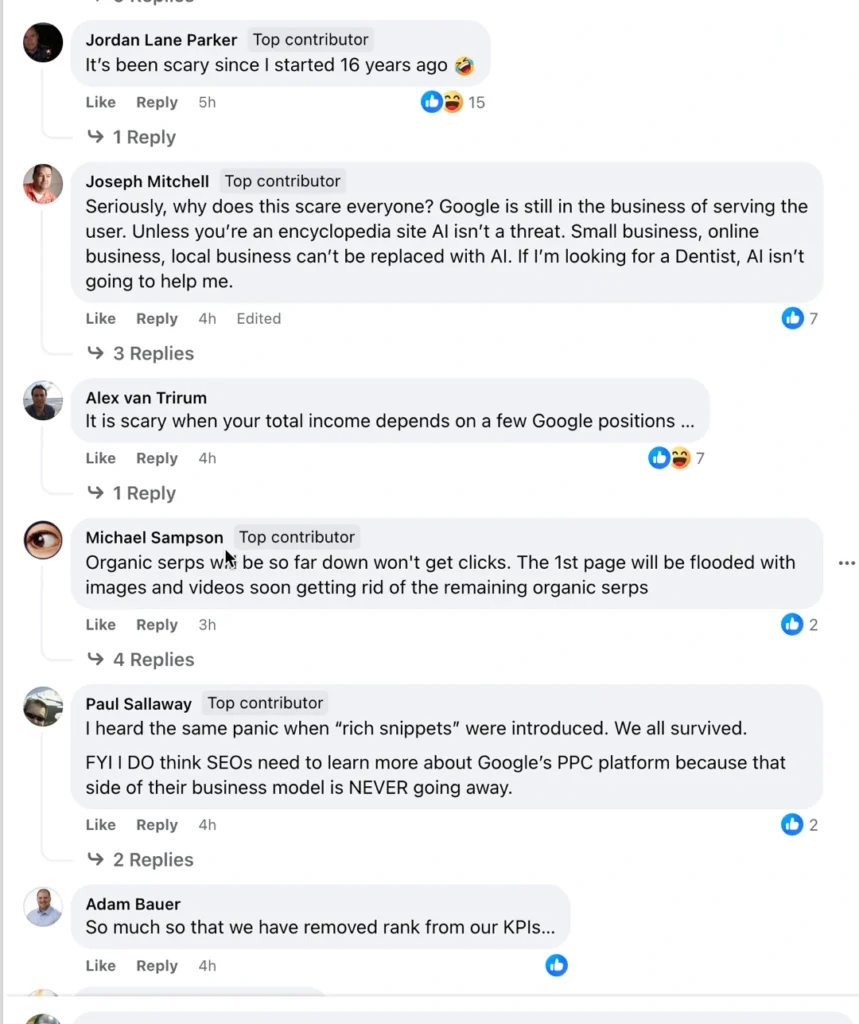
Jordan Lane Parker humorously pointed out the perennial nature of these fears. Changes and updates have always been part and parcel of the SEO path. Paul Sallaway also reminded us of the panic that arose when rich snippets were introduced, suggesting that adapting and evolving is the key to survival.
SEO practitioners predict the tenth organic result could soon sit on the third page as ads, rich snippets, and other Google features push organic listings down.
4. AI’s Role in the Business World
Joseph Mitchell made an essential distinction: while AI is powerful, it can’t replace the personal touch required in many businesses. If someone’s looking for a local service like a dentist, AI won’t be the deciding factor.
5. Why Content Structure Matters in the AI Era
As search engines rely more heavily on AI systems to generate answers, how content is structured has become just as important as its content. Modern AI tools do not read pages line by line. They scan for clear, self-contained answers they can reuse safely.
This is where many traditional SEO approaches fall short. Well-written content can still be ignored if key information is buried, inconsistent, or dependent on surrounding context. Pages that surface in AI-generated results often follow predictable structural patterns, making extraction easier.
For a practical breakdown of how this works, including what AI systems look for and how content should be organized, see how to structure content so AI actually uses it.
6. Dependency on Google Rankings
Alex van Trirum and Michael Sampson highlighted a genuine concern for businesses: the heavy reliance on Google rankings for revenue. As organic search results get pushed down, the first page might soon be dominated by multimedia content.
“I have been working with Clint, BlakSheep for over 2 years now and they have absolutely crushed it for my business. I highly recommend and I send everyone looking for their services to them. My wife just signed up also!”
7. Evolution Over Panic
Adam Bauer pointed out the shift in key performance indicators, suggesting that businesses are moving away from obsessing over ranks. JR Daze advised leveraging AI in logistics, implying that the proper use of AI can be a boon rather than a bane.
8. Semantic Differences
Dom Casas underscored the importance of understanding Google’s terminology. There’s a significant difference between an update and a change. Understanding this can guide our strategies.
9. Diversifying Strategies
Carlos Alvarez stressed the importance of including advertising in one’s business model, hinting at a blend of organic and paid strategies.
10. Staying Optimistic
Lastly, amidst all the concerns, voices like Stephen Brocklehurst and Joseph Mitchell shared a message of hope. By using tried-and-tested systems and maintaining a positive outlook, SEOs can navigate this ever-changing terrain.
In conclusion, while the future of SEO in the age of AI might seem hard, the core principles remain the same. By understanding the needs of site visitors, keeping abreast of updates, and being adaptable, SEO specialists can continue to thrive. After all, at its heart, SEO is about delivering value – and that will never go out of style.
Wondering if your SEO is actually getting traction, or where to focus next? Let’s diagnose it in a 15-minute Discovery Call.
About the author
Founder & Lead Developer · Denham Springs, LA
Clint has built and marketed websites for 26 years, since founding BlakSheep Creative in 2000. He is also a 29-year firefighter and a 23-year member of IAFF Local 557, which is where the bias toward plain answers over sales copy comes from.
- Veteran-owned
- Firefighter-owned
- IAFF Local 557
Common questions about SEO
Is SEO dead because of AI?
How does AI change what content should look like?
Should a local business worry about AI replacing search?
What does diversifying an SEO strategy mean?
What is the difference between a Google update and a change?

Your next step, without the guesswork
No surprises, clear next steps, and a fixed price before anything starts.