
By Clint Sanchez · Published · Updated · 6 min read
Quick answer
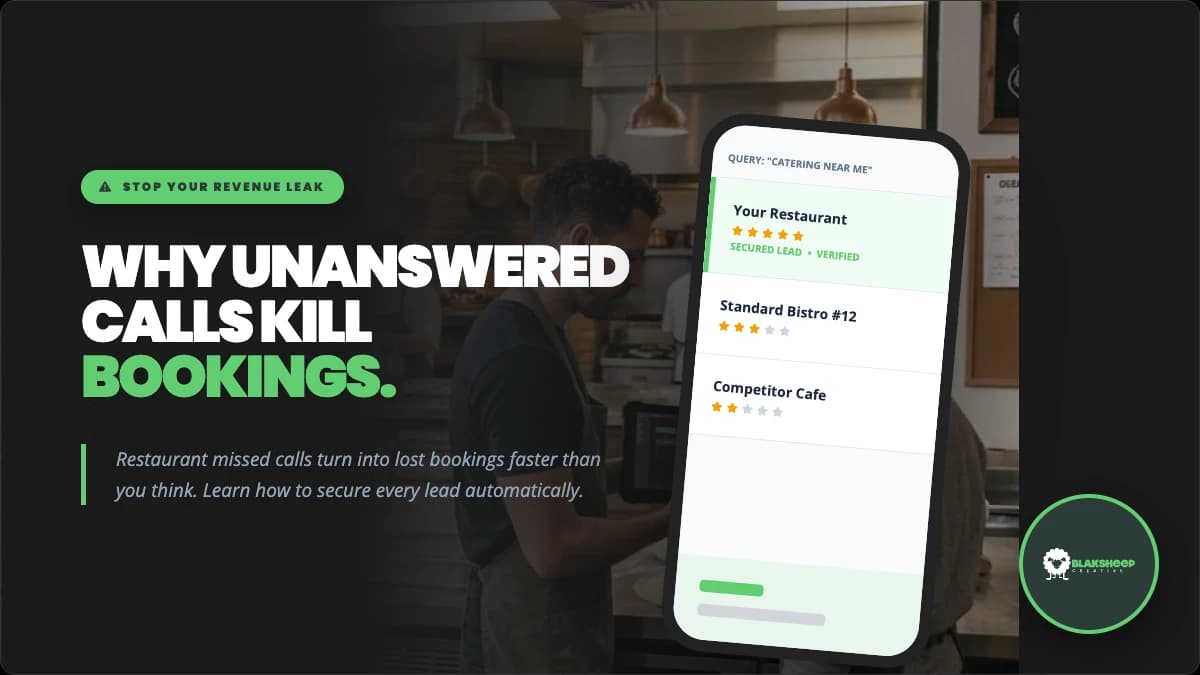
Restaurants lose bookings when calls go unanswered because most missed calls happen during peak service, when staff are focused on seated guests and the caller is ready to book, order, or ask about catering. Guests rarely call back twice; they move to the next restaurant on Google Maps. A missed-call recovery system sends an automatic text, captures what the guest needs, and alerts staff to follow up.
Key takeaways
- Most restaurant missed calls happen during lunch rush, dinner service, and after hours, not at random.
- Calls that start on Google Search or Google Maps are high-intent: the caller is checking hours, availability, or reservations right now.
- A missed call is a process failure, not a staff failure; the fix is a system, not a reminder to answer faster.
- Missed-call text-back sends an automatic SMS the moment a call goes unanswered, then routes the guest's reply to the right staff member.
- Catering and private-event inquiries are the highest-value missed calls and usually have no clear staff owner.
- Fix missed-call text-back first, then catering routing, guest follow-up, review requests, and call tracking, in that order.
In Baton Rouge and Denham Springs, the busiest call windows line up with LSU home games, Mardi Gras weekends, and crawfish season, when the host stand cannot reach the phone. Hurricane season adds a second problem: guests calling to ask if you are open after a storm. An unanswered call in either case sends the table to the next restaurant on the map.

Want this handled instead of DIY?
A 15-minute call, no script, no pressure. You leave with a plan either way.
Restaurant Missed Calls Turn Into Lost Bookings Faster Than You Think
Restaurant missed calls cost bookings, catering leads, and guest trust, especially during lunch rush, dinner service, and after hours. When no one answers, guests usually move to the next option on Google. A simple missed-call recovery system with text-back and follow-up can keep those conversations alive and turn lost calls into real bookings.
TLDR
- Most restaurant missed calls happen during peak service times.
- Guests rarely call back twice when they need a fast answer.
- Google Maps calls are high-intent and time-sensitive.
- Catering and event leads are often lost without follow-up.
- Missed guest recovery calls can turn into review problems.
- Text back systems help recover conversations quickly.
- Restaurants should fix missed calls before building broader automation.
Restaurants compete in a fast decision environment. Guests search, call, and decide within minutes. During hurricane season, festival weekends, lunch rush, and Friday dinner service, unanswered calls can move money straight to the next restaurant on the list.
Missing calls during rush hours? Fix the leak before it costs more bookings.
Missed call
Your business · just now
The business: Sorry we missed your call. What can we help you with? Reply here and we'll get right back to you.
Sent automatically, seconds after the call.
Why Restaurants Miss Calls During the Worst Possible Moments
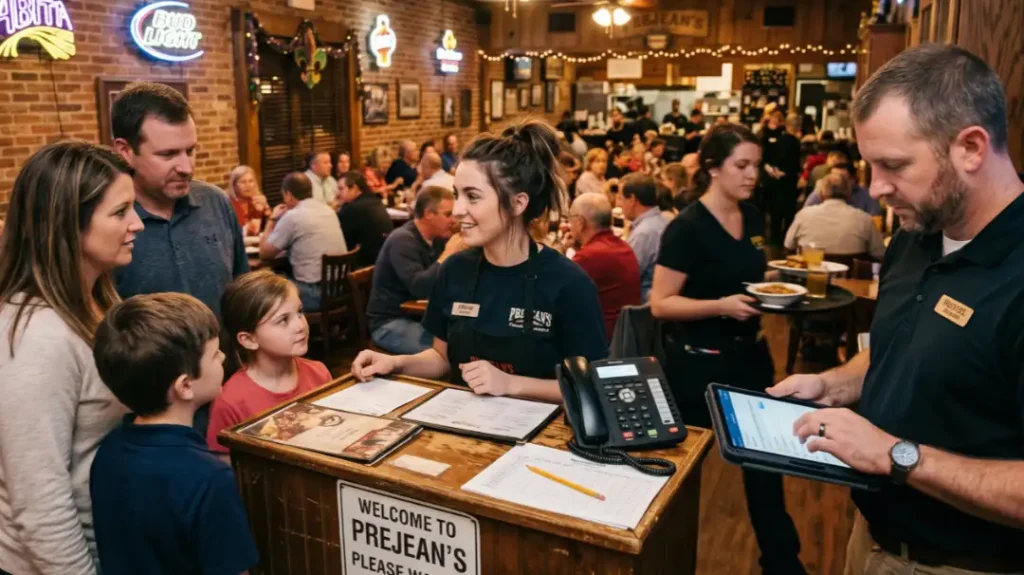
Missed calls are not random. They happen when the restaurant is at capacity, and the team is focused on guests already inside.
During the lunch and dinner rush, the host stand manages wait times, servers handle tables, and managers resolve issues. The phone becomes secondary, even though the caller is often ready to spend money. That is not a staff failure. It is a process failure.
| Situation | What Happens | Result |
|---|---|---|
| Lunch rush | Staff are helping seated guests | Missed reservations |
| Dinner service | Call volume rises while staff capacity drops | Lost bookings |
| After hours | No one is available to answer | Cold leads |
| Catering inquiries | No clear staff owner gets alerted | Lost high value leads |
The table shows why missed calls usually happen when they matter most.
Once you understand when calls are missed, the next step is understanding what those calls may be worth.
What Missed Calls Actually Cost a Restaurant
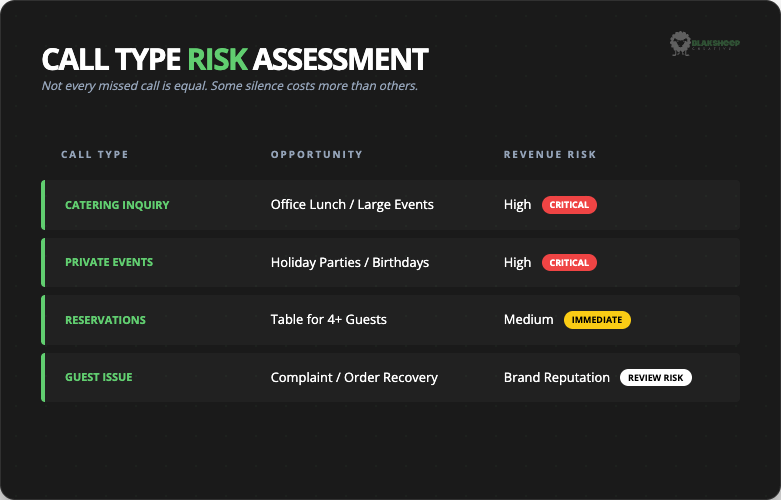
Not every missed call is equal. Some callers only need hours or menu details, but many are ready to book, place an order, complain, or inquire about a larger opportunity.
A single missed call could be a table for six, a private event inquiry, a catering order, or a guest issue that needs quick recovery. Restaurants often underestimate this because they track sales after they happen, not opportunities before they disappear.
| Call Type | What It Could Be | Risk If Missed |
|---|---|---|
| Reservation | Table for two, four, or a group | Lost immediate booking |
| Catering inquiry | Office lunch, school event, private party | Room rental, group dining, and holiday booking |
| Private event | Lost a major revenue opportunity | Wrong order, complaint, or refund request |
| Guest issue | Wrong order, complaint, refund request | Negative review risk |
| Takeout question | Menu, allergy, pickup, order support | Lost order or guest frustration |
This table should be treated as a decision aid, not a fake revenue calculator.
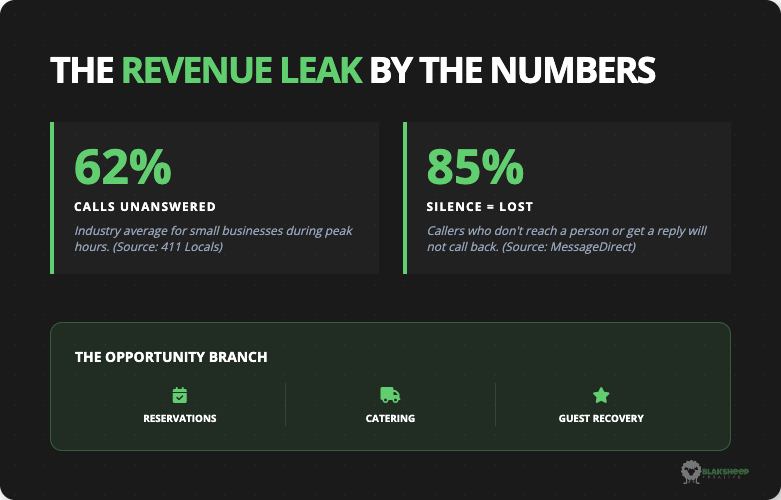
That is why restaurants need a system, not another reminder to answer the phone better.
Want to see what missed calls are costing you?
How Missed Call Recovery Actually Works
The goal is simple. Respond fast enough that the guest does not move on.
A missed call recovery system uses text-back automation, staff alerts, contact tagging, and follow-up routing to keep the conversation going. It should support your team during a real shift, not create another dashboard that nobody opens after week one.
| Step | Action | Purpose |
|---|---|---|
| Call missed | The guest receives a short reply | Starts the recovery workflow |
| Auto text sends | Follow-up happens | Keeps the conversation alive |
| Guest replies | Guest says what they need | Captures intent |
| Staff gets alerted | The right person receives the message | Assigns ownership |
| Follow up happens | Staff completes the conversation | Protects the booking or lead |
This process protects bookings without adding more pressure on the front-of-house team.
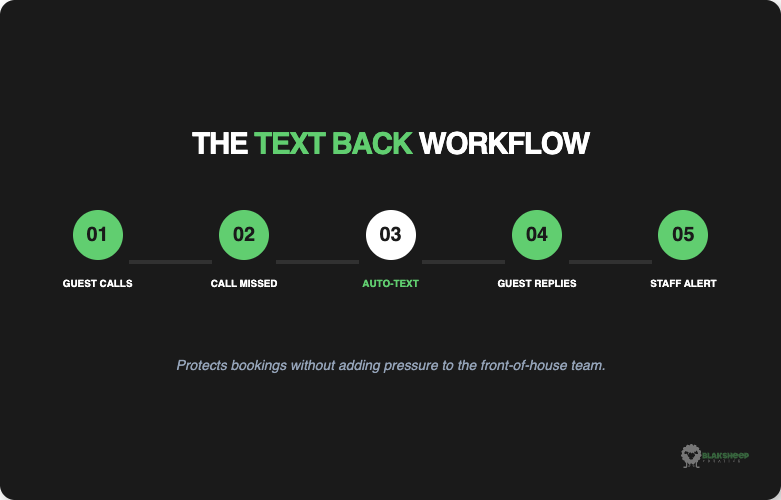
Once the system is in place, restaurants can start recovering more calls instead of guessing which opportunities were lost.
Most restaurant missed calls happen during lunch rush, dinner service, and after hours, not at random.
Why Google Calls Matter More Than Ever
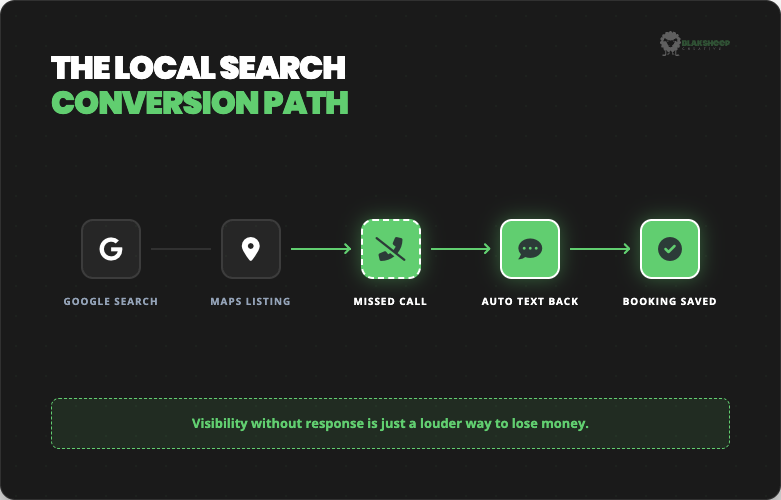
Many restaurant calls begin on Google Search or Google Maps.
These are not casual browsers. They are people checking hours, menus, reviews, directions, reservations, ordering options, or availability. Google Business Profile can send those calls, but the profile does not save the booking if no one answers.
While Google Business Profile optimization is essential for driving calls, visibility without a follow-up plan is just a louder way to lose opportunities. If you are following Google’s restaurant profile guidance or managing a service-based business, the call is only the first step. Missed call recovery is the critical bridge that makes sure your local visibility actually turns into a booked job.
This is where local visibility meets conversion tracking.
What Restaurants Should Fix First
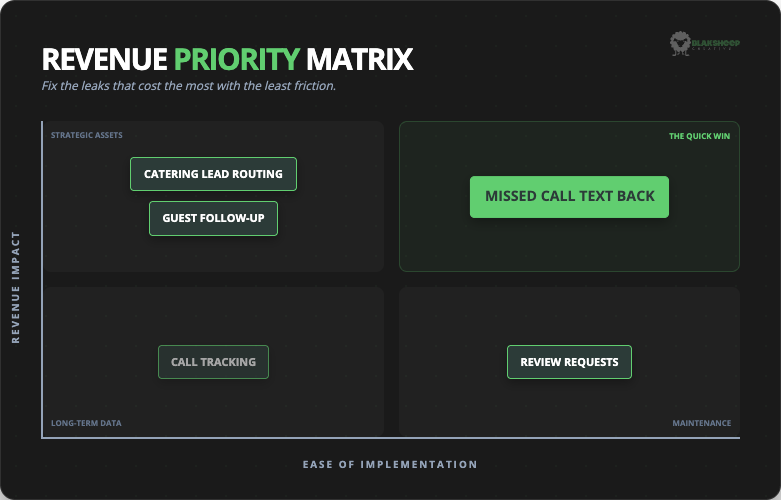
Do not try to automate everything at once. That is how useful tools turn into digital junk drawers.
Start with the workflow that protects the clearest revenue leak. For most restaurants, that means missed call text-back first, then catering lead routing, guest follow-up, and review request timing.
| Priority | Fix | Reason |
|---|---|---|
| 1 | Guestfollow-upp | Responds when staff cannot answer |
| 2 | Catering lead routing | Protects higher value opportunities |
| 3 | Guest follow up | Turns conversations into repeat visits |
| 4 | Review requests | Builds a steadier feedback process |
| 5 | Call tracking | Shows which calls become real outcomes |
This keeps the system focused and usable.
From there, you can expand into broader restaurant automation without confusing staff or guests.
How BlakSheep Creative Helps Restaurants Recover Missed Calls
A good missed-call recovery setup starts with your restaurant’s actual workflow.
BlakSheep Creative reviews how your restaurant handles phone calls, Google calls, after-hours messages, catering inquiries, guest concerns, and staff handoff. Then we build a practical workflow that can include missed-call text-back, SMS reply capture, staff alerts, contact tags, lead routing, call tracking, and follow-up reminders.
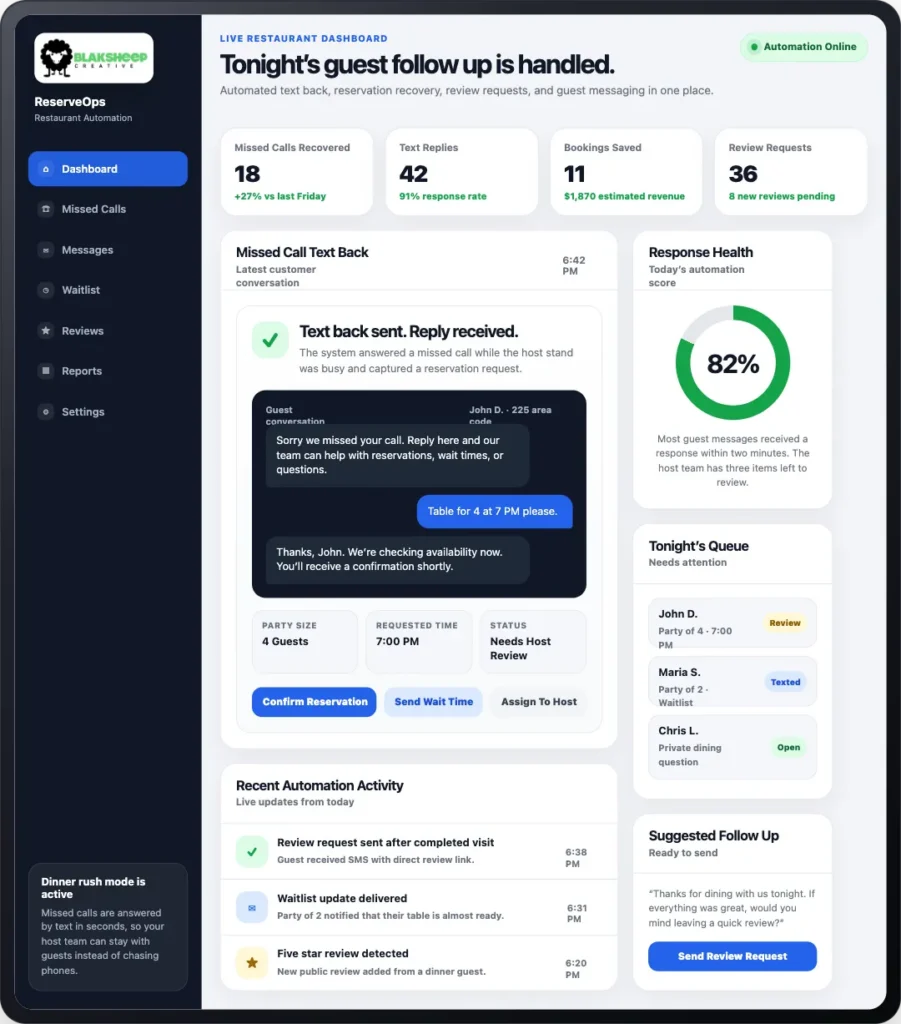
Our missed call recovery for restaurant service is built for restaurant operators who need faster guest response without handing the whole guest experience to a robot with a clipboard.
The first step is a review of your current call and follow-up process.
“Clint and Alec recently took over for me and the creativeness and custome service are astounding. Wish I would've found them years ago! Can't wait to see what the future brings!”
Final Takeaway
Missed calls are not just missed conversations. They are lost bookings, lost catering leads, lost guest recovery moments, and missed repeat visit opportunities.
Restaurants that fix this first gain a cleaner response system before adding larger automation. That makes the work easier to understand, launch, and for staff to accept.
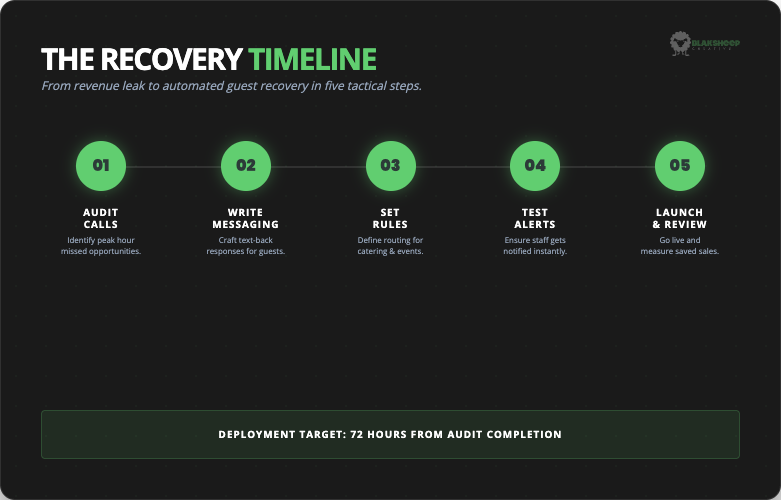
Stop losing bookings from missed calls.
FAQ: Restaurant Missed Calls
Restaurant owners often ask the same questions about missed calls, text-back, and follow-up systems. These answers explain how recovery works and what to expect before you build anything.
Why do restaurants miss so many calls?
Most missed calls occur during peak service times, when staff are focused on in-person guests. The phone becomes secondary even though the caller may be ready to book a table, ask about catering, or solve a guest issue.
Do restaurant guests call back after a missed call?
Some guests call back, but many move to another restaurant when they need a fast answer. Guests searching from Google Maps often have high intent, so a delayed response can turn a warm opportunity into a lost booking.
What is a missed-call text-back for restaurants?
Missed call text back sends an automatic SMS reply when a restaurant is unable to answer the phone. The message lets the guest respond with what they need, then staff can follow up when the rush slows down.
Can missed call recovery help with catering leads?
Yes. Catering and private event calls can trigger contact tags, staff alerts, reminders, and follow-up steps. This helps higher-value inquiries reach the right person before the lead cools off or books a table at another restaurant.
Does missed call recovery replace restaurant staff?
No. It supports staff by handling the first response and routing the conversation. Guests still need real hospitality, managerial judgment, and staff follow-up, especially for complaints, private events, and special requests.
What should restaurants track after adding missed call recovery?
Restaurants should track missed calls, text-back replies, saved reservations, catering leads, private-event inquiries, guest-recovery conversations, and CTA clicks. These metrics show if the workflow is creating business value.
About the Author: This guide was produced by the senior strategy team at BlakSheep Creative. Based in Denham Springs, Louisiana, we build websites, SEO systems, CRM workflows, and automation for local businesses that need clearer lead flow and better follow-up.
About the author
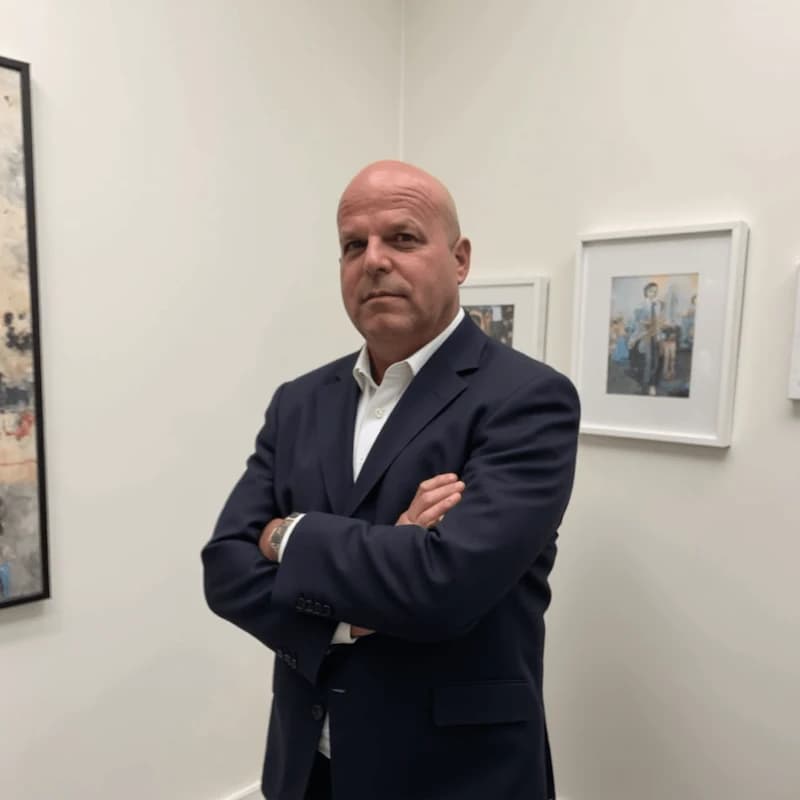
Founder & Lead Developer · Denham Springs, LA
Clint has built and marketed websites for 26 years, since founding BlakSheep Creative in 2000. He is also a 29-year firefighter and a 23-year member of IAFF Local 557, which is where the bias toward plain answers over sales copy comes from.
- Veteran-owned
- Firefighter-owned
- IAFF Local 557
Common questions about CRM setup
How fast should a restaurant respond to a missed call?
Where do most restaurant calls come from?
How do missed calls lead to bad reviews?
Should a restaurant automate everything at once?
What does a missed-call recovery setup include?
Does missed-call text-back work for takeout orders?

Your next step, without the guesswork
No surprises, clear next steps, and a fixed price before anything starts.