
By Clint Sanchez · Published · Updated · 5 min read
Quick answer
Local AEO (Answer Engine Optimization) is the practice of structuring a business's online presence so AI assistants like Siri, Alexa, ChatGPT, and Google Gemini return it as the single answer to a near me or voice query. It builds on local SEO but targets answer selection instead of rankings: LocalBusiness schema in JSON-LD, conversational question-based content, a complete Google Business Profile, page speed under 2.5 seconds, and consistent NAP citations across the web.
Key takeaways
- Traditional local SEO competes for space on a results page; local AEO competes to be the one source an AI trusts to answer.
- According to Backlinko's voice search study, pages that rank for voice search load roughly 52% faster than average pages.
- Voice queries are longer and conversational, such as "who is a dentist in Baton Rouge that takes Delta Dental," so content should target full questions.
- LocalBusiness schema in JSON-LD tells AI systems exactly where you are; test it with Google's Rich Results Test.
- A Largest Contentful Paint under 2.5 seconds and a fully responsive mobile layout are baseline requirements for voice results.
- Google Business Profile is the anchor for map pack and voice recommendations and has to be complete, accurate, and active.
- Being the answer only pays off if the phone gets answered; missed calls waste the visibility.
A Walker homeowner with a burst pipe at 2 a.m. does not open a laptop; they ask their phone for an emergency plumber. In Livingston and Ascension parishes, near me is a buying signal, and the assistant names one business. A Prairieville HVAC company that ranks fourth on Google can still be invisible to Siri if its site has no FAQ schema, no conversational content, and a Google Business Profile that has not been touched in a year.

Want this handled instead of DIY?
A 15-minute call, no script, no pressure. You leave with a plan either way.
Local AEO (Answer Engine Optimization) is the process of optimizing your online presence to be the single, direct answer provided by AI assistants like Siri, Alexa, ChatGPT, and Google Gemini. Unlike traditional SEO, which aims to rank your website in a list of blue links, Local AEO focuses on structuring data so machines can understand and speak your business details directly to users searching for immediate local solutions.
Below, we explain how this approach works for service-based businesses and brick-and-mortar locations, and what it takes to earn visibility as the answer rather than just another result. That visibility only matters if the website can carry the next step. For a practical look at what happens after discovery, read what industrial supply buyers expect from a website, which covers the page structure, resource content, and quote flow buyers expect once they land.
It builds on the principles of Answer Engine Optimization by focusing on how AI systems interpret local business information and select a single result to present as the answer.
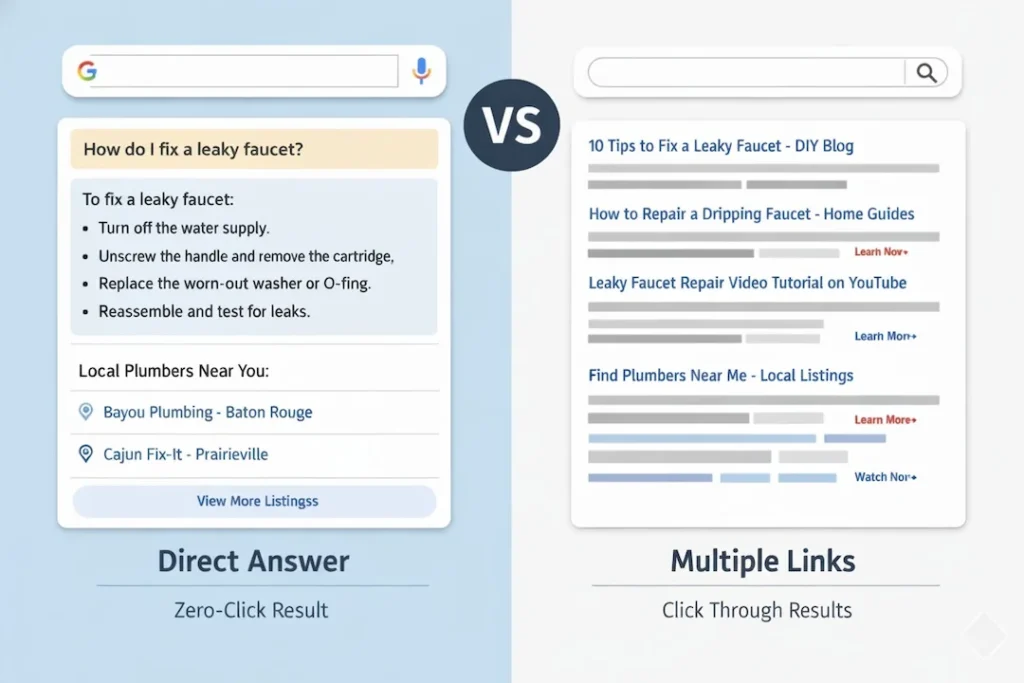
AI systems rely on structure as much as substance. Pages that clearly organize information are easier to interpret, which is why structuring content so AI can actually use it has become a critical part of search visibility.
Key Takeaways (TL;DR)
- AEO is the new SEO: AI wants answers, not links. You need to provide direct, structured facts to stay competitive and confident in your digital presence.
- Schema is non-negotiable: Structured data (JSON-LD) tells robots exactly where you are in Denham Springs or Baton Rouge.
- Conversational content wins: People speak differently than they type. Your content must match natural speech patterns.
- Google Business Profile is the anchor: it must be flawless, up to date, and active to rank in the Map Pack.
- Speed is authority: Slow sites are ignored by AI processors seeking quick answers, making fast-loading websites essential for trust and relevance.
- Citations still matter: NAP (Name, Address, Phone) consistency across the web builds the trust AI needs to recommend you.
Picture this scenario. A homeowner in Walker has a burst pipe at 2:00 AM. They do not sit down at a desktop computer, open a browser, and type “emergency plumber livingston parish.” They grab their phone and shout, “Hey Google, find me an emergency plumber near me.”
Want this handled for you? We build and market websites for Louisiana businesses, and we will tell you honestly if you do not need us.
If your digital marketing strategy is stuck in 2015, Google might show them a list of links. But in 2025, Google (and Siri, and ChatGPT) is looking to give them one specific answer. If you aren’t optimized for Answer Engine Optimization (AEO), your competitor gets that call. At BlakSheep Creative, we help local businesses transition from chasing clicks to becoming the answer.
What is the Difference Between Local SEO and Local AEO?
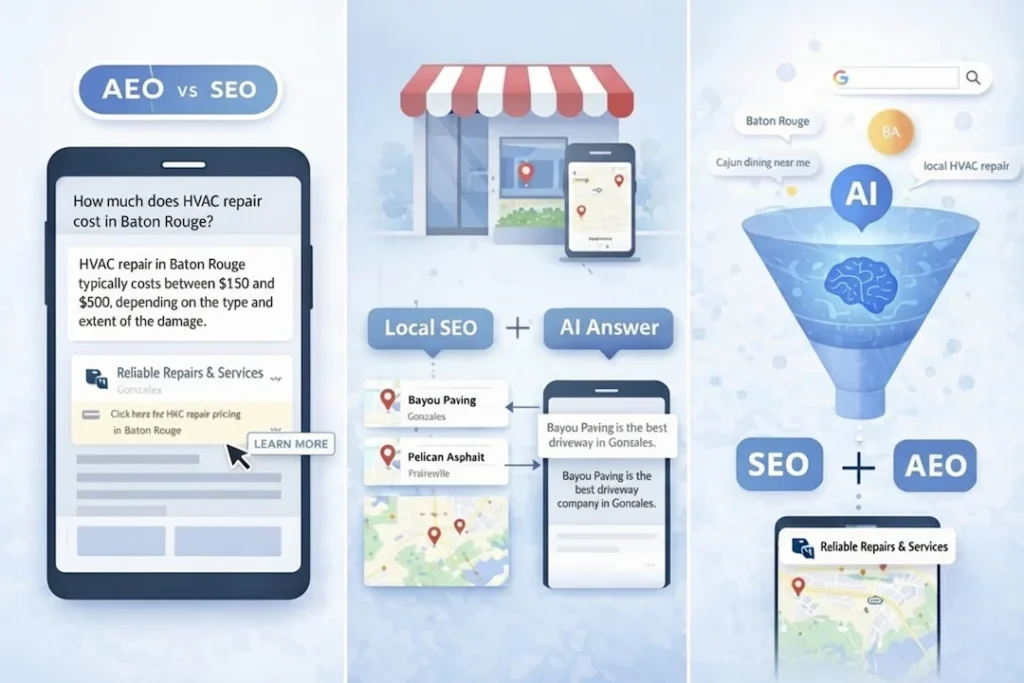
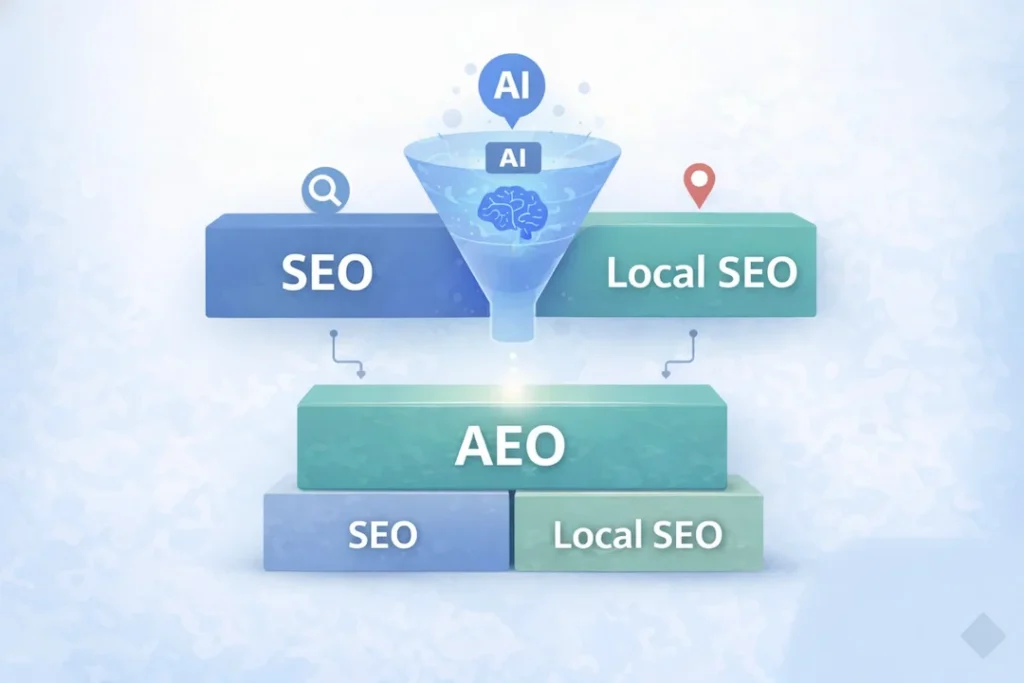
Traditional local SEO is about competing for space on a search results page. This approach is about becoming the single source AI systems trust to answer a question. While the two overlap, the tactics and outcomes are different.
Traditional SEO prioritizes visibility across search results and map listings, while this model depends on how those same signals are interpreted and weighted by AI systems. Strong SEO foundations still matter, but rankings alone are no longer the end goal. Local AEO does not replace traditional optimization. It builds on the same foundations that still matter for local visibility. This overview of local SEO strategies that still work provides helpful context for how those signals feed into AI-driven results.
This gap is why many businesses still struggle to appear in AI-generated answers. As explained in Why AI Answer Engines Ignore Your Site, AI systems prioritize clarity and trust over rankings alone.
Why “Near Me” Queries Are Critical for Louisiana Businesses
In Ascension and Livingston Parishes, “near me” isn’t just a search term; it is a high-intent buying signal. When someone searches for “seafood restaurant near me” in Gonzales or “web design near me” in Denham Springs, they are ready to transact.
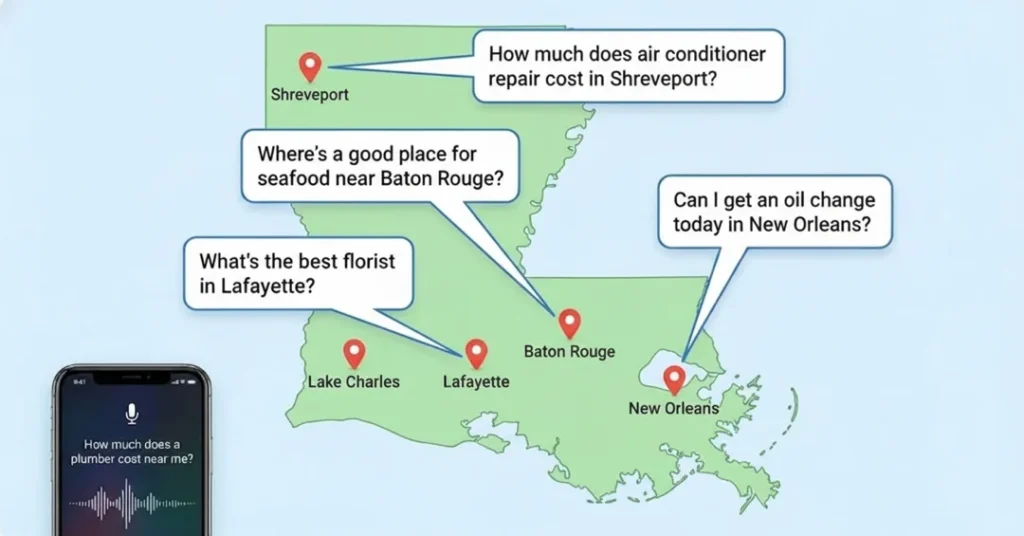
Real Client Scenario: Consider a fictional HVAC company, “Bayou Cool Air,” based in Prairieville. They had a great website but zero AEO strategy. They ranked #4 on Google for “AC repair.” However, when users asked Siri, “Who is the best AC repair in Prairieville?”, Siri recommended a competitor. Why? Because the competitor had solid Schema markup and a Q&A section on their site that directly answered the question “Do you offer 24/7 AC repair?” Bayou Cool Air did not.
Service-area businesses also need clear local content for search and AI-driven answers. Our guide to local SEO for trash can cleaning companies shows how one niche can structure service areas, FAQs, schema, reviews, and quote paths for better local visibility.
After implementing AEO strategies (specifically adding FAQ schema and conversational keywords), Bayou Cool Air began appearing as the bolded “Featured Snippet” and the top voice recommendation. Their call volume increased by 40% in three months without spending any more on advertising.
How Do I Optimize Content for Voice Search?
Voice search queries are longer and more conversational than text searches. Instead of typing “dentist baton rouge,” a user says, “Who is a dentist in Baton Rouge that takes Delta Dental?”
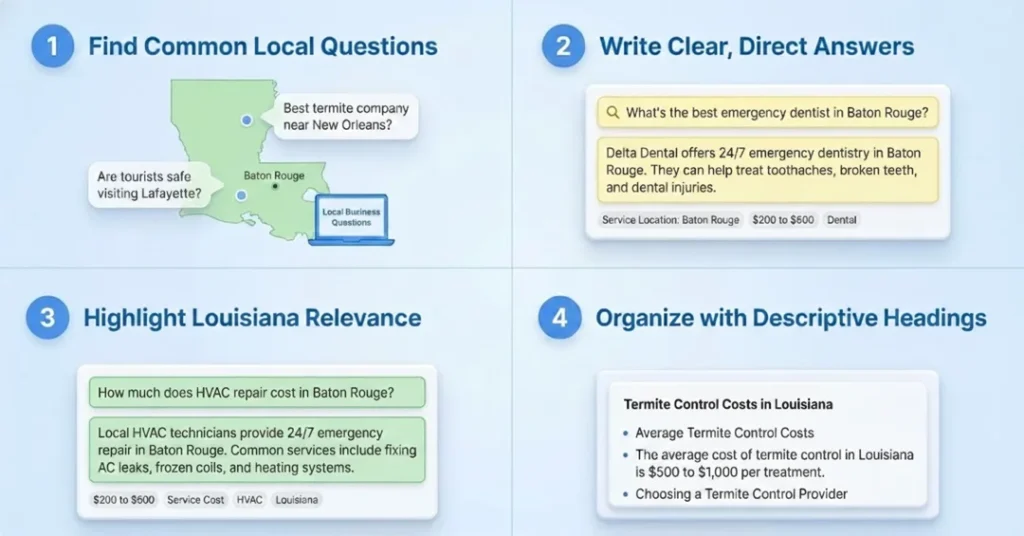
To capture this traffic, you must:
- Target Long-Tail Keywords: Focus on full questions rather than two-word phrases.
- Write conversationally: Read your content out loud. Does it sound like a robot or a human? AI favors natural language.
- Create localized content: Mention specific landmarks. If you serve Livingston Parish, mention range roads, local highways, and specific neighborhoods.
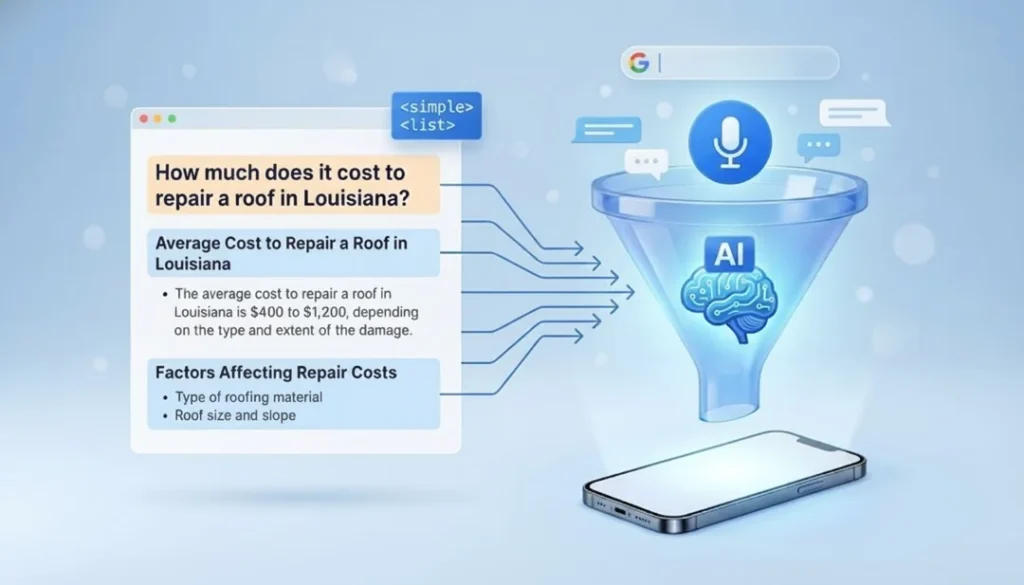
Voice search is often discussed as a separate tactic, but it is tightly connected to answer selection. This article on voice search optimization examines how spoken queries differ from typed searches.
Voice search success also depends heavily on how information is organized. This breakdown of how to structure content so AI actually uses it explains why clear hierarchy and formatting influence answer selection.
Better local visibility only helps if your team is ready when the phone rings. If a stronger search presence is exposing weak follow-up, learn how to stop losing leads from missed calls before visibility turns into waste.
The Role of Technical SEO in AEO
You cannot charm an AI if your site is broken. Technical foundations are more critical for AEO because AI bots crawl faster and deeper than human users.
| Technical Factor | Why It Matters for AEO | Benchmark |
| Page Speed (LCP) | Voice assistants need instant data to relay to the user. | Under 2.5 seconds |
| Schema Markup | Translates your content into code that machines understand. | JSON-LD (LocalBusiness) |
| Mobile Friendliness | Most voice searches happen on mobile devices. | 100% Responsive |
| Domain Authority | AI cites sources it trusts. Authority comes from backlinks. | Context dependent |
Note on Data: According to a landmark voice search study by Backlinko, pages that rank for voice search load roughly 52% faster than average pages. Speed is not just a luxury; it is a requirement.
Regularly test and update your schema using the Rich Results Test to stay ahead of competitors and maintain visibility in voice search. Ongoing monitoring helps you adapt to changing search patterns and AI preferences, so your strategy stays effective.
Ready to Be the Answer?
Learn how we approach Answer Engine Optimization for service-based businesses and what it takes to earn visibility inside AI-driven answers. View our AEO services.
Contact BlakSheep Creative today. Let’s get your business heard. →
Want to see where you stand right now? Use the free AEO audit below to identify gaps, missed citations, and visibility issues holding your site back.
↓ Free AEO audit. No sales call required.
About the author
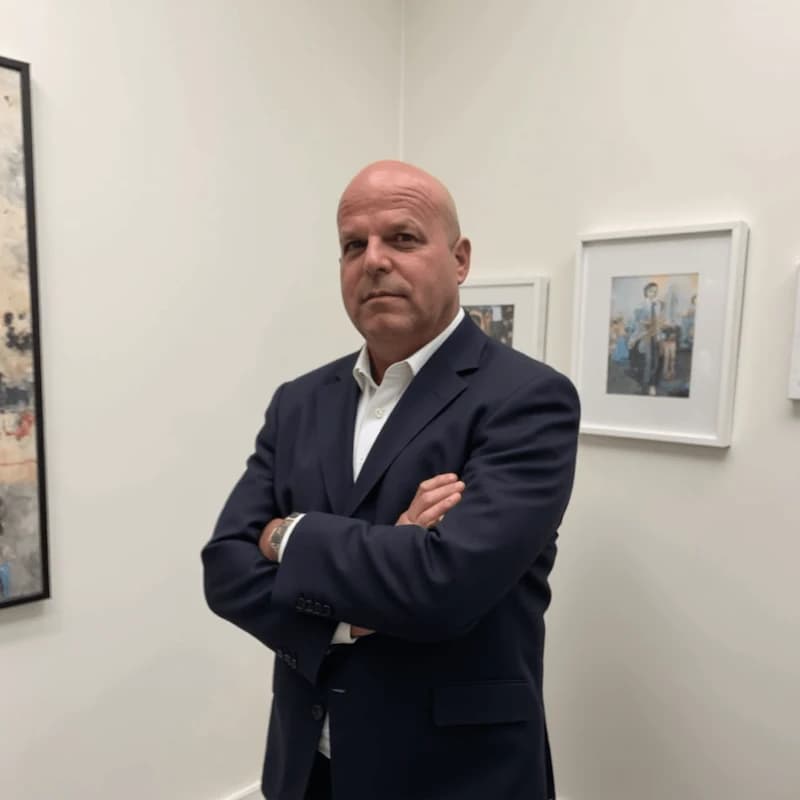
Founder & Lead Developer · Denham Springs, LA
Clint has built and marketed websites for 26 years, since founding BlakSheep Creative in 2000. He is also a 29-year firefighter and a 23-year member of IAFF Local 557, which is where the bias toward plain answers over sales copy comes from.
- Veteran-owned
- Firefighter-owned
- IAFF Local 557
Common Questions About Local AEO and Voice Search
Short answers to the questions that come up most on this topic.
What is local AEO?
How is local AEO different from local SEO?
How do I optimize content for voice search?
What schema markup do I need for local AEO?
Does page speed affect AI and voice search results?
Why does Google Business Profile matter for AEO?

Your next step, without the guesswork
No surprises, clear next steps, and a fixed price before anything starts.