
By Clint Sanchez · Published · Updated · 16 min read
Quick answer
Bin cleaning operators lose leads because nobody captures them while the truck is running. Five leaks do the damage: missed calls, slow form replies, churned subscribers, no review requests, and a website that cannot book. Home services businesses miss about 27% of inbound calls, and 35 to 50% of sales go to the first business that responds. Automated text-back, form auto-replies, review triggers, win-back sequences, and online booking plug all five without adding work.
Key takeaways
- According to Invoca's 2024 research, home services businesses miss roughly 27% of all inbound calls, and operators on a route miss more.
- Forrester Research found that 35 to 50% of sales go to the first vendor who responds, so speed to lead is the biggest lever a bin cleaning operator has.
- Research from Harvard Business Review and MIT found that responding to a lead within 5 minutes makes you 21 times more likely to qualify it than waiting 30 minutes.
- Missed call text-back sends an automated SMS to the caller within 60 seconds, keeping the lead alive while you are still on the truck.
- SimpleTexting's 2025 report found SMS gets a 45% response rate compared to 6% for email, with an average reply time of 90 seconds.
- BrightLocal's 2024 survey found 88% of consumers would hire a business that responds to all reviews, compared to 47% for one that ignores them.
- A review request sent automatically 2 to 4 hours after a completed job builds reviews at a pace that manual asking never matches.
In Livingston and East Baton Rouge Parish, bin cleaning demand peaks in the same months the heat and humidity make a garbage can unbearable, June through September. That is also when a route runs longest and the phone gets answered least. A homeowner in Watson or Central who calls at 10 AM and hears voicemail is calling the next operator on Google before you reach the next stop.

Want this handled instead of DIY?
A 15-minute call, no script, no pressure. You leave with a plan either way.
You’re on the truck. Water’s running. Bins are moving. Your phone rings and you can’t get to it. That missed call was a customer. And they didn’t leave a voicemail. Nobody leaves voicemails anymore unless they’re 67 years old or trying to complain. They’re already calling the next result on Google.
In 2024, Invoca found that home services businesses miss roughly 27% of all inbound calls. For bin cleaning operators who spend six to eight hours a day on the truck, that number runs higher. The leads are coming in. They’re leaving before you can call back.
Here’s what most operators get wrong: they think they have a marketing problem. Not enough ads. Not enough visibility. Not enough Google juice. That’s rarely the real issue. The issue is capture. Leads hit your business every day, and five different leaks drain them before you ever get a conversation going.
This post names all five leaks, gives you the math behind each one, and shows you exactly how to seal them.
TLDR:
- Home service businesses miss ~27% of inbound calls (Invoca, 2024), and operators on the truck miss far more.
- 35–50% of sales go to the first vendor who responds (Forrester Research). Speed to lead is the single biggest lever.
- There are 5 specific leaks draining your leads: missed calls, slow form replies, churned subscribers, no review requests, and a website that doesn’t convert.
- Responding within 5 minutes makes you 21x more likely to qualify a lead vs. waiting 30 minutes (HBR/MIT).
- All 5 leaks are fixable with automation that runs while you’re on the truck.
The Real Reason Your Bin Cleaning Business Isn’t Growing
Forrester Research found that 35–50% of sales go to the first responder. That’s not a marketing stat. That’s a capture stat. The operator who picks up first, or texts back first, wins that customer most of the time.
Most bin cleaning operators blame growth problems on the wrong thing. They think they need more Google Ads, more door hangers, more Facebook posts. And sometimes that’s true. But if you’re already spending money on any kind of visibility and you’re not growing, the problem usually isn’t at the top of the funnel. It’s in the middle.
Think about what happens on a typical Tuesday. Not a bad Tuesday. A completely normal one. Your GBP listing gets three visits. One person fills out your web form. One person calls. One person closes the browser and goes back to watching YouTube. Of the two active leads, you miss one call and don’t see the form until 6 PM. The caller booked someone else at 10 AM. The form lead replies to your evening email with “I went with another company.” You just lost two leads you paid to attract. That’s a Tuesday. You didn’t do anything wrong. You just weren’t there.
This isn’t a failure of marketing. It’s a failure of capture. And it happens to nearly every operator running routes.
Per the 411 Locals study of 85 businesses across 58 industries, only 37.8% of small business calls get a live answer. Another 37.8% go to voicemail. And 24.3% of calls receive zero response at all.
Those numbers don’t reflect bad businesses. They reflect operators who are busy doing the work. That’s exactly the problem.
Why aren’t more bin cleaning businesses growing?
The problem usually isn’t awareness. It’s capture. Leads are coming in through calls, forms, and Google searches, but most operators on a route can’t respond fast enough to win them. With 35–50% of sales going to the first responder (Forrester), even a 15-minute delay costs real revenue. The fix is automated follow-up, not more advertising spend.
The 5 Leaks: Where Bin Cleaning Leads Actually Go
The research is clear: leads don’t disappear because of weak marketing. They disappear because nobody captures them. We call these the 5 Leaks, and every bin cleaning operator has at least three of them running right now.
Each leak has a measurable cost. Add them up and you get a rough picture of how much revenue is draining out of your business while you’re doing the work.
Leak 1: Missed Calls (-35%)
You’re on the truck. Your phone rings. You can’t answer. The caller waits half a beat, decides you’re not worth holding for, and hangs up. Voicemail is for people who have time to sit around hoping you check it. They’re calling the next result.
This is the biggest single leak. An operator running a full route from 7 AM to 3 PM has a six-to-eight-hour window where every call is a potential miss. No amount of great Google reviews fixes a phone that rings to no answer.
In 2025, Ringover found that 75.5% of consumers have switched businesses because of poor phone or customer service. Unanswered calls are poor customer service. The prospect doesn’t know you’re on a truck. They just know nobody picked up.
Leak 2: Slow Form Replies (-22%)
Your website has a contact form. It works. Someone fills it out Tuesday morning at 9 AM. You get off the truck at 3 PM, see the notification, and reply at 3:30. They booked someone else at 11 AM.
Online leads go cold fast. The person who submitted your form almost certainly submitted two or three others at the same time. Whoever responded first got the conversation. You got a dead lead and a polite “we went with someone else” that stings more than it should.
This is fixable with a simple auto-responder that fires within 60 seconds of a form submission. Most bin cleaning websites don’t have one. The solution section covers exactly what it looks like.
Leak 3: Churned Subscribers (-18%)
A customer pauses service. Maybe they’re traveling. Maybe money’s tight. You note it in your route sheet and move on. Six months later, they’re still paused and you haven’t touched them.
Win-back sequences exist because paused customers are your warmest possible leads. They already trusted you enough to pay you. A single text or email at the right time, with the right offer, brings a meaningful percentage of them back. Without that outreach, they quietly cancel and find someone else when they’re ready.
Leak 4: No Review Requests (-12%)
You do good work. Your service is clean. Customers are satisfied. But they don’t leave reviews, because they don’t think about it. Why would they? Getting their bin cleaned isn’t exactly a peak emotional experience. Nobody’s posting a 4-minute reaction video about how fresh their bins smell. It just works, and people don’t write reviews about things that just work.
The only way to build a steady stream of reviews is to ask at exactly the right moment, automatically, on every completed job. Most operators never do this. Their GBP profile sits at 4.1 stars with 22 reviews while a competitor with the same service quality and a review automation running has 94 reviews at 4.8. That competitor gets the next call.
Leak 5: A Website That Doesn’t Sell (-13%)
A prospect finds your business on Google at 9:45 PM. They liked your truck. Your GBP looks good. They click through to your website. It has a phone number and a contact form. They don’t want to call this late. They half-heartedly fill out the form and go to bed. By morning, you haven’t replied. They’ve forgotten they even looked.
Your website is either a booking engine or it’s a brochure. Brochures don’t book customers. Online booking, self-serve quoting, and instant confirmation convert the late-night browser into a paying subscriber. A static site with no action options loses a percentage of every visitor who isn’t ready to call.
Why Missed Calls Are the Biggest Leak (and the Easiest to Fix)
In 2020, Lead Connect found that 78% of buyers purchase from the first vendor to respond to their inquiry. The bin cleaning operator who responds first, even automatically, wins that customer more often than not. The one who calls back at 4 PM is usually too late.
Missed call text-back is exactly what it sounds like. When your phone rings and you don’t answer, an automated SMS fires to the caller within 60 seconds. Something like: “Hi, we just missed your call. Still looking for bin cleaning service? Reply YES and we’ll get you a quick quote.” That text arrives while the lead is still on their phone, still in the mindset of booking. It keeps the conversation alive without you doing a thing.
Why does SMS work better than voicemail or email for this? The data is clear.
Citation Capsule: In 2025, SimpleTexting’s SMS Marketing Report found that SMS achieves a 45% response rate compared to email’s 6%, with an average reply time of 90 seconds versus 90 minutes for email. For a bin cleaning operator who can’t answer the phone mid-route, an automated missed-call text-back captures the lead before they dial a competitor.
SMS also carries a 98% open rate. That means nearly every text you send gets read. Can your email newsletters say that? No. Your email newsletter is getting maybe 20% opens if you’re lucky, and at least half of those are you checking that it sent correctly. Voicemails don’t come close either. Most callers won’t leave one, and of those who do, a meaningful share never check back.
The math on this leak is the most encouraging one in the whole framework. Missed call text-back requires zero manual effort once it’s set up. It runs while you’re on the truck, while you’re eating lunch, while you’re asleep. For the biggest leak in your business, it’s one of the simplest fixes. For the full setup, see how we handle missed call text-back for route operators.
The 5-Minute Rule That Determines Every Sale
Research from Harvard Business Review and MIT (Oldroyd et al.) found that responding to an online lead within 5 minutes makes you 100 times more likely to make contact and 21 times more likely to qualify that lead versus waiting 30 minutes. Twenty-one times. That’s not a marginal advantage. That’s a different league.
Citation Capsule: The Oldroyd et al. study tracked 100,000 inbound sales leads across multiple industries. Leads contacted within 5 minutes were 21x more likely to qualify than those contacted after 30 minutes, with 100x higher contact rates at the 5-minute mark. For a route operator checking messages at end-of-day, nearly every lead is already cold.
Why does speed matter so much? Think about what the prospect is doing when they submit a form or make a call. They’re in decision mode. They’re comparing options. In most markets, a residential customer considering bin cleaning service will look up two or three local providers and submit to whoever looks good on Google. The first person to reply gets the conversation. The others get silence and a polite “we went with someone else” email if they’re lucky.
For a route operator, real-time manual response is physically impossible. You’re not going to check your phone between every bin. The answer isn’t working harder. It’s automation that responds within that 5-minute window without any action on your part.
And the upside of fixing this is enormous. Forrester’s research confirms that 35–50% of all sales go to the first responder. That’s not a small edge. In a market where three local operators are competing for the same customer, first-response alone can win you half the available business.
According to Invoca's 2024 research, home services businesses miss roughly 27% of all inbound calls, and operators on a route miss more.
What Happens When You Never Ask for Reviews
In 2024, BrightLocal’s Local Consumer Review Survey of 1,026 US adults found that 81% use Google to read reviews before hiring a local business, and 75% do it always or regularly. Your Google Business Profile is not a nice-to-have. It is a filter. Prospects read it before they ever call you.
Bin cleaning is a low-frequency purchase. A residential customer might cancel and rejoin once. They’re unlikely to leave a review unless something goes wrong or you specifically ask them to. That means your review count stays flat. Your competitors who automate review requests after every completed job keep growing theirs. Over 12 months, the gap between 24 reviews and 87 reviews is the gap between page-two rankings and the local pack.
The same BrightLocal data puts a real number on the stakes. They found that 71% of consumers would not consider hiring a local business with an average rating below 3 stars. More usefully: 88% of consumers said they would hire a business that responds to all reviews, compared to only 47% for a business that ignores them.
Citation Capsule: BrightLocal’s 2024 survey found that 71% of consumers would not consider using a local business rated below 3 stars, and 88% would choose a business that actively responds to all reviews compared to 47% for one that ignores them. For bin cleaning operators, a stagnant 4.2-star GBP profile is a passive lead-loss mechanism running 24 hours a day.
What does fixing this look like? It’s not manually texting every customer after every job. It’s a trigger: job marked complete in your system, automated text fires 2–4 hours later asking for a review with a direct link. Simple. Consistent. It compounds. Every review makes the next customer more likely to choose you.
How to Plug All 5 Leaks Without Adding to Your Workload
The good news: you don’t fix these leaks by working more hours. You fix them with an automation stack that runs while you’re on the route, between jobs, and after hours.
Here’s what the full stack looks like.
Missed call text-back fires within 60 seconds of a missed call. The lead gets an SMS. They reply. Your system logs the conversation and notifies you. You follow up when you’re off the truck. The lead hasn’t gone cold.
Form auto-responder fires within 60 seconds of a web form submission. The prospect gets a confirmation: “Got your request. We’ll follow up with pricing by end of day.” They know you received it. They wait. You respond when you’re ready. You haven’t lost the conversation.
Win-back sequence triggers when a customer pauses or cancels. A 2–3 message sequence fires over 7–14 days: a check-in, a simple offer, and a final outreach. A percentage of paused customers come back. Without the sequence, they don’t.
Review request trigger fires 2–4 hours after a job is marked complete. One text, direct link, specific ask. No manual effort. Over 90 days, this stacks reviews at a rate that would take years to build manually.
Online booking and self-serve quoting mean your website works at 9 PM when you’re not. A prospect lands, sees what you offer, gets a price estimate, and schedules a pickup. You wake up to a confirmed booking in your queue.
All five of these run as a connected system, not five separate tools. That’s what marketing automation built specifically for bin cleaning operators looks like in practice. It’s not a CRM built for car dealerships or a marketing suite built for e-commerce. It’s built for operators on a truck who can’t answer every call.
Is it for every operator? No. If you’ve got a 6-week waitlist and you’re turning away work, this probably isn’t your constraint right now. Go enjoy that problem for a minute. Most operators would trade for it. But if you have any capacity at all, and any leads are coming in, and you’re not closing all of them, the leaks above are the reason.
Questions Bin Cleaning Operators Ask About Leads and Follow-Up
Most operators think the problem is volume. They’re asking “how do I get more leads?” when the actual question is “why aren’t I closing the leads I already have?” These are the questions that come up once operators make that shift.
How many leads am I actually losing to missed calls?
In 2024, Invoca found that home services businesses miss roughly 27% of all inbound calls. For operators running full routes, the number is likely higher. If you’re on the truck for 6 hours a day, any call during that window is a potential miss. Multiply that by the number of days you’re running routes each week and you start to see how many conversations never happen.
What is missed call text-back and how does it work?
Missed call text-back is an automated SMS that fires to a caller within 60 seconds of a missed call. The message is simple: something like “Hey, we missed your call. Still looking for bin cleaning service? Reply YES.” The caller is still on their phone. They see the message. They reply. You’ve kept the lead alive without picking up the phone. The whole thing runs automatically, with no action from you.
How fast do I need to respond to a lead to still convert them?
HBR and MIT research found that responding within 5 minutes makes you 21 times more likely to qualify the lead compared to waiting 30 minutes. For an operator mid-route, manual response in that window isn’t realistic. Automation is the only way to hit the 5-minute mark consistently. Set up an auto-responder on your forms and missed call text-back on your phone line. Those two tools handle the window while you’re working.
How do I get more Google reviews for my bin cleaning business without asking every customer manually?
The key is timing and automation. BrightLocal found that 88% of consumers would hire a business that responds to all reviews, compared to 47% for one that ignores them. Set a trigger so every completed job fires a review request SMS 2–4 hours after the service is marked done. Direct link to your GBP review page. One step for the customer. The timing matters: ask while the service is fresh, not a week later when they’ve forgotten.
What software do bin cleaning businesses use to manage leads and follow-up?
A few options exist in this space. QuoteIQ and Jobatory are purpose-built for bin cleaning route management, with scheduling and customer management features. ServiceWorks covers field service operations more broadly and works for route businesses. Bin Cleaner OS (built by BlakSheep Creative) focuses specifically on the lead capture and follow-up side: missed call text-back, form auto-response, review request automation, and win-back sequences. The right fit depends on your operation size and which leaks you’re trying to plug first. Operators who need both route management and lead capture often run two tools in parallel.

We build this for trash can cleaning companies.
Fixed quote before we start, and you talk to the people who do the work.
About the author
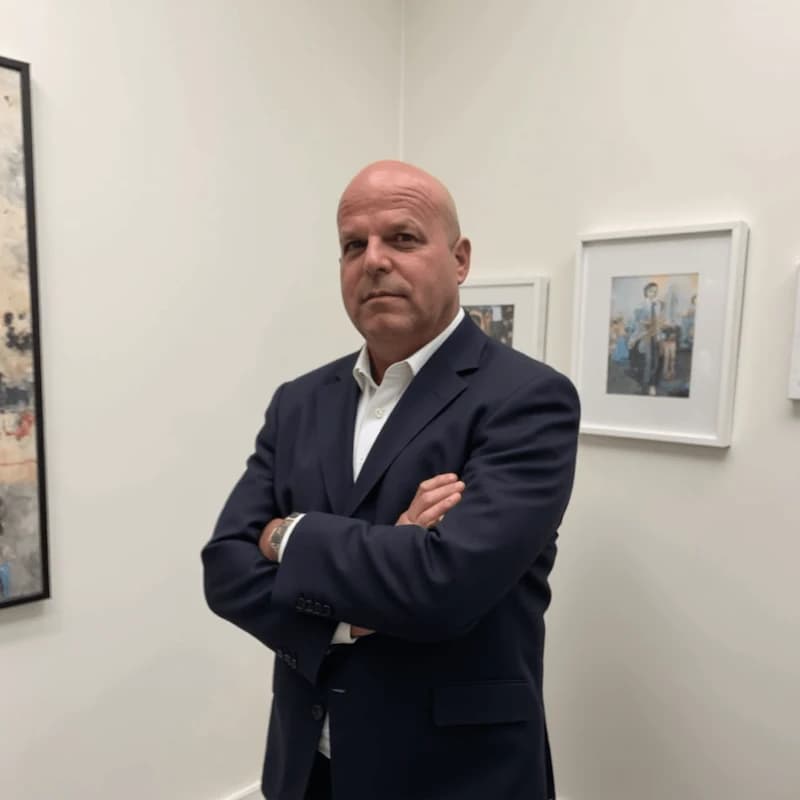
Founder & Lead Developer · Denham Springs, LA
Clint has built and marketed websites for 26 years, since founding BlakSheep Creative in 2000. He is also a 29-year firefighter and a 23-year member of IAFF Local 557, which is where the bias toward plain answers over sales copy comes from.
- Veteran-owned
- Firefighter-owned
- IAFF Local 557
More Questions About Bin Cleaning Leads
Short answers to the questions that come up most on this topic.
Do I need to answer every call myself to stop losing leads?
What is a win-back sequence for a bin cleaning business?
Does a contact form auto-responder actually help?
What should a missed call text-back message say?
When is the best time to ask a bin cleaning customer for a review?
Why is a website without online booking a lead leak?

Your next step, without the guesswork
No surprises, clear next steps, and a fixed price before anything starts.