
By Clint Sanchez · Published · Updated · 10 min read
Quick answer
Email now out-pulls LinkedIn for aircraft brokers because LinkedIn aviation content saturated in late 2025, according to Aviation Business Consultants' January 2026 report. A four-touch sequence on Days 0, 4, 10, and 18 (a site teardown, a short bump, one specific finding, and a breakup email) is producing 35 to 50 percent opens and 2 to 5 percent replies for broker outbound, with LinkedIn used only as a warm layer between sends.
Key takeaways
- According to Aviation Business Consultants (January 2026), email out-pulled social across the full aviation sales cycle: prospecting, nurture, and referral re-engagement.
- IADA dealers closed 333 preowned transactions in Q1 2026 versus 316 the prior year, and the average jet took 207 days to sell in 2024.
- The sequence runs four touches over 18 days: a teardown delivery, a four-day bump, one specific finding, and a breakup email.
- Realistic 2026 benchmarks for warm aviation outbound are 35 to 50 percent opens, 2 to 5 percent replies, and 0.5 to 1.5 bookings per 100 sends.
- SPF, DKIM, and DMARC must all pass, and a new sending domain should ramp from 20 to 100 sends a day over three weeks.
- Track reply rate and bookings, not clicks, because brokers read on phones between flights and rarely click a link until they are back at a desk.
- In BlakSheep's own pipeline, about half of all replies land on the Touch 4 breakup email.
BlakSheep runs this sequence from Denham Springs, and the Gulf South has its own broker and charter market around Baton Rouge Metropolitan, Lakefront in New Orleans, and Lafayette, where energy executives and coastal operators buy and sell aircraft. Those buyers travel constantly, so the same rule applies here: they read email on a phone on a ramp, not at a desk, and they answer the message that proves you looked at their business.

Want this handled instead of DIY?
A 15-minute call, no script, no pressure. You leave with a plan either way.
Published June 9, 2026. Written by Clint Sanchez, founder of BlakSheep Creative.
For two years, every aviation marketing deck said the same thing. Post more on LinkedIn. Build a personal brand. Be a “thought” voice in the cabin-class community. A lot of brokers did exactly that. And in 2024 it worked, because the feed wasn’t yet stuffed with the same five takes on Q3 delivery numbers.
That window closed. In January 2026, Aviation Business Consultants reported that email is out-pulling social across the full aviation sales cycle, prospecting, holding-pattern nurture, and referral re-engagement. The brokers who built LinkedIn-first stacks in 2024-25 are now blending into the same scroll. The ones quietly winning are running tight outbound email.
This post gives you the exact 4-touch sequence we run for our own aviation pipeline at BlakSheep. Copy it. Adapt it. Ship it Monday.
The Mission Brief – Email out-pulled social across the 2026 aviation sales cycle per Aviation Business Consultants, Jan 2026. – LinkedIn aviation content saturated in late 2025. Late entrants got crowded out by herd movement. – A 4-touch sequence (Day 0, 4, 10, 18) is producing 35-50% opens and 2-5% replies for broker outbound. – 100% bonus depreciation is now permanent under OBBBA and IRS Notice 2026-11, so Q2-Q3 buyer behavior is tax-anchored. Your timing matters. – Track reply rate and bookings, not clicks. Brokers read on phones.
Why the LinkedIn-first thesis broke
LinkedIn worked for brokers in 2024 because the feed wasn’t crowded yet. By late 2025, every brokerage, OEM rep, and aviation consultant was posting the same Q3 delivery charts, the same EBACE recap, the same “five lessons from my last transaction.” Per Aviation Business Consultants’ 2025 review, herd movement killed the differentiation that early movers enjoyed.
The math also shifted under brokers’ feet. Q1 2026 IADA dealers closed 333 preowned transactions versus 316 the prior year, with average preowned jet pricing at $21.01M in December 2025. Average days to sell a jet ran 207 in 2024. That’s a long, expensive sales cycle to feed with a content channel that’s lost its differentiation premium.
Email didn’t get more sophisticated. It just got less crowded relative to LinkedIn. A specific, personalized email to a broker now feels like a craftsman tap on the shoulder. A LinkedIn DM feels like spam, because it usually is.
The brokers who win in 2026 aren’t picking email over LinkedIn. They’re using email to start the conversation and LinkedIn to maintain warmth between touches. The channel hierarchy flipped. Outbound is email-first now.
The 4-touch email sequence (copy-paste ready)
Here’s the spine. Four touches across 18 days. Each one earns the next. None of them pitch a discovery call in the first paragraph. Every email assumes the broker is in a hangar or on a flight deck, not at a desk.
The variables you’ll swap: {first_name}, {company_name}, {specific_finding}, {teardown_link}, {calendar_link}.
Touch 1, Day 0: The Teardown Delivery
This is the open. You’re delivering value before you ask for anything. Three patterns we see broken on broker sites go above the link, so the reader gets value even if they never click.
Subject line:
Quick teardown for {first_name}
Body:
{first_name},

Spent 20 minutes on {company_name} this morning. Three patterns I see
on most broker sites, including yours:

1. Listing pages with a generic "Contact Us" and no clear next step.
   HNW buyers won't email a form. They want a specific broker, a
   specific number, a specific window. Yours go to a shared inbox.

2. Broker bios that don't establish credibility for the buyer profile.
   No flight hours. No type ratings. No transactions closed. No dollar
   volume. A $20M buyer wants to know who's flying the deal.

3. Inquiry forms that ask for ten fields or two. Both kill conversion.
   The sweet spot is name, email, aircraft of interest, timeline.

Wrote a 6-minute teardown specific to {company_name}, screenshots and
all. Yours to keep regardless: {teardown_link}

No pitch. If it's useful, it's useful.

Clint
BlakSheep Creative
Veteran-owned. Built for operators.
Why it works: The three patterns deliver value before the click. Even a non-opener of the link walks away with something they can fix Monday.
Mistake to avoid: Opening with “I help aircraft brokers grow.” Every broker has deleted that sentence a hundred times. Lead with their site, not your service.
Touch 2, Day 4: The Teardown Bump
Four days later. No new ask. No expanded pitch. Just a polite resurface in case Touch 1 got buried under a contract or a check ride.
Subject line:
Re: Quick teardown for {first_name}
Body:
{first_name},

Probably got buried. Here's the {company_name} teardown link in case
you want to grab it: {teardown_link}

No pitch.

Clint
Why it works: It respects the inbox. Brokers fly. They miss emails. A clean bump signals you understand that.
Mistake to avoid: Extending the pitch in the bump. The second you add a paragraph about “Have you considered…” you’ve changed the deal. Keep it short.
Touch 3, Day 10: The Specific Finding
This is where most sequences die. Touch 3 is your proof you actually looked at their business. Pick ONE finding from the teardown and detail it. Not three. One. Specificity is the wedge.
Subject line:
One specific thing I'd change on {company_name}
Body:
{first_name},

Won't re-pitch the teardown. One specific finding worth pulling out:

Your broker bios. Three of the five don't list flight hours, type
ratings, or transactions closed. The fourth lists "26 years in
aviation" which is the bio equivalent of "open to opportunities."
The fifth is solid, types listed, hours listed, two specific
transactions named.

If you rewrote the four to match the fifth, your listing-page-to-
inquiry rate would move. HNW buyers buy the broker first, the
aircraft second.

Worth a 15-min walkthrough? I'll record it so you can show your team
and not sit through it twice: {calendar_link}

Clint
Why it works: It proves you read their site. It also gives a low-friction CTA (recorded, 15 minutes, useful to the team) instead of a “discovery call.”
Mistake to avoid: Generic language like “I see opportunities to optimize your funnel.” That sentence has never closed a broker. Be specific or be deleted.
Touch 4, Day 18: The Breakup
The breakup is not goodbye. It’s a clean exit that signals values and leaves three doors open. Per general cold outreach data across B2B, breakup emails routinely pull a meaningful share of total replies. In aviation, where buying cycles are long and brokers are polite, the breakup often outperforms Touch 1.
Subject line:
Closing the loop on {company_name}
Body:
{first_name},

I'll stop reaching out. No hard feelings, your inbox is your inbox.

If you do want to engage later, three options:

1. Email me directly at clint@blaksheepcreative.com
2. Book a 15-min walkthrough: {calendar_link}
3. Save my number for Q4 when you're planning 2027 marketing:
   (225) 505-3834

We built BlakSheep because most agencies don't walk their own talk.
We're veteran-owned, first-responder owned, and we run our own
aviation pipeline on the exact playbook we'd run for you. If that
matters to you down the road, you know where to find us.

Fly safe.

Clint
Why it works: It removes pressure, signals values alignment with the ~30-40% of US aviation professionals from military backgrounds, and leaves three concrete doors open.
Mistake to avoid: Passive-aggressive sign-offs. “Should I assume you’re not interested?” is a tantrum. Don’t write tantrums to people who fly other people’s aircraft for a living.
Half the replies we get from this sequence land on Touch 4. Some of them say “Sorry, brutal Q2, let’s talk in August.” Those become Q3 conversations. The breakup is a calendar invite disguised as a goodbye.
The deliverability gotchas nobody talks about
Email only works if it lands in the inbox. For aviation outreach specifically, three things will kill your deliverability before you write a single subject line.
SPF, DKIM, and DMARC must all pass. Yahoo and Google’s 2024 sender requirements still bite in 2026. If you’re sending more than 5,000 emails per month from a domain and DMARC isn’t configured, you’ll start hitting Promotions and Spam tabs by week three. Free check tool: MXToolbox.
Warm new sending domains slowly. If you bought a fresh domain for outbound, do not blast 500 brokers on Day 1. Ramp from 20 a day to 100 a day over three weeks. Aviation buyers run small inboxes with tight spam filters because of the volume of OEM and parts vendor pitches they already ignore.
Gmail-from-your-personal-account is fine until it isn’t. For the first 30-50 sends, sending from your own Gmail is fine and actually outperforms a dedicated platform on deliverability. Past 100 sends per week, you need a real sending stack with proper domain authentication. In the aviation outreach setups we build, Touches 1 and 2 go through a dedicated subdomain (something like mail.yourbrokerage.com) with full SPF/DKIM/DMARC, and the Touch 4 breakup from the founder’s real inbox. That mix preserves deliverability and lifts reply quality on the breakup.
Platform settings matter too: enable a dedicated IP only if you’re north of 10,000 sends per month. Below that, shared IPs warmed by the platform outperform. And skip the image in your email signature. It’s a deliverability tax for zero value.
What to track (and what to ignore)
Track four numbers. Ignore the rest.
Open rate. Realistic 2026 range for warm aviation outbound: 35-50%. Below 35% means subject lines or sender reputation. Above 50% likely means tracking pixel inflation, dial back your expectations.
Reply rate. Realistic range: 2-5%. This is the only number that matters for sequence quality. A 4% reply rate on 250 sends is 10 conversations. Ten conversations with $5M-$150M brokers is a quarter.
Reply quality. Split replies into qualified, MLM/vendor pitch back, and out-of-office. Yes, brokers get pitched MLM through their published email. Track the ratio. A 4% reply rate where 3% are MLM and vendor pitches isn’t a 4% reply rate.
Bookings per 100 sent. Realistic range: 0.5-1.5%. One booked walkthrough per 100 sends is a healthy aviation sequence. Two is excellent. Anything above three, check your data, you may be sending to a list that’s been pre-warmed.
Do not optimize for click rate. Brokers read on phones, between flights, and most won’t click a teardown link until they’re back at a desk. Click rate will under-report engagement by half.
According to Aviation Business Consultants (January 2026), email out-pulled social across the full aviation sales cycle: prospecting, nurture, and referral re-engagement.
FAQ
The questions brokers ask most once they have read the sequence: timing around tax-motivated buyers, LinkedIn's role, list size, and running it solo.
How does this sequence change if buyers are tax-motivated in Q3?
Lean into it. With 100% bonus depreciation now permanent under OBBBA and IRS Notice 2026-11, buyers who want the deduction need an in-service date before December 31. Adjust Touch 3 to reference the buyer’s likely Q4 placed-in-service pressure. Time the sequence so Touch 4 lands in early August, giving you a full Q3 to convert.
Should I run this sequence on LinkedIn instead?
No. Run it on email and use LinkedIn as the warm-touch layer between sends. Follow on LinkedIn the day after Touch 1. Comment usefully on one of their posts before Touch 3. That two-channel warmth lifts reply rates without making LinkedIn the primary channel, which is what stopped working in late 2025.
How big does my list need to be?
Smaller than you think. 250 well-researched brokers run through this sequence will produce 8-12 conversations at the benchmark ranges above. That’s enough to fill a quarter for most agencies and most broker partnerships. Quality of list beats size every time in aviation.
What if I’m a one-person broker doing my own outbound?
Run it from your personal Gmail, cap at 20 sends per day, and skip the dedicated sending domain until you’re past 500 sends per month. Your reply rate will likely be higher than an agency’s because the buyer knows they’re talking to a principal, not a BDR.
Close: the sequence is yours. The workflow is on offer.
The 4-touch sequence above is enough to ship Monday. Open Gmail, build your list of 50 brokers, write the teardowns, queue Day 0. You don’t need permission and you don’t need an agency.
If you want the sequence templates, the responder handlers for “send me more info” replies, the data-quality gate that strips bad emails before send, and the routing logic for Touch 4 built into your CRM, that’s part of our CRM setup service. We’re veteran-owned and first-responder owned, and our pricing is published on the Grow page.
See the Aviation Broker CRM setup →
Book a 15-minute walkthrough →
Fly safe. Sell more jets.
Clint Sanchez is the founder of BlakSheep Creative, a veteran-owned and first-responder-owned digital marketing and AI automation agency based in Denham Springs, Louisiana, serving aviation, professional services, and home services clients nationwide.
Want this handled for you? We build and market websites for Louisiana businesses, and we will tell you honestly if you do not need us.

We build this for private jet charter.
Fixed quote before we start, and you talk to the people who do the work.
About the author
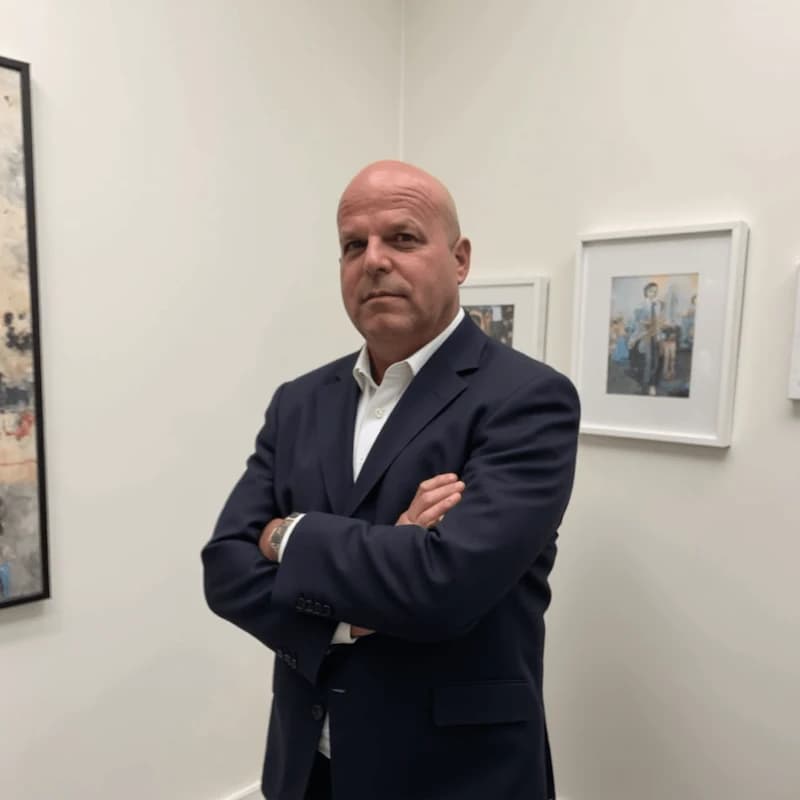
Founder & Lead Developer · Denham Springs, LA
Clint has built and marketed websites for 26 years, since founding BlakSheep Creative in 2000. He is also a 29-year firefighter and a 23-year member of IAFF Local 557, which is where the bias toward plain answers over sales copy comes from.
- Veteran-owned
- Firefighter-owned
- IAFF Local 557
More Questions About Email Outreach for Aircraft Brokers
Short answers to the questions that come up most on this topic.
Why did LinkedIn stop working for aircraft brokers?
What goes in the first email of the sequence?
What is a breakup email, and why does it work for brokers?
What deliverability setup does aviation outbound need?
Which metrics should an aircraft broker track for outbound email?
Should the emails come from a personal Gmail or a sending platform?

Your next step, without the guesswork
No surprises, clear next steps, and a fixed price before anything starts.