
By Clint Sanchez · Published · Updated · 7 min read
Quick answer
High-quality backlinks come from sites that are topically relevant, have a real audience, and chose to link because the page was worth citing. Five methods still work: publish something worth linking to, get quoted as an expert source, contribute genuine articles to relevant publications, replace broken links with your own resource, and claim the local links your business already qualifies for.
Key takeaways
- Relevance, editorial choice, a real audience, and natural anchor text are what make a link count. A missing one devalues the rest.
- Google asks for anchor text that is descriptive, concise, and relevant, which is the opposite of exact-match commercial anchors.
- HARO, later Connectively, shut down on 9 December 2024. Any guide still recommending it has not been updated since.
- Google's site reputation abuse policy targets third-party content published on a host site mainly for that host's ranking signals, and exempts clearly authored editorial pieces.
- Domain Authority and Domain Rating are third-party estimates from Moz and Ahrefs, not Google metrics. Use them to sort, never to target.
- Chamber listings, sponsorships, supplier dealer pages, and local media are links a local business already qualifies for and rarely claims.
- Expired domain abuse and scaled content abuse are separate named policies covering private blog networks and mass-generated link pages.
For a business in Denham Springs or Baton Rouge, the best backlinks are often local. Sponsoring a Livingston Parish youth league, a festival, or a school fundraiser usually comes with a link from the organization's site. Coverage in local news, a chamber listing, and supplier or partner pages carry geographic relevance that a guest post on a national blog cannot match.

Want this handled instead of DIY?
A 15-minute call, no script, no pressure. You leave with a plan either way.
High-quality backlinks come from sites that are topically relevant to yours, that a real audience reads, and that chose to link because the page was worth citing. In practice that means five things: publish something worth linking to, get quoted as an expert source, contribute to relevant publications, replace broken links with your own resource, and claim the local links your business already qualifies for.
The tactics that used to fill articles like this one are now named directly in Google's spam policies. What follows separates the two, and points at the sources so you can check rather than take our word for it.
What makes a backlink high quality
Quality is not a single score. It is the combination of four things, and a link missing any one of them is worth far less than the metric on your dashboard suggests.
| Signal | What good looks like | Why it matters |
|---|---|---|
| Relevance | The linking page is about your subject or your area | A plumbing link from a home services publication beats one from a general news site with a bigger score. |
| Editorial choice | A person decided to link, unpaid and unprompted by an anchor demand | Google's policies define link spam as links created primarily to manipulate rankings. |
| Real audience | The page gets actual visitors | A link that never sends a click usually never sent a signal either. |
| Anchor text that reads naturally | Descriptive, concise, relevant | Google's own guidance asks for exactly this and warns against generic text. |
On that last row, Google's documentation on making links crawlable states that "Good anchor text is descriptive, reasonably concise, and relevant to the page that it's on and to the page it links to". A page full of exact-match commercial anchors pointing at you is the opposite pattern, and it is the pattern spam systems look for.
Publish something worth linking to
Every other tactic on this page fails without this one, because outreach is a distribution method and it needs something to distribute.
Four asset types earn links reliably. Original data from your own operations, which nobody else can publish. A genuinely clearer explanation of something confusing in your industry. A free tool or calculator that saves somebody an hour. And a visual that makes a complicated idea legible, which is still the most linked-to format we produce.
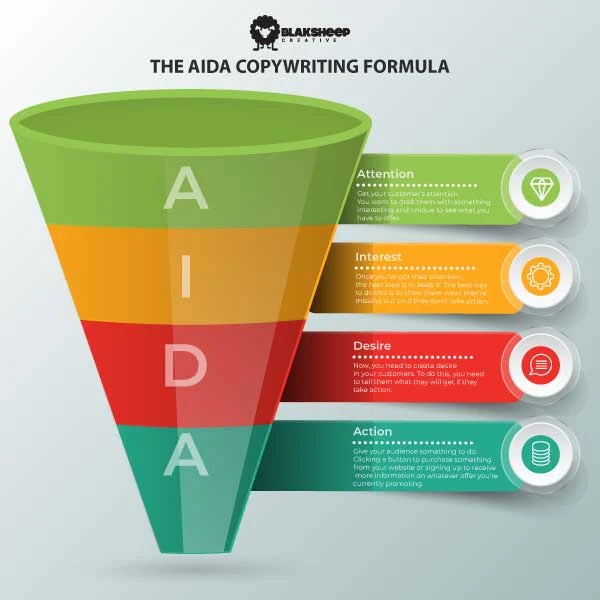
The test is simple: would a writer covering your topic reach for your page as evidence? Another list of tips fails that test. A chart with a number nobody else has passes it. Our guides to the AIDA framework and to building a content calendar cover the production side.
Get quoted as an expert source
Being quoted in an article is the cleanest high-authority link available to a small business, because the publication has every editorial reason to link to the person it just cited.
One thing has changed and most guides have not caught up. HARO, the service everyone recommended, was rebranded as Connectively by Cision and then shut down on 9 December 2024. Any article still telling you to sign up for HARO emails was written before that and has not been updated since.
The working replacements are Qwoted, Featured, and SourceBottle, plus direct relationships with the reporters who cover your industry or your parish. Answer fast, answer specifically, and give a usable quote rather than a paragraph of marketing. The mechanics carry over from our post on how press releases help SEO, where the same principle applies: the coverage is the asset, not the wire listing.
Guest posting, and what Google's site reputation policy changed
Contributing an article to a relevant publication still works. Buying placement on a large site because it has authority no longer does, and Google now says so explicitly.
Google's spam policies define site reputation abuse as applying "where third-party content is published on a host site mainly because of that host's already-established ranking signals, which it has earned primarily from its first-party content". The policy names a medical site hosting an unrelated third-party advertising page as an example, and explicitly exempts clearly authored editorial pieces with identified responsibility.
Read the exemption carefully, because it is the whole instruction. A genuine article, under your name, on a site your customers read, integrated with what that site normally publishes, is fine. A paid slot on a high-authority domain that has nothing to do with your industry is the exact thing the policy describes.
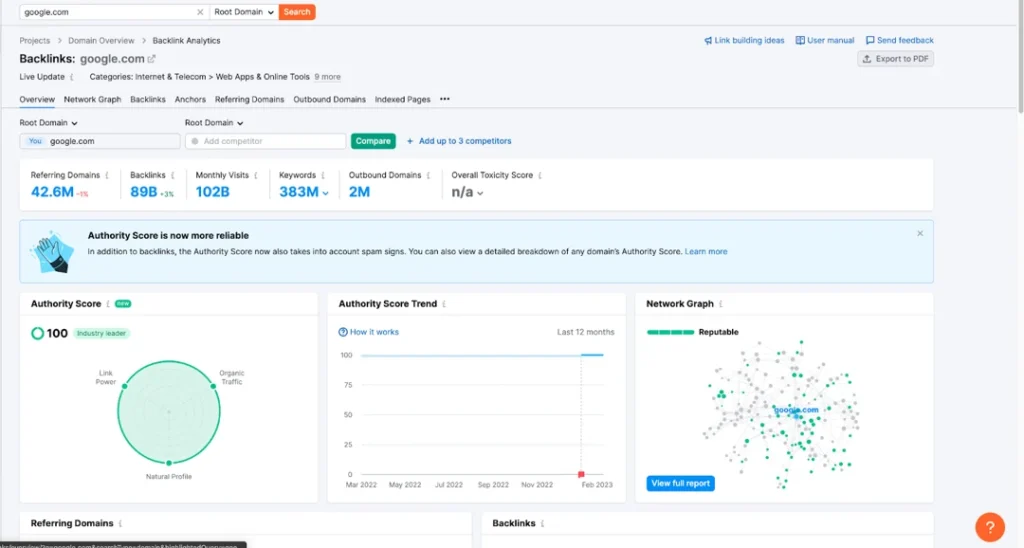
The authority scores you see in tools like Semrush, Moz, and Ahrefs are third-party estimates, not Google metrics. Use them to sort a shortlist, never as the reason a link is worth pursuing. A relevant site with a modest score outperforms an irrelevant giant.
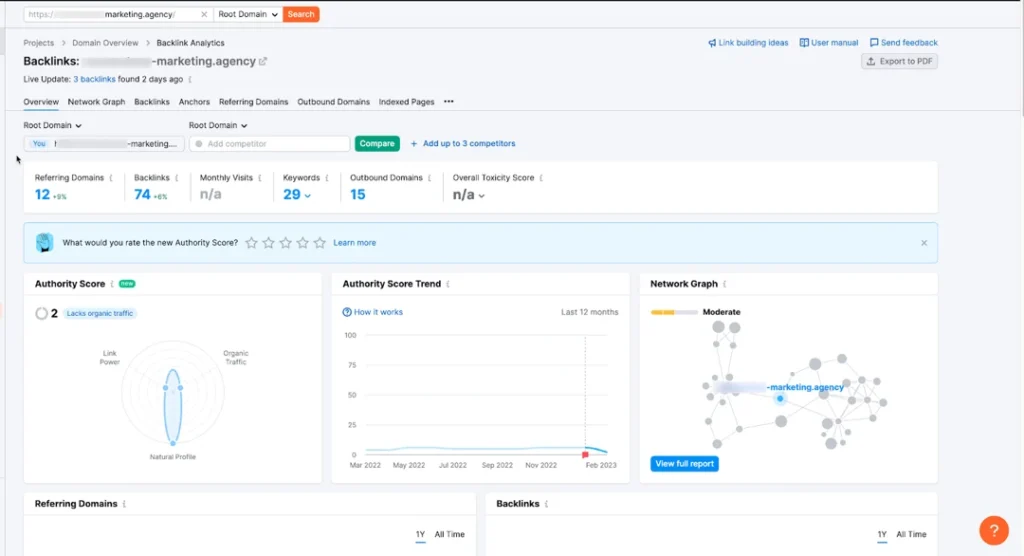
Relevance, editorial choice, a real audience, and natural anchor text are what make a link count. A missing one devalues the rest.
Broken link building
This is the most mechanical tactic on the list and it still works, because you are doing the site owner a favor rather than asking for one.
The process is four steps. Find resource pages in your industry that link out. Run them through a crawler to find links returning a 404. Check that you have, or can quickly write, a genuine replacement for what the dead page covered. Then email the owner naming the specific broken link, the page it sits on, and your replacement, in about four sentences.
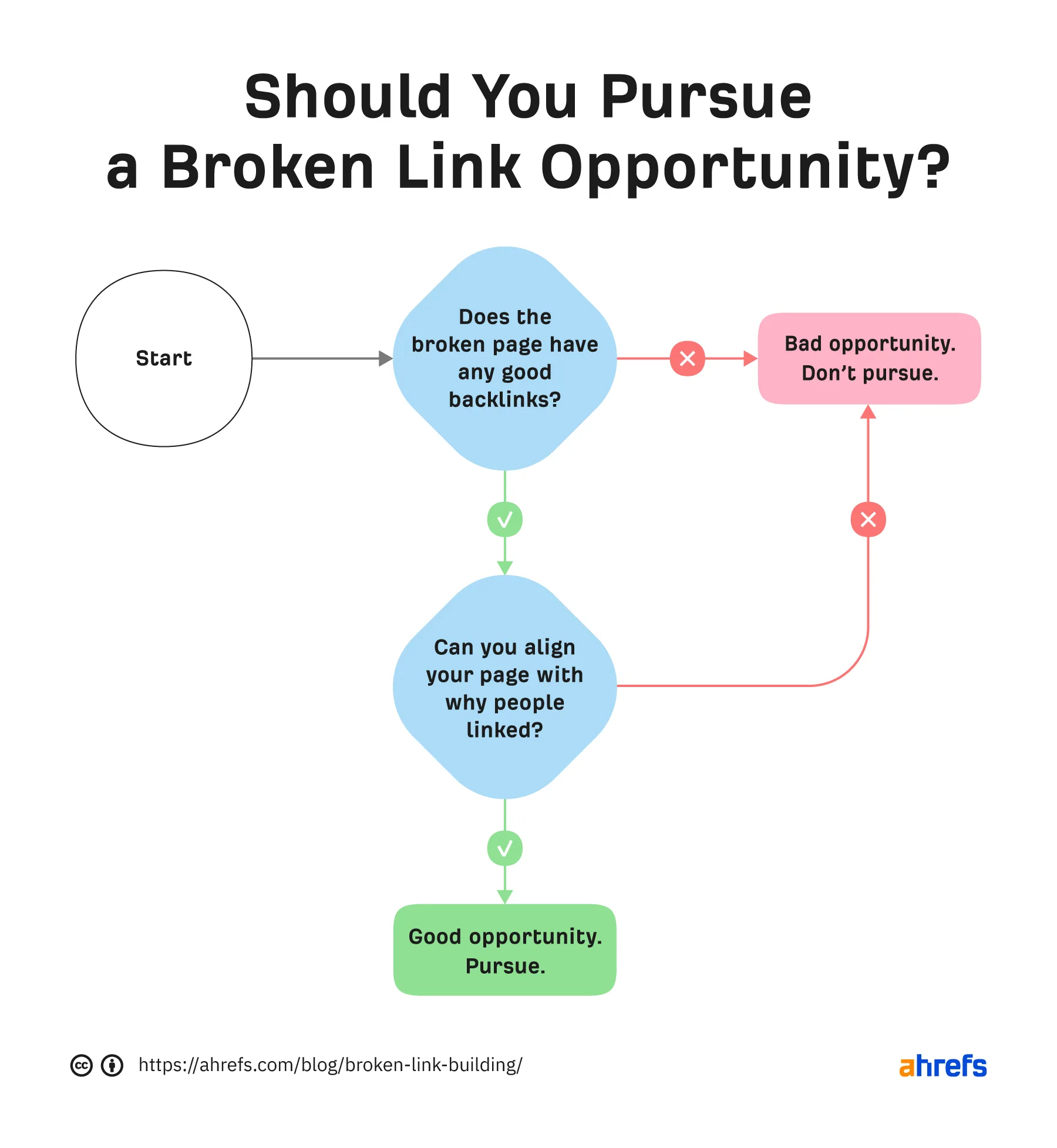
Response rates are low, in the single digits, so this is a volume activity. It works best when your replacement is genuinely better than what was there, and worst when you have written a thin page purely to have something to offer.
The local links most businesses never claim
For a business serving a specific area, this is the highest-return section on the page, and almost none of it requires outreach skills.
- Chamber of commerce. Livingston Parish, Baton Rouge, Ascension. Membership usually includes a listing with a link.
- Trade associations and licensing bodies. Most publish member directories that link out.
- Sponsorships. A youth league, a school fundraiser, a festival. The organization's site almost always lists sponsors with links.
- Suppliers and manufacturers. Dealer locators and certified installer pages are links you have already earned by being a customer.
- Local media. The Advocate, WAFB, WBRZ, and parish news pages cover local business news that national outlets will not.
- Partners you already refer work to. A mutual mention on a partners page, written naturally, is legitimate.
These links carry geographic relevance a national guest post cannot match, and Google's local documentation names how many sites link to your business as a prominence input. The full local sequence is in our Denham Springs local SEO process, and there is a related angle in getting free backlinks from your Google Business Profile.
Communities, mentions, and links that pass nothing
Reddit, Quora, LinkedIn, and industry forums do not hand out ranking credit. They are worth time for a different reason.
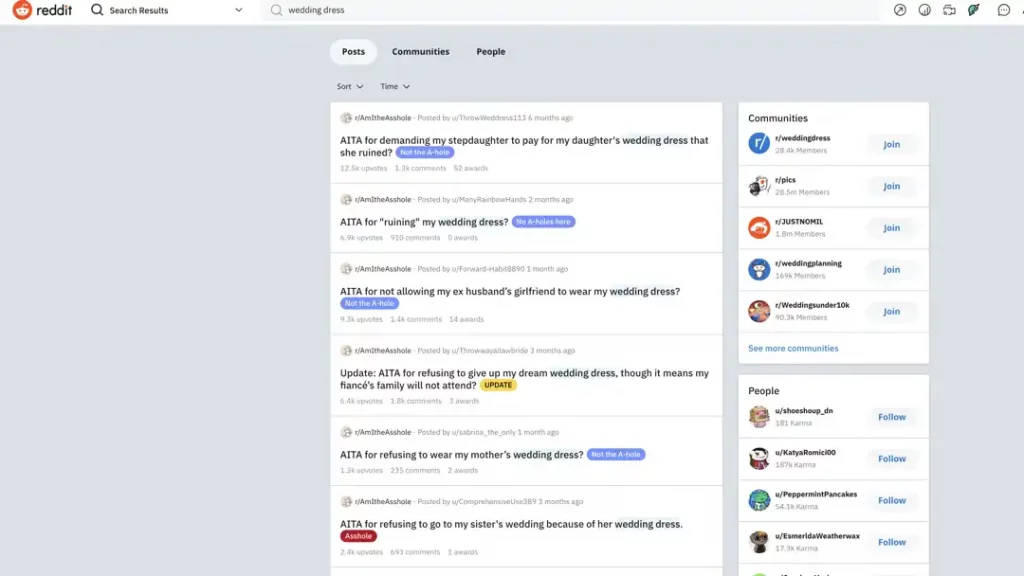
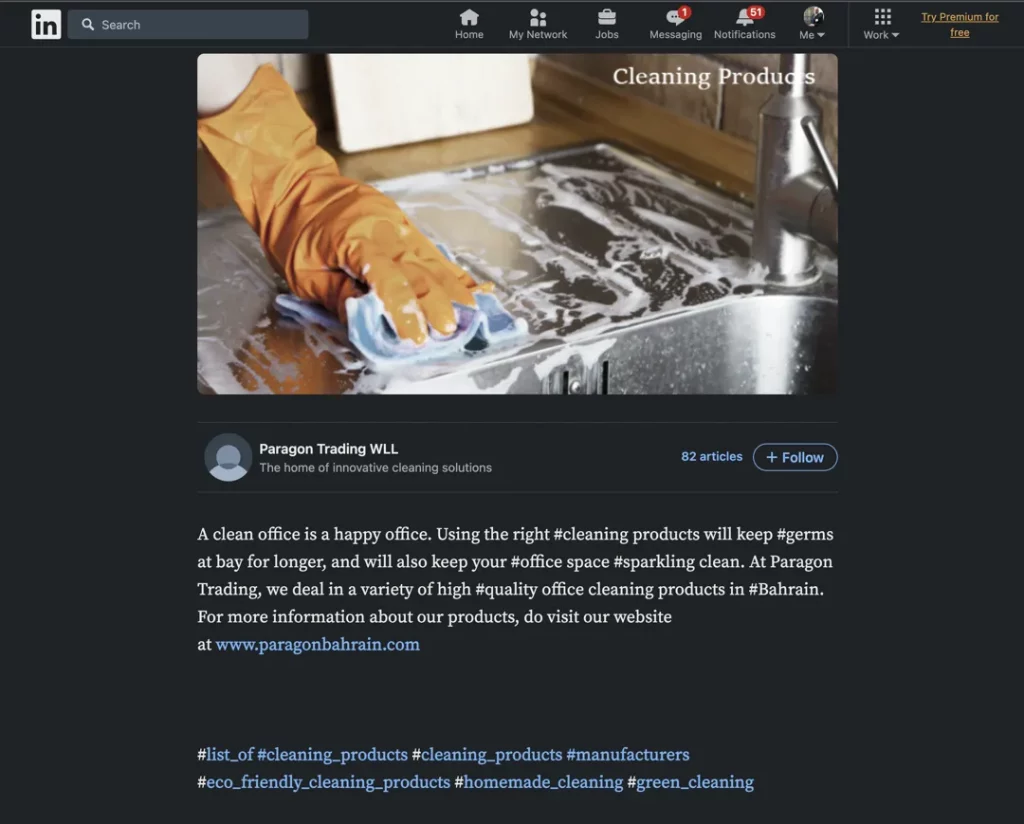
Google recommends the rel="ugc" attribute for user-generated content links such as comments and forum posts, and says links marked that way will generally not be followed. So the community link itself does nothing. What it does is put your answer in front of people who write, and community platforms are now among the most-cited sources in AI answers, which is a second reason to be present in them.
Treat these as discovery channels with a measurable referral number attached. Our post on using Quora for SEO works through what that looks like in practice.
“Mr clint is an amazing guy who is extremely professional and responsive, when it comes to the service he provides. His website building and promoting skills are top tier.”

The tactics Google's policies name directly
Several long-standing link building methods are described in Google's published spam policies. These are not gray areas and they are not worth the risk.
Buying links that pass ranking credit, exchanging links at scale, and low-quality directory or bookmark submissions are all listed under link spam. Private blog networks built on expired domains are covered by a separate policy: Google defines expired domain abuse as buying an expired domain and repurposing it "primarily to manipulate search rankings by hosting content that provides little to no value to users". Mass-generated pages built to host links fall under scaled content abuse.
The practical risk is rarely a manual penalty. It is that the effect of the links gets removed, and any ranking resting on them goes with it. That is a worse outcome than never having bought them, because you have paid twice. Our roundup of off-page SEO techniques rates the full list of tactics against the same policies.
How to vet a link opportunity in two minutes
Before spending an hour on any placement, run these five checks. Any single failure is usually enough to walk away.
- Would you read this site? Open it and look. If the homepage is a wall of unrelated sponsored posts, stop.
- Is it about your subject? Topical relevance beats every authority score in the list.
- Does it have an audience? Check for comments, shares, or a real social presence.
- Are they asking for money for a followed link? That is the definition of the thing Google's policy prohibits.
- Would the link make sense to a reader? If the only reason it exists is the link, it does not belong there.
Applied honestly, this filter removes most of what lands in an inbox offering guest post opportunities, which is the point.
Where to start
Spend the first month on the local list, because those links are already yours to claim and require no outreach. Then build one asset worth citing per quarter and pitch it to a short, relevant list. If you would rather have it run for you, our SEO services page covers the scope, and the search work is included with every plan we run.
About the author

Founder & Lead Developer · Denham Springs, LA
Clint has built and marketed websites for 26 years, since founding BlakSheep Creative in 2000. He is also a 29-year firefighter and a 23-year member of IAFF Local 557, which is where the bias toward plain answers over sales copy comes from.
- Veteran-owned
- Firefighter-owned
- IAFF Local 557
Common Questions About High-Quality Backlinks
Short answers to the questions that come up most on this topic.
How many backlinks do I need to rank?
Are paid backlinks against Google's rules?
How long do backlinks take to affect rankings?
Is guest posting still worth doing?
What replaced HARO for getting quoted?
Do nofollow links have any value?

Your next step, without the guesswork
No surprises, clear next steps, and a fixed price before anything starts.