
By Clint Sanchez · Published · Updated · 11 min read
Quick answer
A local business operating through a disruption, a storm, a flood, a road closure, or a public-health event, needs to do four things: communicate constantly through Google Business Profile, the website, social media, and email about hours, closures, and pickup or delivery options; keep operating by adapting delivery, adding online ordering, and meeting customers virtually; use downtime to learn; and follow every changing local, state, and federal rule.
Key takeaways
- Silence reads as closed: update Google Business Profile special hours, temporarily closed status, service attributes, and a Google Post within the first hours of any disruption.
- Do not add descriptors like Delivery Available to your business name; Google allowed it briefly in 2020, but it is now a policy violation. Use attributes instead.
- A site-wide website banner stating closures, new hours, or shipping options is the fastest way to reach customers when listings lag.
- Keep hours and phone numbers identical across Google, Bing Places, Yelp, Apple Business Connect, and Facebook so no customer drives to a dark storefront.
- PayPal, Square, or Stripe payment links and the WooCommerce plugin for WordPress let a business start taking online orders within a day.
- Denham Springs clients moved a yoga studio, pain management appointments, and guitar lessons online in 2020, and two kept the online option as a second line of business.
- Follow every emergency order; the Central, Louisiana pastor who defied the 2020 orders is still the first result for his church's name.
Louisiana had been through Katrina and the August 2016 flood before the pandemic hit, and Livingston Parish businesses knew the drill: tell customers you are open, tell them how, and keep telling them. The Central pastor who defied the stay-home orders became a national example of how fast the community turns on a business that ignores the rules.

Want this handled instead of DIY?
A 15-minute call, no script, no pressure — you leave with a plan either way.
Local businesses are truly the backbone of any community. They are the neighbors who are there to serve, sustain, and inspire the people and culture of their town, making it a place to call home.
We first wrote this guide in March 2020, in the opening weeks of the COVID-19 shutdown, when every small business owner we knew had the same unanswered questions.
- When can we reopen?
- How long will we have to work from home?
- What will the shutdown do to our business?
The pandemic-specific details have long since expired, so we have rewritten the post around what actually held up: the playbook for keeping a local business visible and operating through any disruption. In South Louisiana that means a hurricane, a flood, a week without power, a road closure that cuts off your storefront, or the next public-health event. The advice is the same, and we would rather you have it before you need it.
Before we get into it, we want to say thank you for what you provide to your community as a small business owner.
In this article, we will show you local SEO and communication steps that make a real difference in the first days of a disruption, along with advice from other SEO professionals and some lofty thoughts about how, together, we build a stronger local future.
Be sure to check out our related articles:
Local Business Disruption Tips (What We Learned From COVID-19)
Four things separated the businesses that came through the shutdown intact from the ones that did not: they communicated constantly, they kept operating in some form, they used the slow time to get better, and they followed the rules. Here is each one in practice.
Communicate (a Lot)
The single most important thing any local business can do during a disruption, essential service or not, is to give timely and accurate information to its customers and its community. Silence reads as closed.
Here are the places to do it, in order of how fast customers will see them:
Google Business Profile
SEO professionals have stressed the importance of a Google Business Profile (GBP) for years, and a disruption is when it earns its keep. Google is the intermediary between your brand and the public, and your profile is the first thing a customer sees when they search your name to find out if you are open.
Want this handled for you? We build and market websites for Louisiana businesses, and we will tell you honestly if you do not need us.
Google also learned from 2020. Business Profiles now carry a permanent set of fields built for exactly this situation, and edits publish within minutes rather than the days they took during the shutdown. Use these four:
Business Name
Leave your business name alone. During the 2020 shutdown Google briefly tolerated names like “Larry’s Grill, Delivery Available,” but that window closed, and adding descriptors to your name is now a policy violation that can get the profile suspended. Put curbside, delivery, and pickup in the attributes and service options fields instead, where Google shows them as badges on your listing.
Phone Number
If your storefront is closed but you still want customers to reach you, forward the business line to a cell phone, update your voicemail greeting with the current situation, and only change the phone number on the profile if forwarding is not possible. A changed number on the listing is one more thing to remember to change back.
Hours of Operation
SEO experts still debate showing no hours versus limited hours. Our advice is Google’s method of setting special hours for the affected dates, which keeps your regular hours intact for when things return to normal. Multi-location businesses can set special hours in bulk or through the API.
If you are closed for more than a few days, use the temporarily closed status rather than leaving stale hours up. A temporarily closed profile can dip in rankings while the label is on, but it comes back when you remove it, and a customer who drives to a dark storefront does not come back at all. Safety and honesty trump rankings.
Update Posts
The COVID-19 post type Google introduced in 2020 is gone, but ordinary Google Posts do the same job. Publish one post that fits everything a customer needs to know: current status, hours, how to order, and how to reach you. Pin the same information as your first review response if you are getting questions there.
In addition to any edits you make to your GBP, update your most visible listings on other platforms. Bing Places and Yelp both offer a temporarily closed status and special hours; Apple Business Connect and Facebook carry hours too. Keep them consistent, because a mismatch is what a customer remembers.
Website
Listings can lag, but you have full control of your website, and it should be the home base for anything the public needs to know. Here is a checklist of items to update on your site as soon as possible:
- Put a site-wide banner on all pages with key information such as “temporarily closed,” “drive-up service available 9-5 Monday – Friday,” or “storefront closed but we can still ship to you.”
- Explain how the disruption affects your business and list every service that remains available.
- Edit your location landing pages, in bulk or one at a time, to reflect closures, new hours, and new offers.
- Make sure your hours are accurate everywhere they appear on the site, including the homepage, contact page, about page, and landing pages.
- If your contact phone number has changed, update it everywhere it exists on the website. Don’t overlook headers, footers, or sidebars.
- If you have a blog, use it to keep the public updated about the availability of products and services.
- Make sure your website has highly visible links to any social media platforms you are using for updates. (This is an SEO best practice we do on all of our website development projects.)
- Help your community by publishing content about local resources for basic needs.
Social Media and Email Blasts
“Make it clear what you’re doing, such as things like home delivery or curbside pickup. And mention it EVERYWHERE. The companies that are being successful with this are telling people non-stop how they can still support them. Additionally, don’t be afraid to reach out to people who have supported you via social media in the past and ask them to mention what you’re doing.” Dana DiTomaso, Kick Point, during the 2020 shutdown. It is still the best one-paragraph summary of disruption marketing we have read.

If your customers use Facebook, Instagram, YouTube, TikTok, or another platform, a disruption is when the instant communication those sites provide matters most.
Use social media to highlight not just your own services but any services you discover other businesses in your city are providing. This simple act strengthens your community. Ask your followers and customers to share any information that makes your town safer or better during the event.
Email is one of the best tools you have to tell your customer base about changes and special offers. Let us suggest that you only communicate what is truly necessary.
Every disruption produces a few Baton Rouge digital marketers who exploit it for senseless self-promotion instead of putting customers’ needs first. Don’t be an opportunist. Be a helper.
If you’re too busy to do it yourself, we can assist you with social media management.
Don’t stop at your listing, website, social media, and email. Use offline media as well. Call into local radio shows and reach out to local newspapers if you have facts or offers that can help the public.
Operate The Best That You Can
“Find out what support is being made available for you at [the] government level, tap into this as soon as you can, it’s likely there will be a lot of paperwork and many hoops through which you’ll need to jump.” Claire Carlile, Claire Carlile Marketing
After a declared disaster, research any support offered to your business by the Small Business Administration, the state, and your parish, and use it to remain as operational as possible for the duration. The paperwork is real, and so is the money.
Here are four adjustments to consider, and to plan for before you need them:
1. Fulfill Essentials
If your business is allowed to operate, adapt the way you deliver it. During the shutdown we watched local businesses do all of the following, and every one of them works again after a hurricane:
- Healthcare providers handling appointments by phone or video and offering drive-up testing.
- Drive-through, delivery, and curbside pickup for meals, prescriptions, groceries, and other necessary goods.
- Grocery stores partnering with third parties such as Instacart for home delivery.
- Businesses that serve vulnerable populations, banking, laundry, and fuel taking and communicating extra safety steps for customers and staff.
- Brands donating goods and services to fill essential needs. One of our clients, The Afya Foundation, raised over $100,000 in a single weekend in 2020 with a $6-for-2 campaign to deliver masks to healthcare workers in New York City.
2. Audit your Ecommerce
If your local business already sells online, you are ahead of the game and set up to keep selling by delivery or pickup. If you have not implemented any form of online selling and your supply chain is still viable, consider these options:
- If you have a card processor, the most basic solution is to take orders over the phone and then ship them, allow curbside pickup, or deliver them.
- If you don’t have a card processor, PayPal invoicing, Square, or Stripe payment links are easy to set up and use.
- If your site is built on WordPress, you (or a web developer) can set up the WooCommerce plugin with PayPal or Stripe as a built-in payment option. You can set up flat-rate shipping, free shipping, or local pickup, and WooCommerce automatically sends order confirmation emails to both owner and customer and lets you create discount coupons.
- If you’ve decided e-commerce is a wise move for the present and the future, and would like to learn how we can add it to your business website, contact us for a free consultation.
3. Connect With your Customers Virtually
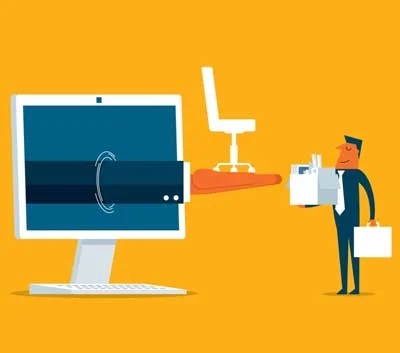
In Denham Springs alone, we watched one client move her yoga studio to online classes, another offer secure online pain management appointments, and a third teach guitar lessons over the web. All three kept revenue coming in while their doors were closed, and two of them kept the online option afterward as a second line of business.
South Louisiana people are social by nature, and nothing replaces in-person relationships, but virtual meetings are the next best thing and can keep a business operating in some capacity through almost any disruption.
Check out these resources:
- Zoom has video tutorials on its site to help you set up and use the product. Google Meet works from any Gmail account with no setup at all.
- If you’re a healthcare professional, Doxy is a simple, secure telemedicine platform with a free tier, multiple waiting rooms, and access from computers, tablets, and smartphones.
4. Use Downtime to Learn
If a disruption has partly or completely paused your business, and you find yourself with far more time than usual, use it to gain business knowledge you never have time for otherwise.
Some of the best digital marketing education is free year-round:
- Moz Academy offers free SEO and local SEO courses.
- Yoast SEO Academy has free courses on SEO fundamentals and the WordPress block editor.
- Google Skillshop covers Google Ads, Analytics, and Business Profile at no cost.
- You already know: YouTube has anything you want to learn.
Follow All Regulations and Laws
Start each day of a disruption by reviewing local and state news so you know which regulations apply to your city and parish that day. Emergency orders change quickly and vary from place to place, and your business must know which services it is allowed to offer.
Don’t be that Pastor in Central, Louisiana (a suburb of Baton Rouge).
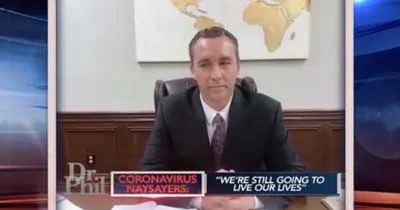
The lasting lesson from 2020 is how fast the public turns on an organization that ignores the rules. Pastor Tony Spell defied suggestions, and ultimately orders, from the local, state, and national levels and kept holding services at his church in Central.
The backlash from busing people in from a five-parish radius (that’s what we call counties here in Louisiana) vilified him and his entire organization on a national stage; he was even grilled by Dr. Phil. Years later it is still the first thing that comes up when you search the church’s name. Your business does not want that kind of permanent record.
Avoid Fake News
Social media is a great connector within your community at any time, but beware of misinformation and scams during a disruption. Both spike within hours of any emergency.
Get your news from sources you trust, and if you have any doubt about a specific guideline, contact local authorities directly. This article does not take the place of laws and regulations specific to your community.
Begin working towards a stronger local future
“I would say generally it’s critical for business owners to connect with one another. To the extent they can join or form groups for support or to share ideas, they should. This is a terrible and scary time but there are also potential opportunities that may emerge with creative thinking. The ‘silver lining’, if there is one here, is the opportunity to reexamine business processes, try new things, and think, out of necessity, very creatively about how to move forward. Employees are also a great source of ideas and inspiration.” Greg Sterling, Search Engine Land, 2020
We would like to close with some positive thinking. Local SEO isn’t just a service we provide at BlakSheep Creative. It’s a culture that we share that believes in well-resourced communities.
All of us have the same basic common needs:
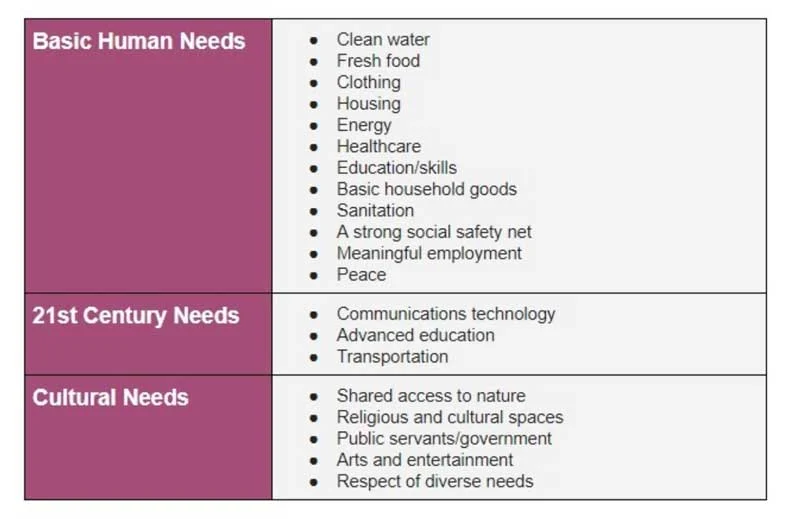
The chart above is the framework of a functional, prepared, and healthy society. It covers basic human needs, the cooperation required to run a stable community, roles everyone can take to support life and culture, and relief from inevitable disasters. There’s also land and water stewardship, a need for skilled educators, medical professionals, artisans, and a peaceful platform for full human expression.
Hurricane Katrina, the Great Flood of August 2016, and the COVID-19 pandemic each showed how Louisiana sustains itself, and how our communities come together to care for one another in times of need. There will be a next one.
We’ve done it before, and we’ll do it again.
Looking for a real conversation about your business: no sales pitch, no commitment? Book a free 15-minute Discovery Call.

Ready to put this to work?
Talk to the people who would actually build it.
About the author
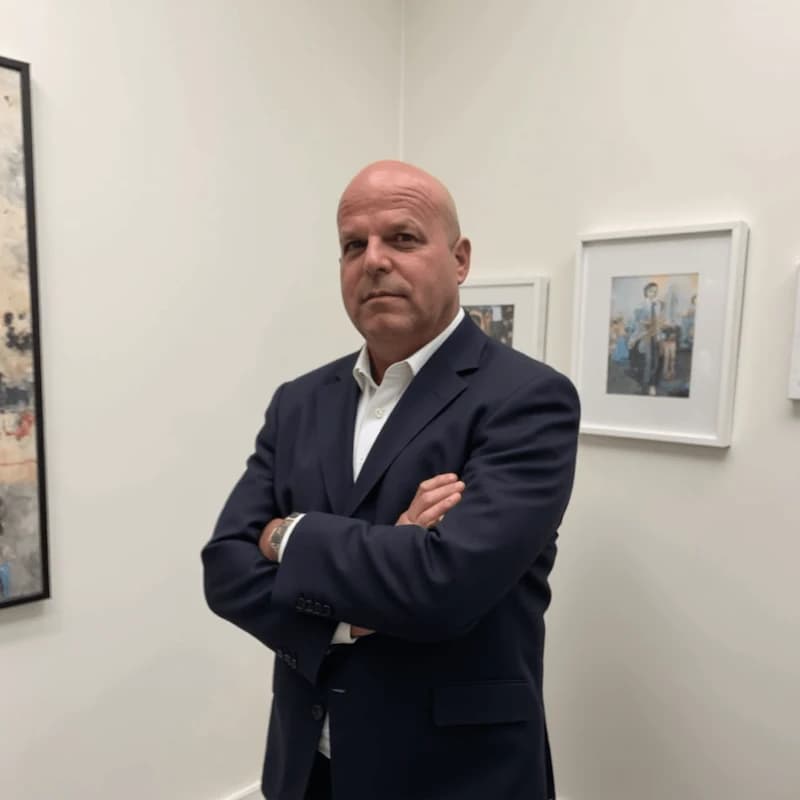
Founder & Lead Developer · Denham Springs, LA
Clint has built and marketed websites for 26 years, since founding BlakSheep Creative in 2000. He is also a 29-year firefighter and a 23-year member of IAFF Local 557, which is where the bias toward plain answers over sales copy comes from.
- Veteran-owned
- Firefighter-owned
- IAFF Local 557
Common questions about digital marketing
What should a business update on Google Business Profile during a disruption?
What should a business website say during a shutdown or storm closure?
How can a small business add online ordering quickly?
Did Louisiana businesses really move online during COVID-19?
Why does following emergency regulations matter for a business's reputation?

Your next step, without the guesswork
No surprises, clear next steps, and a fixed price before anything starts.