By Clint Sanchez · Published · Updated · 10 min read
Quick answer
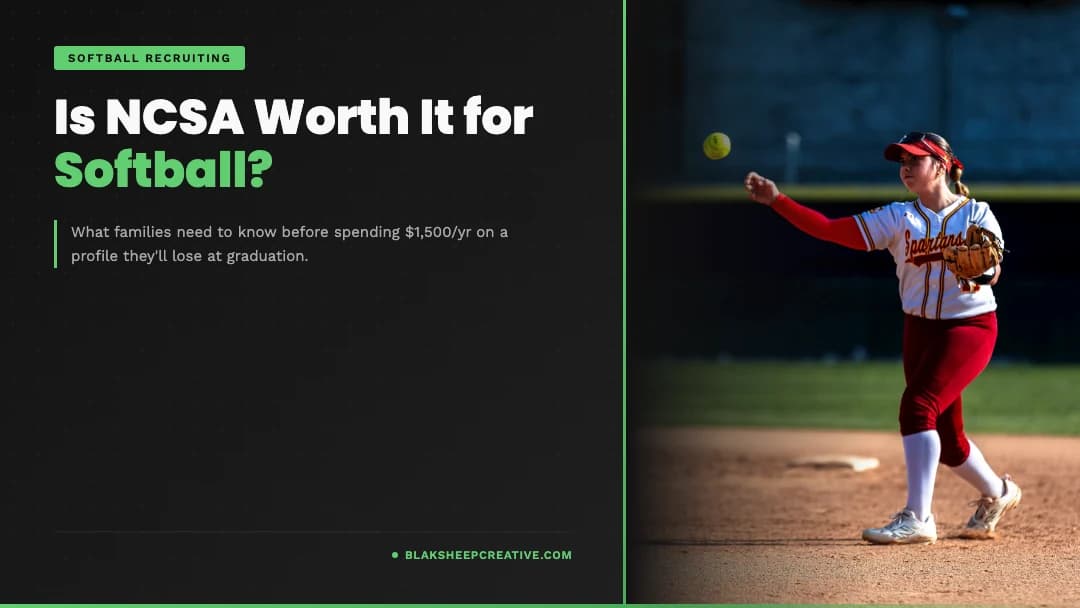
For most softball families, NCSA is not worth $1,500 to $4,200 per year. NCAA Division I coaches cannot initiate contact until September 1 of a player's junior year, so freshman and sophomore subscriptions produce no coach-initiated outreach, and the profile disappears when payments stop. Only 1.7% of high school softball players reach D1. Coaches recruit from showcases and athlete-initiated emails, then look the player up, which an owned recruiting website handles for a one-time cost.
Key takeaways
- NCSA does not publish pricing; documented quotes run from about $1,500 per year for a base tier to more than $4,200 for MVP+, set in a sales call.
- As of May 22, 2025, NCSA and SportsRecruits are both owned by IMG Academy, so comparing them is comparing two products from one parent company.
- According to CollegiateGoals' NCAA data, 1.7% of high school softball players reach Division I and about 5.7% play in any NCAA division.
- NCAA D1 rules bar coaches from initiating contact until September 1 of a player's junior year.
- CommitBound estimates competitive programs receive 50 to 200 recruiting emails a week; coaches use platforms to verify players after contact, not to find them cold.
- ScholarshipStats counts 1,673 U.S. colleges with varsity softball, including 189 NAIA and 366 NJCAA programs that D1-focused platforms underserve.
- A subscription profile is deleted after graduation; a one-time recruiting website the player owns stays live and can be emailed, linked, or put on a QR code.
Travel ball families around Baton Rouge, Denham Springs, and Walker already spend $5,000 or more a season on team fees, tournaments, and hotel weekends in Hattiesburg, Gulfport, and Houston. An NCSA renewal on top of that buys a profile a coach never browses. The Louisiana showcase circuit is where coaches see the player; the site she emails them afterward is what needs to be right.

Want this handled instead of DIY?
A 15-minute call, no script, no pressure. You leave with a plan either way.
What NCSA Actually Delivers for Softball Recruiting Families
NCSA charges between $1,500 and $4,200 per year for a recruiting profile your athlete loses at graduation. NCAA Division I coaches cannot legally initiate contact until September 1 of a player’s junior year, so freshman and sophomore subscriptions generate zero coach-initiated outreach. And as of May 2025, NCSA and SportsRecruits are owned by the same parent company.
TLDR:
- NCSA pricing runs $1,500–$4,200+/year and is never listed publicly; pricing is revealed in a high-pressure sales call
- As of May 22, 2025, NCSA and SportsRecruits are both owned by IMG Academy. Comparing them is comparing two products from the same corporate parent
- Only 1.7% of high school softball players reach D1; 5.7% reach any NCAA division
- D1 coaches cannot legally initiate contact until September 1 of junior year. Subscriptions during freshman and sophomore year produce zero coach-initiated outreach
- Coaches respond to athlete-initiated outreach; they do not find players by browsing platform profiles cold
- A one-time recruiting website the player owns permanently outperforms a subscription profile that expires when payments stop
BlakSheep Creative has built websites in Denham Springs, Louisiana since 2000. When families started calling us after spending $5,000+ per season on travel ball and another $1,500+ per year on NCSA profiles they’d lose at graduation, we built a different answer: a one-time recruiting website the athlete owns, no renewal required. That service is Recruit Spotlight. This article explains the context behind it.
You pay once. Your athlete owns it forever.
Recruit Spotlight builds a custom recruiting website for travel ball softball players. No subscriptions, no platform lock-in. Starter packages start at $297. Your athlete keeps the domain and the site after every season, every year, until she signs.
What NCSA Charges and Why It’s Never on Their Website
NCSA does not publish its pricing. The company structures its sales process around a phone consultation where a representative reviews a player’s information and presents a custom quote. Based on multiple documented cases and reporting by recruiting-industry sites, NCSA pricing ranges from roughly $1,500 per year for a base-tier membership to over $4,200 for an MVP+ plan.
One parent documented a quote of $3,000 for an annual MVP plan after a 45-minute phone call. Another reported $1,800 for the Champion tier. The price is not fixed. It varies based on sport, class year, and the family’s apparent ability to pay.
GetRecruited’s 2025 pricing breakdown documents the NCSA tier structure from collected user reports. Treat the ranges as approximations. NCSA adjusts pricing in individual conversations.
The secrecy is structural. Families who research NCSA costs find forum posts and third-party estimates, not a published rate card. That information gap is the point: you enter the sales call not knowing what other families paid, which makes it harder to negotiate or walk away.
There are also multi-year contract options. Families who sign a two- or three-year agreement lock in a lower per-year rate, but they commit to paying regardless of results. When payments stop, the profile goes dark.
The 2025 Merger Most Families Missed
On May 22, 2025, IMG Academy announced the acquisition of SportsRecruits. IMG Academy already owned NCSA. Both NCSA and SportsRecruits are now subsidiaries of the same parent company.
If you have been comparing NCSA and SportsRecruits as competing platforms (checking which one coaches use more, which has better features, which is worth the cost), you have been comparing two products from the same corporate parent.
SportsRecruits offers a lower-cost subscription ($399/year or $99/month). It has been positioned as a more affordable alternative. But since May 2025, that comparison is internal to one company. The “free cross-check” many families use to verify NCSA’s value is a revenue stream for the same organization.
No article currently ranking for “NCSA review” or “NCSA vs SportsRecruits” mentions this merger. The IMG Academy press release was published in May 2025. Most comparison guides have not been updated to reflect it.
The Funnel Math: How Many Softball Players Actually Reach D1?
Understanding what NCSA is selling requires understanding the recruiting funnel it operates inside.
The National Federation of State High School Associations (NFHS) recorded 345,451 girls playing fast-pitch softball in 2023-24. CollegiateGoals’ 2024 data puts the broader figure (including club and travel programs) at 362,038 players.
Of those players, only 1.7% reach NCAA Division I: roughly 6,074 athletes. Another 1.3% play D2, 2.7% play D3. Total NCAA participation across all three divisions is about 5.7% of high school players.
No recruiting platform changes those percentages. A player’s position in that funnel is determined by her performance at tournaments, her academic profile, the timing of her outreach to coaches, and the specificity of her fit with a program’s roster needs. A profile on NCSA doesn’t alter any of those variables.
What those percentages don’t account for: ScholarshipStats documents 1,673 U.S. colleges that sponsor varsity softball, including 189 NAIA programs and 366 NJCAA programs that most subscription platforms underserve because their focus is on the D1 market. Families locked on D1 often miss legitimate scholarship paths at NAIA and JUCO programs that actively recruit.
NCSA does not publish pricing; documented quotes run from about $1,500 per year for a base tier to more than $4,200 for MVP+, set in a sales call.
What College Coaches Actually Do When Recruiting Softball Players
The most critical thing most families don’t know about NCSA is that college coaches do not primarily find players by browsing platform profile databases.
CommitBound estimates that competitive programs receive 50 to 200 recruiting emails per week. Coaches manage that volume by responding to inbound outreach from players they’ve already seen at tournaments, heard about from travel coaches, or been referred to by a trusted source. They use platforms to verify a player’s information after contact is made, not to find them cold.
There’s also a legal constraint that changes the math entirely. NCAA Division I rules prohibit coaches from initiating contact with prospective student-athletes until September 1 of the player’s junior year. Coaches may observe players at events before that date, but written or verbal contact initiated by the coach is not permitted.
A family that buys an NCSA subscription in a player’s freshman year is paying for two years of profile exposure during a period when D1 coaches cannot legally respond to what they find on a platform. The family is counting on coaches seeing the profile, being interested, and then contacting the player the moment the contact window opens in junior year. In practice, coaches recruit by watching players at showcases and by responding to athlete-initiated outreach. They do not queue up profiles to revisit two years later.
SportsRecruits’ own 2024 Halftime Report shows 2.2 million coach profile views. Coaches do look at profiles. But the sequence matters: coaches view profiles after a player has sent an introductory email or they’ve seen her at a tournament. The profile verifies interest. It does not create it.

Your daughter needs a recruiting site that works after she sends the email.
Recruit Spotlight builds the page coaches land on when they look her up. Custom stats, schedule, highlight video, bio, and a direct inquiry form that routes to your phone. One-time payment. She owns the domain.
Renting a Profile vs. Owning a Recruiting Website
The most structurally different thing about NCSA compared to a custom recruiting website is what happens when payments stop.
An NCSA membership is a subscription. The profile exists as long as payments continue. When a player’s recruiting process ends (by committing, by aging out, or by stopping payments), the profile goes offline. The family does not own the URL. There is nothing to share independently, nothing that exists outside the platform.
A custom recruiting site is a permanent asset. The player owns the domain. The URL does not expire when a credit card stops being charged. It can be emailed directly to coaches, linked from social media, and printed on a QR code for showcases. After signing, the player keeps it as part of her personal brand through college and beyond.
That distinction matters most at the point of contact. When a player sends a well-crafted introductory email to a coaching staff, the coach’s next step is to look her up. What they find is the signal. A template-style NCSA profile looks identical to the other 40 profiles the coach reviewed that week. A custom one-page site with real photos, accurate stats, a highlight reel, and a coach inquiry form that routes directly to a parent’s phone is different.
Platform Comparison: What You’re Buying in 2026
| Platform | Cost | Contract type | Profile ownership | Inquiry routing | After graduation |
|---|---|---|---|---|---|
| NCSA | $1,500–$4,200+/yr | Multi-year options | No | Platform inbox (delayed) | Profile deleted |
| SportsRecruits | $399/yr or $99/mo | Monthly or annual | No | Platform inbox (delayed) | Profile deleted |
| FieldLevel | $348–$948/yr | Monthly or annual | No | Platform inbox (delayed) | Profile deleted |
| Recruit Spotlight | $297–$997 one-time | None | Yes: player owns domain | Form routes to parent’s phone/email | Site stays live permanently |
The table above does not claim platform inboxes are worthless. SportsRecruits logged 2.2 million coach profile views in 2024, which confirms coaches use platforms to look players up. The issue is sequence: that verification happens after athlete-initiated contact through other channels, not from cold profile browsing. A custom recruiting website handles the same function without the subscription cost and without the expiration date.
“Clint at BlakSheep Creative is incredible! His proactiveness and service are such a rarity in his business category! I can't wait to see how his business and mine both grow in 2021!”
Softball Recruiting Platform Questions We Hear Most
These are the questions families ask after they start digging past the platform marketing pages and want straight answers.
Is NCSA a scam for softball?
NCSA is a real company with paying customers and documented commitments. The complaints come from the pricing opacity, high-pressure sales calls, multi-year contracts, and profiles that disappear at graduation. The better question is this: does $1,500–$4,200 per year for a profile you’ll lose at graduation represent the right budget allocation, given that coaches don’t passively browse profiles to find players they’ve never seen?
Do college coaches actually use NCSA to find softball players?
Coaches use NCSA to verify a player’s information after making contact through other channels: primarily showcases and direct athlete outreach. They do not cold-browse profile databases to find prospects they’ve never seen. SportsRecruits’ 2024 Halftime Report documents 2.2 million coach profile views, but that viewing happens after contact is made through other channels.
What’s the difference between NCSA and SportsRecruits now?
As of May 22, 2025, both are owned by IMG Academy. NCSA is the premium paid tier with undisclosed pricing. SportsRecruits is the lower-cost subscription option. They operate as separate platforms but share the same corporate parent. Families using SportsRecruits as a free cross-check against NCSA are now comparing two products from one company.
When should my daughter start her softball recruiting profile?
A recruiting website is worth having by the end of freshman year. Not because coaches can contact her before junior year, but because it needs to be ready when the contact window opens and when she begins sending outreach emails. Building it during junior year, when the contact period is already active, is too late for the outreach season. An owned site built once is ready whenever she is.
What should a softball recruiting website include?
At minimum: a current headshot and action photo, primary position and key stats (batting average, ERA, or the relevant metrics for her position), current travel team and schedule, highlight video, academic profile (GPA, graduation year, intended major), and a direct coach inquiry form. The form should route to a parent’s phone or email, not to a platform inbox with a 24-48 hour response window that creates friction at the exact moment a coach is ready to make contact.
The Bottom Line on NCSA for Softball Families
NCSA has a real product, paying customers, and some documented commitments. That does not change the structural problems: pricing hidden behind a sales call, subscriptions that expire at graduation, profiles that look like every other template on the platform, and a D1 contact timeline that makes freshman and sophomore subscriptions functionally invisible to coaches for two full years.
NCSA is a legitimate company. The real question is what $1,500–$4,200 per year for a profile you’ll lose at graduation is actually buying, especially now that NCSA and SportsRecruits are both products of the same parent company.
A custom recruiting website costs $297 once. The player owns the domain. The site stays live until she signs. When coaches look her up after she emails them, they find a page that is hers, not a template next to thousands of others on a subscription platform.
That is Recruit Spotlight.
One payment. She owns it forever.
Recruit Spotlight builds a custom recruiting website for travel ball softball players. Hero section, stats, schedule, highlight video, coach inquiry form, and Vercel hosting included. Starting at $297. No subscription. No renewal date.
We build this for softball & club sports teams.
Fixed quote before we start, and you talk to the people who do the work.
About the author
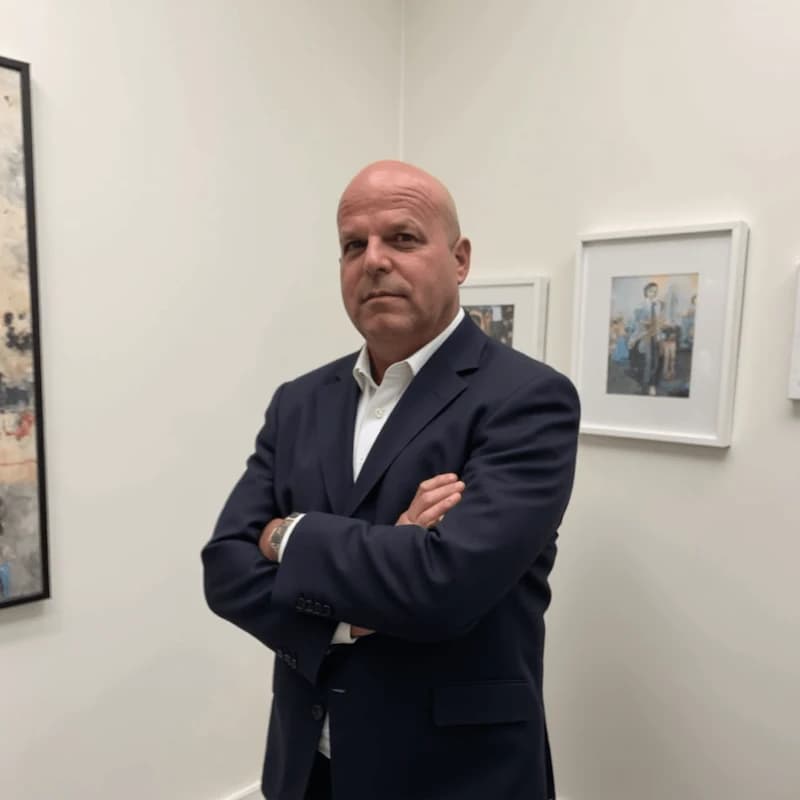
Founder & Lead Developer · Denham Springs, LA
Clint has built and marketed websites for 26 years, since founding BlakSheep Creative in 2000. He is also a 29-year firefighter and a 23-year member of IAFF Local 557, which is where the bias toward plain answers over sales copy comes from.
- Veteran-owned
- Firefighter-owned
- IAFF Local 557
More Questions About Softball Recruiting Platforms
Short answers to the questions that come up most on this topic.
How much does NCSA cost for softball?
Is NCSA better than SportsRecruits for softball?
What percentage of softball players get recruited to play in college?
How do college softball coaches actually find recruits?
Does a softball player lose her NCSA profile after graduation?
How much does a softball recruiting website cost compared to NCSA?

Your next step, without the guesswork
No surprises, clear next steps, and a fixed price before anything starts.