By Clint Sanchez · Published · Updated · 5 min read
Quick answer
Toxic links are not something Google penalizes anymore. John Mueller has said Google has no internal concept of toxic domains, and since the Penguin 4.0 update Google ignores bad links rather than punishing sites for them. Cleanup can still be worth doing because spammy referrers send poor traffic. Find bad links in Google Search Console, Moz Link Explorer, or Ahrefs, ask site owners to remove them, and use the disavow tool only as a last resort.
Key takeaways
- According to Google's John Mueller on Reddit, Google has no internal concept of toxic domains, and site owners can ignore toxic links and the tools that report them.
- Since the Penguin 4.0 update, Google ignores bad links instead of applying a penalty for them.
- A large number of spammy links can still hurt traffic and conversions and can look like black hat SEO.
- The first way to remove a bad link is to ask the linking site's owner; the Google Disavow Tool is a last resort.
- Google Search Console lists every site linking to yours for free; Moz Link Explorer and Ahrefs Site Explorer add spam and quality scores.
- Moz assigns each link a Spam Score, with higher numbers indicating a more likely spam source.

Want this handled instead of DIY?
A 15-minute call, no script, no pressure. You leave with a plan either way.
As SEOs, it’s all about link building, right? We’re constantly searching for new opportunities to get links from high-quality websites. But what about the other side of the coin? What if you have bad links pointing to your website? Are those hurting your rankings?
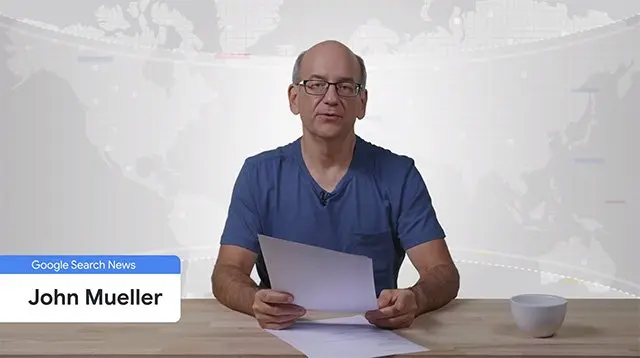
Google’s John Mueller was recently asked about this on Reddit. He said that there are a few tools out there that help identify poor quality or even spammy links, but in general, Google has said it has no internal concept of “toxic domains” and that you can ignore toxic links and the tools that report on them.
What Changed?
In the early days, Google would drop a penalty on sites with many bad or deceptive links pointing to them. This was known as the “Google penalty.” But in recent years, Google has changed its tune.
Ever since the Penguin 4.0 update, Google started ignoring bad links rather than penalizing sites for them. So if you have a few bad links pointing to your site, don’t sweat it. Google is no longer taking that into account when determining your rankings.
Should You Still Try to Remove Bad Links?
While you don’t have to worry about a Google penalty anymore, that doesn’t mean you should ignore bad or spammy links altogether. If you have a lot of low-quality or spammy links pointing to your site, that could be a sign that you’re using black hat SEO tactics, and that’s something you definitely want to avoid.
Want this handled for you? We build and market websites for Louisiana businesses, and we will tell you honestly if you do not need us.
Additionally, bad links can still hurt your traffic and conversion rates. Unless your business lives on the shady side of the internet, you probably don’t want visitors from sites known for being spammy.
So while you don’t need to worry about a Google penalty, it’s still a good idea to clean up any bad links pointing to your site.
How to Remove Bad Links
If you want to remove bad links pointing to your site, there are a few different ways you can go about it.
The first is to reach out to the site owner and ask them to remove the link. This is usually the quickest and easiest way to get rid of a bad link.
If the site owner doesn’t respond or refuses to remove the link, your next option is to use the Google Disavow Tool. This tool allows you to tell Google not to consider certain links when determining your rankings.
Of course, using the Disavow Tool should be a last resort. You should only use it if you’ve tried everything else and you’re sure the link is bad.
How Do you Find Bad Links?
If you want to find bad links pointing to your site, you can use a few different tools:
Google Search Console
Google Search Console is a great place to start. Open the Links report in the left-hand nav and look at “Top linking sites” under External links. From there, you’ll see the domains that link to you most, and you can export the list.
1. Go to Google Search Console
2. Click “Start Now”
3. Select Your Property
4. Click Links
5. Click More
But, if you have a lot of links pointing to your site, this process can be time-consuming. In that case, you might want to use a tool like Moz’s Link Explorer or Ahrefs’ Site Explorer.
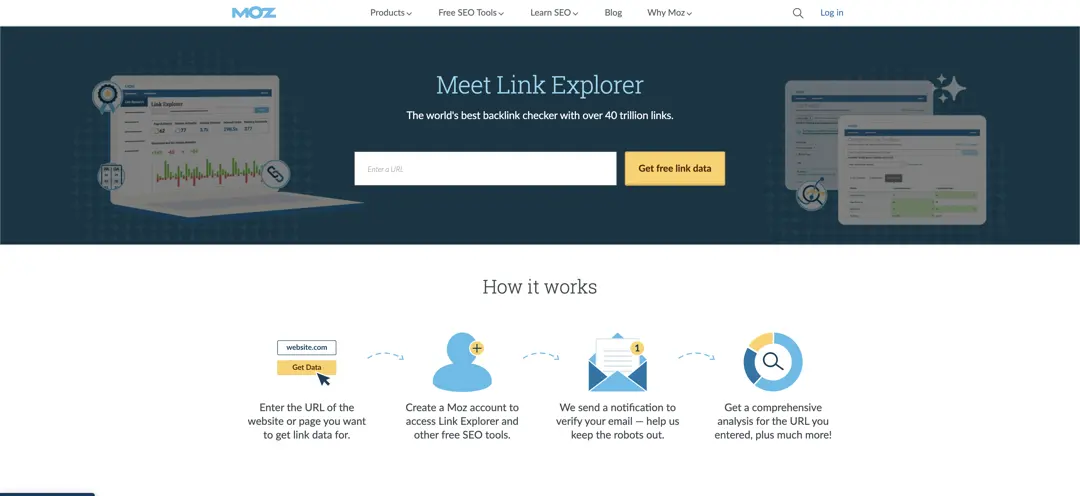
Moz’s Link Explorer
Moz’s Link Explorer is an excellent tool for finding bad links. Just enter your website’s URL and hit “Search.” Moz will then give you a list of all the websites linking to yours.
From there, you can click on each link to see more information about it. Moz also assigns a “Spam Score,” which is now a percentage from 0 to 100 rather than the old count of 17 flags. The higher the percentage, the more the linking site looks like the sites Moz has seen get penalized. A high spam score is a reason to look closer, not proof the link is hurting you.
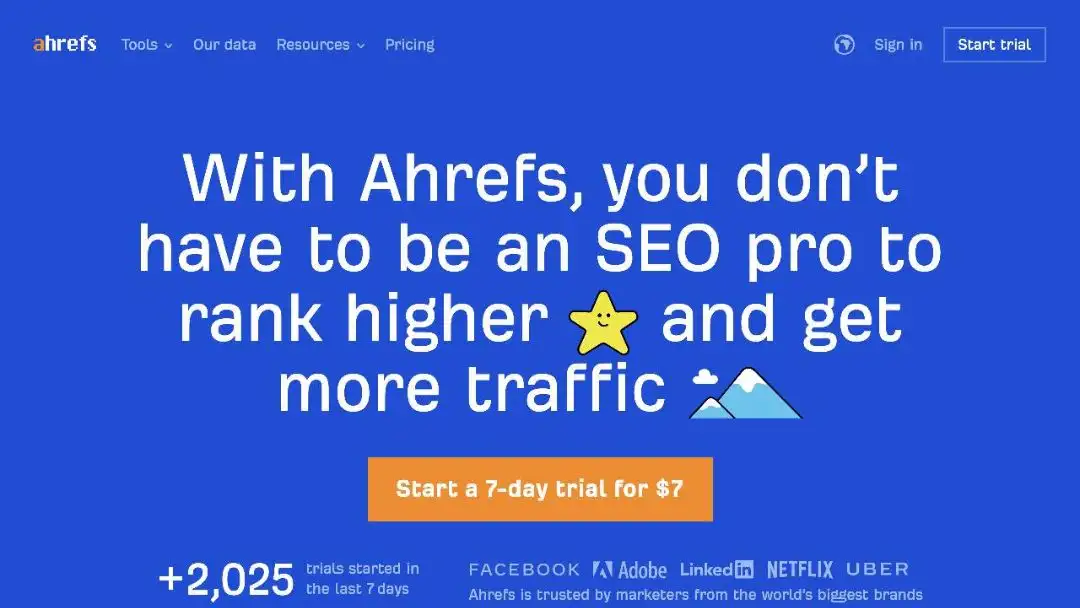
Ahrefs’ Site Explorer
Ahrefs’ Site Explorer is another great tool for finding bad links. Just enter your website’s URL and hit “Search.” Ahrefs will then give you a list of all the websites linking to yours.
Ahrefs does not publish a link “quality score.” What it gives you is Domain Rating, a 0 to 100 measure of how strong a linking site’s own backlink profile is. A link from a very low DR site is not automatically bad, but a pile of them from sites with no real audience is worth a look.
These tools will give you a comprehensive overview of all the links pointing to your site. You can then sort by Domain Authority or Domain Rating and work down from the sites that look least like real publishers.
We’ll tell you what. Here at BlakSheep Creative, we pay a lot for our SaaS tools. And anyone knows that paid tools are always better than free ones, right?
So here’s what we’ll do. We pay for these tools so that you don’t have to. We’re in the business of making things easy for our clients.
If you’re serious about getting rid of your toxic links, we can help. We’ll run a complete link audit and give you a report of all the bad links pointing to your site. We’ll even provide you with a list of sites you can reach out to have the links removed.
If you’re interested, just shoot us an email, and we’ll get started. In the meantime, check out our blog for more great tips on SEO and link building.
Just email us at seo@blaksheepcreative.com, and we’ll audit your link profile for free. We’ll send you a report of all the bad links pointing to your site, and we’ll even tell you how to get rid of them.
What are you waiting for? Email us today and let us help you clean up your link profile. After all, we’re in the business of helping our clients rank higher.
The Bottom Line
Bad links are no longer something you need to worry about, thanks to Google’s Penguin 4.0 update.
However, that doesn’t mean you should ignore them altogether. Bad links can still hurt your traffic and conversion rates, so it’s a good idea to clean them up if you can.
But insofar as Google, “don’t get hung up about it.” Google no longer cares about bad links, so you can focus your energy on more productive things.
Do you still worry about toxic links? Let us know in the comments below.
Looking for a real conversation about your business — no sales pitch, no commitment? Book a free 15-minute Discovery Call.
About the author

Founder & Lead Developer · Denham Springs, LA
Clint has built and marketed websites for 26 years, since founding BlakSheep Creative in 2000. He is also a 29-year firefighter and a 23-year member of IAFF Local 557, which is where the bias toward plain answers over sales copy comes from.
- Veteran-owned
- Firefighter-owned
- IAFF Local 557
Common Questions About Toxic Links
Short answers to the questions that come up most on this topic.
What is a toxic link?
Can bad backlinks get my site penalized?
Should I use the Google Disavow Tool?
How do I see who links to my website?
Do bad links hurt anything if Google ignores them?

Your next step, without the guesswork
No surprises, clear next steps, and a fixed price before anything starts.