
By Clint Sanchez · Published · Updated · 4 min read
Quick answer
Patreon lets podcasters offer perks like exclusive content or shout-outs in exchange for direct listener payments, and it can produce steady income even for small shows. The author's view is that it is a bad look: it asks listeners to pay for a show they already support, tells the advertisers who fund most podcasts that their money is not needed, and at worst charges listeners to remove the ads the host chose to run.
Key takeaways
- Patreon lets podcasters trade rewards such as exclusive content or shout-outs for direct financial support.
- Even small podcasts can earn a steady income from patrons, enough to buy equipment, hire help, or go full-time.
- The author's objection: asking listeners to pay extra for a show they already enjoy is unfair when advertisers are already paying.
- Running ads and a Patreon at once tells advertisers the host does not need their money, which reflects poorly on the industry.
- The worst pattern is charging $5 a month for an ad-free feed after loading the free feed with ads every five minutes.
- Reddit and Quora threads show many listeners share the view that Patreon damages the listener relationship.

Want this handled instead of DIY?
A 15-minute call, no script, no pressure. You leave with a plan either way.
We listen to a lot of podcasts…
I mean a lot of podcasts. It’s become a go-to source of entertainment and information. It’s become a go-to source of entertainment and information while commuting, working out, and cooking dinner.
One popular option is Patreon – a site that allows podcasters to offer rewards to their patrons (such as exclusive content or shout-outs) in exchange for financial contributions.
But some people believe Patreon is a slap in the face to advertisers, who are the primary source of income for most podcasters.
While podcasters get most of their revenue from their advertisers, they seem willing to bypass those ads entirely if their listeners are willing to pay them directly through Patreon.
So which is it? An excellent way to generate revenue, or a bad look for podcasters? Let’s explore both sides of the argument.
Is Patreon a Good Idea to Generate Revenue?
On the one hand, podcasters who use Patreon can generate a lot of revenue – especially if they have a large and engaged audience.
Want this handled for you? We build and market websites for Louisiana businesses, and we will tell you honestly if you do not need us.
And it’s not just the big-name podcasters doing well on Patreon. Plenty of small-time podcasters are generating a healthy income from their patrons.
This steady revenue stream can be a lifesaver for podcasters trying to make a living from their show. It allows them to invest in better equipment, hire additional help, and even quit their day job to podcast full-time.
Plus, Patreon gives listeners a way to support the shows they love directly. And as we all know, people are more likely to pay for something they value than to sit through a bunch of ads.
So if you’re a podcaster looking for ways to generate revenue, Patreon is definitely worth considering.

Is Patreon a Bad Look for Podcasters?
On the other hand, some people believe that using Patreon is a bad look for podcasters.
Spoiler Alert: I’m one of them.
The reason is simple: it’s essentially telling advertisers that the hosts want to help push their business unless the listener pays them directly.
This doesn’t sit well with me for a few reasons:
It’s unfair to listeners.
First, it’s unfair to listeners. Why should they have to pay extra to support a show they already enjoy? Especially when the podcaster is already making money from advertisers.
Kind of sucks when everything you wanna see is for patreon members only and you can’t do patreon because you have no money because it all goes yo your own bills, then you feel pathetic and selfish for not being able to donate, and left out because those who can keep talking
, AuntieWrites (@AuntieWrites) September 4, 2022
It’s a bad look for the industry.
Second, it sends the wrong message to advertisers – who are, let’s face it, the ones footing the bill for most podcasts. Asking listeners to pay directly makes it look like podcasters are less concerned with their advertisers’ well-being and more concerned with padding their pockets.
It makes a podcaster look like a money-hungry Jezebel.
While advertisers are investing in a podcaster’s show, the podcaster is essentially saying, “Screw you, I don’t need your money. My listeners will pay me directly.” This makes the host look greedy and ungrateful.
“Join our exclusive (insert witty club name here) on Patreon for only $5/month!”
You hear it all the time.
Honestly, though, I don’t know what is worse. Being invited to some “exclusive” club on Patreon (there are so many tiers to choose from!), or getting the same level of content from the podcaster and just having to listen to them read a bunch of ads.
It’s pretty clear which one we prefer.
Podcasting is challenging enough without making things more complicated (and expensive) for listeners. So, in my opinion, Patreon is a bad idea for both podcasters and the industry as a whole.
Here’s a true story:
Recently a self-proclaimed duo of true crime experts decided to start a podcast. They begged, groveled, and cold-emailed hundreds of people asking for sponsors. And when they finally got a few takers, they rolled out some mediocre content.
Bear in mind that their listeners had to listen to an ad every five minutes, with no segway, no notice, just an advertisement slap dab in the middle of a sentence.
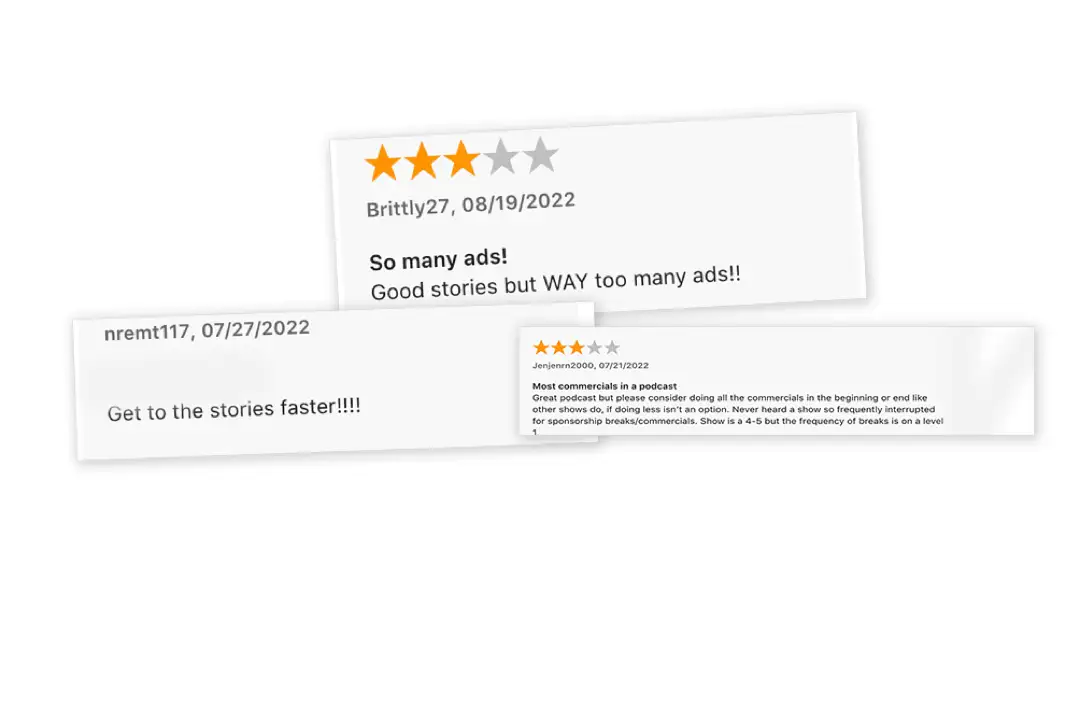
When listeners started complaining and requesting “more content, fewer commercials,” the hosts decided to start a Patreon.
For $5/month, listeners could get an “ad-free” experience.
Seriously? Are you kidding me?
So not only are they already making money from advertisers, but now they want their listeners to pay them directly too? And on top of that, they’re offering less content for more money.
That doesn’t sound like someone genuinely concerned about providing a quality product and experience for their listeners!
I call shenanigans.
Podcasters should focus on providing quality content and excellent value to their listeners. If they want to generate revenue, they should look for ways to do so that don’t involve asking their listeners for more money.
Especially when it involves saying “eff you” to their advertisers.
The Internet Has Spoken
We’re not alone in our opinion. There are entire threads on Reddit and Quora discussing this very topic.
Here are a few choice quotes:
It seems that the consensus is that Patreon is a bad idea, and podcasters should avoid it if they want to maintain a good relationship with their listeners.
So, There You Have It
Podcasting is a tricky business, and there are many ways to generate revenue. However, in my opinion, Patreon is not one of them. Asking your listeners to pay you directly sends the wrong message and ultimately reflects poorly on the podcaster and the industry as a whole.
What do you think? Is Patreon a good or bad idea for podcasters? Let me know in the comments!
Looking for a real conversation about your business, no sales pitch, no commitment? Book a free 15-minute Discovery Call.
About the author
Founder & Lead Developer · Denham Springs, LA
Clint has built and marketed websites for 26 years, since founding BlakSheep Creative in 2000. He is also a 29-year firefighter and a 23-year member of IAFF Local 557, which is where the bias toward plain answers over sales copy comes from.
- Veteran-owned
- Firefighter-owned
- IAFF Local 557
Common Questions About Patreon for Podcasters
Short answers to the questions that come up most on this topic.
How does Patreon work for podcasts?
Can a small podcast make money on Patreon?
Why do some listeners resent Patreon paywalls?
Is it wrong to offer an ad-free feed on Patreon?
Does Patreon hurt a podcast's relationship with advertisers?

Your next step, without the guesswork
No surprises, clear next steps, and a fixed price before anything starts.