
By Clint Sanchez · Published · Updated · 7 min read
Quick answer
Clubhouse faded because its growth came from pandemic lockdowns and iPhone-only exclusivity, not from a product people needed. Once people went back to normal life, daily use dropped, downloads fell about 90%, and the app had no way to curate live rooms or help users find relevant conversations. It is not shut down, but it has become a niche network rather than the next big social platform.
Key takeaways
- Clubhouse launched in April 2020 as an invite-only, iPhone-only audio app and reached 10 million users by mid-February 2021.
- According to Digital Music News, Clubhouse downloads were down about 90% by mid-2021.
- Clubhouse dropped its invite system in July 2021 and opened to everyone, but by early August it ranked only 35th among social networking apps in the App Store.
- The app had no reliable way to curate live rooms, so users had to sit through conversations for minutes before knowing if they were worth their time.
- The product-market fit test is simple: if Clubhouse disappeared tomorrow, almost nobody would be upset, unlike Twitter, Facebook, or Airbnb.
- Clubhouse will most likely survive as a niche network for special-interest groups rather than a mainstream platform.

Want this handled instead of DIY?
A 15-minute call, no script, no pressure. You leave with a plan either way.
It was April of 2020, during the COVID-19 pandemic. Everybody was home, quarantining. Suddenly a lot of people were talking about a new social networking platform called Clubhouse.
I was scrolling through my Twitter feed and stumbled upon a mention of Clubhouse. I turned on the app to see what it was, only to find that its exclusivity makes the platform more desired by people who want their own space without any distractions or social media noise in their life right now.
The experience was kind of like going back into college using an invite system for parties rather than letting anyone walk up. This strategy has led them to over 100 million users worldwide since they launched last year–it’s no wonder silicon valley was excited about this so-called “new normal” Social App!”
Other Articles About Other “Lesser Known” Social Media Platforms:
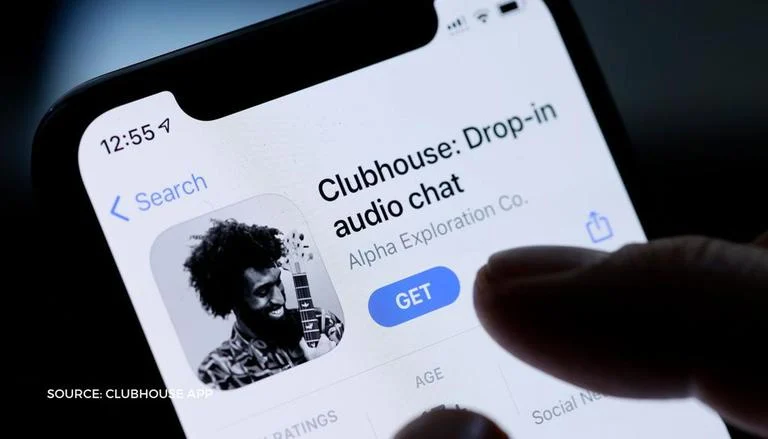
Clubhouse is a platform that allows people to have private conversations. The company claims over 500,000 rooms are created on average every day, and recordings made during these discussions only keep going if someone files a complaint while the room was live or within 24 hours after its closure.
Want this handled for you? We build and market websites for Louisiana businesses, and we will tell you honestly if you do not need us.
Participants can be anyone from employees meeting with clients in one-on-one meetings up through CEOs discussing strategy;
Clubhouse has been used by everyone from doctors making rounds at hospitals (with patient confidentiality protected), schoolteachers teaching students about science experiments–and even newlyweds planning their honeymoon!
Remember exclusivity? It was only available for iPhones.
A year later, they boomed. And around mid of February 2021-their most significant Milestone yet. They’ve reached 10 million users on their platform, which is impressive for a social app that was less than one year old and only available for iPhone users!
We’ve learned quite a few things from this:
- The iPhone is the best place to launch your app idea.
- People love exclusivity
- Easy come easy go.
The thrill is gone.
By 2021, Clubhouse had expanded its platform availability to Android users. However, it barely made a difference in contrast with the iPhone market.
Fast forward to today, and Clubhouse is MIA. People on Twitter barely talk about it, and it seems like people have moved on.
Downloads are down 90%, according to a recent study.
Clubhouse is still up and running, but perhaps we can say it’s dead already.
What happened to Clubhouse?
In July 2021, Clubhouse laid waste on its over-hyped invite system, opening the app to everyone.
But was it too late? What about in the long term?
As of early August, Clubhouse was the 35th most popular social networking app in the App Store; slightly more popular than dating apps OkCupid and Grindr, and less popular than Tagged and Wink.
But what if we told you that Clubhouse isn’t the problem. Here are three reasons that we think people have moved on from Clubhouse:
It wasn’t built upon a solid foundation and genuine community.
Clubhouse is like a late-night talk show where celebrities come together and speak about their family, achievements, passions, and plans.
Jack Dorsey, Naval Ravikant, Mark Zuckerberg, and Elon Musk have all spoken on Clubhouse. They’ve given talks on Clubhouse because they felt that it was important to do so at the time. Thousands of people were still utilizing the platform when they completed their rooms.
At the time, Clubhouse was still the hotshot social network, and when users stopped using it, there was no reason for others to do so.
The mystery is not solved yet. Clubhouse, after all, has millions of dollars to spare so that they could invest in research and development for the company’s next big move – who knows what designs or innovations might come out?
People started going back to their everyday life.
After people started going out and returning to their everyday life, the number of daily active users on Clubhouse went down dramatically. We can consider that a significant part of Clubhouse’s success at first. All of us were stuck at home.
People really move on very fast.
People don’t find Clubhouse that helpful or relevant.
People moved on once the epidemic passed, when they began going out and meeting individuals outside of their homes and offline again.
At first, this appeared to be a time of euphoria, with a rise in real-life meetups for a few weeks, but it soon reverted to people spending most of their time at home.
However, months went by, and nothing changed. People have moved on to find the next big thing. I wonder what that even means. In my personal experience, the user experience for Clubhouse has to change to cater to everyday people.
For something to survive, it must address specific issues for a small group of people. They must also be customer-centric and adapt their marketing strategy to meet the needs of liberal arts and humanities students.
Clubhouse was constructed based on Hollywood’s hype, in which everything is a bubble and ephemeral.
The Problem of Curation
Curation is the future of content, but with infinite information available to us, it’s now more critical than ever before that we only consume what’s relevant.
Is Clubhouse still a thing? I think it was a great platform at first, but the billions of notifications and lack of content curation/ able to go back and listen to talks feels too messy and it’s just not for me
krissy (@krissyova) May 14, 2021
Curating has always been about providing access and disseminating knowledge; these days, filtering out incorrect stuff is key in maintaining your sanity and saving time!
How do we make sure that the content we provide to every user is of quality?
YouTube, Instagram, and Spotify solve the user curation dilemma through likes or shares, and their algorithm helps users find good content.
Clubhouse’s conversations happen live, and in real-time, so it can be challenging to curate every room and identify the best content.
A solution for this problem has yet been developed; however, any innovation we’ve seen from history was a matter of time (hard work), planning, etc…
No product-market fit
We’ve been told that if you want to identify if your product-market fit is strong or not, then this test will help.
Imagine Twitter or Facebook disappearing forever; how would you react?
You’d freak out.
If Airbnb disappeared, what would you do? How would you feel if they went away?
You’d freak out.
What would you do if Notion disappeared forever?
You’d freak out.
If Clubhouse disappeared today, no one would seem to be very upset, and people would just move on quickly.
Is the Clubhouse App dead?
No. Clubhouse isn’t dead… yet. Well, it depends on who you ask.
Ye Clubhouse is dead .. I mean super dead.
Amit (@Ikumar7) November 6, 2021
Clubhouse was a good idea that had poor execution. It benefitted from a worldwide pandemic and people’s natural desire to be part of something’ exclusive .’
The app suffered from all the same things as many other apps like it: A poor product-market fit, no clear differentiation between it and other social networks, an inability to keep up with the times and changing technology.
Clubhouse is not dead; most likely, the app will live on as a niche network for special interest groups like STEM majors or those interested in entrepreneurship. Hopefully, the developers at Clubhouse will learn from the mistakes they made in the past and create a better product for their users.
Clubhouse launched in April 2020 as an invite-only, iPhone-only audio app and reached 10 million users by mid-February 2021.
What People Say
Ellen Major, one of our commenters, voiced her opinion. She said:
The thing about Clubhouse is it’s challenging to browse for something that interests you. I always felt like I had to give a conversation 5-minutes before getting involved. And even then, the content might not be interesting enough or make sense, in my opinion, so most of these conversations never went anywhere good anyway – they were just too much work trying out when there are other places where people can communicate more efficiently; without any risk!
Juan Rubins added:
“I think Clubhouse has the potential to become the Next Big Thing, but it will take some time. I’ve seen that several users come and go, just like on Twitter or Facebook. And that’s not bad at all.”
Clare Black also said:
“Clubhouse was too time-consuming, notifications were annoying, and the conversations just weren’t worth listening to. Its being audio only made it difficult for me to get on board. The sound quality on ClubHouse wasn’t great either when you’re trying to listen in on people with lousy WiFi or microphones that cut out often. But what put me off most about this app is all these notifications.
I found myself checking it less frequently after downloading but still getting tons of them every day, so I eventually gave up altogether by disabling push notifications which solved everything once and for all. Clubhouse was a good idea, but the execution just wasn’t there.”
What are your thoughts?
I believe they could have worked on improving their search function so that anyone interested in rooms on a particular topic could find what’s available.
Let’s say I’m interested in rooms talking about topics like happiness, success, and motivation. If I could search the keywords and the app would show me rooms with those topics, I’d definitely check some of them out.
Just like Uber and Pinterest’s new visual discovery feature, Clubhouse could’ve implemented this within their app to make it more valuable and convenient for people who wanted to find what they were looking for.
Do you know what we’re talking about? Let us know by leaving your comments below.
Looking for a real conversation about your business — no sales pitch, no commitment? Book a free 15-minute Discovery Call.
About the author

Founder & Lead Developer · Denham Springs, LA
Clint has built and marketed websites for 26 years, since founding BlakSheep Creative in 2000. He is also a 29-year firefighter and a 23-year member of IAFF Local 557, which is where the bias toward plain answers over sales copy comes from.
- Veteran-owned
- Firefighter-owned
- IAFF Local 557
Common Questions About Clubhouse
Short answers to the questions that come up most on this topic.
Why did Clubhouse grow so fast in 2020 and 2021?
Why did people stop using Clubhouse?
Does Clubhouse work on Android?
What is the curation problem with Clubhouse?
Is Clubhouse worth using for a small business?
Could Clubhouse make a comeback?

Your next step, without the guesswork
No surprises, clear next steps, and a fixed price before anything starts.