
By Clint Sanchez · Published · Updated · 7 min read
Quick answer
Effective online reputation management for a business comes down to ten rules: keep your website and profiles active and current, respond to every review, monitor what is said about you, publish your own content to control the narrative, address criticism head-on, use social media to interact with customers, ask happy customers for reviews, be careful what you share, watch your competitors' reputations, and bring in a reputation management company when you cannot keep up.
Key takeaways
- According to a Visual Objects study, more than 76% of consumers look at a company's online presence before visiting in person.
- A BrightLocal study reported by Search Engine Land found 88% of consumers read online reviews to judge the quality of a local business.
- Every review deserves a reply: thank positive reviewers, and apologize and try to resolve negative ones without arguing.
- Publishing your own blog posts, images, and infographics lets you control what people see when they search your name.
- Everything shared online is permanent, so anything that could be misread should not be posted at all.
- Monitoring competitors' reviews reveals industry-wide complaints, their weaknesses, and gaps in the market you can fill.
- The simplest way to get more positive reviews is to ask happy customers directly.
In Baton Rouge and Livingston Parish, reputation is still word of mouth, it just happens on Google and Facebook now. After a storm, a roofer or tree service earns or loses years of goodwill in two weeks of reviews. The businesses that answer every review, including the angry one about a missed callback, are the ones neighbors recommend in the parish Facebook groups.

Want this handled instead of DIY?
A 15-minute call, no script, no pressure. You leave with a plan either way.
Online reputation management is one of the most important aspects of any business or individual’s digital presence. It can be the difference between a successful online presence and a complete disaster. Here are ten rules you should follow to make sure you’re managing your online reputation effectively:
1. Make sure your online presence is active and up-to-date.
According to a new study from Visual Objects, a directory of design and creative firms, more than 76% of consumers search for a company’s internet presence before visiting in person.

If your website is outdated or difficult to navigate, you’re likely losing customers. In fact, did you know that 97% of consumers search online for local businesses? This makes it more important than ever to have a website that is not only functional but also represents your brand in a positive light.
Customer experience, if in-person or online, is essential to maintaining a good reputation.
2. Respond to all reviews, both positive and negative.
When someone takes the time to leave a review, if it’s positive or negative, they expect a response.
Want this handled for you? We build and market websites for Louisiana businesses, and we will tell you honestly if you do not need us.
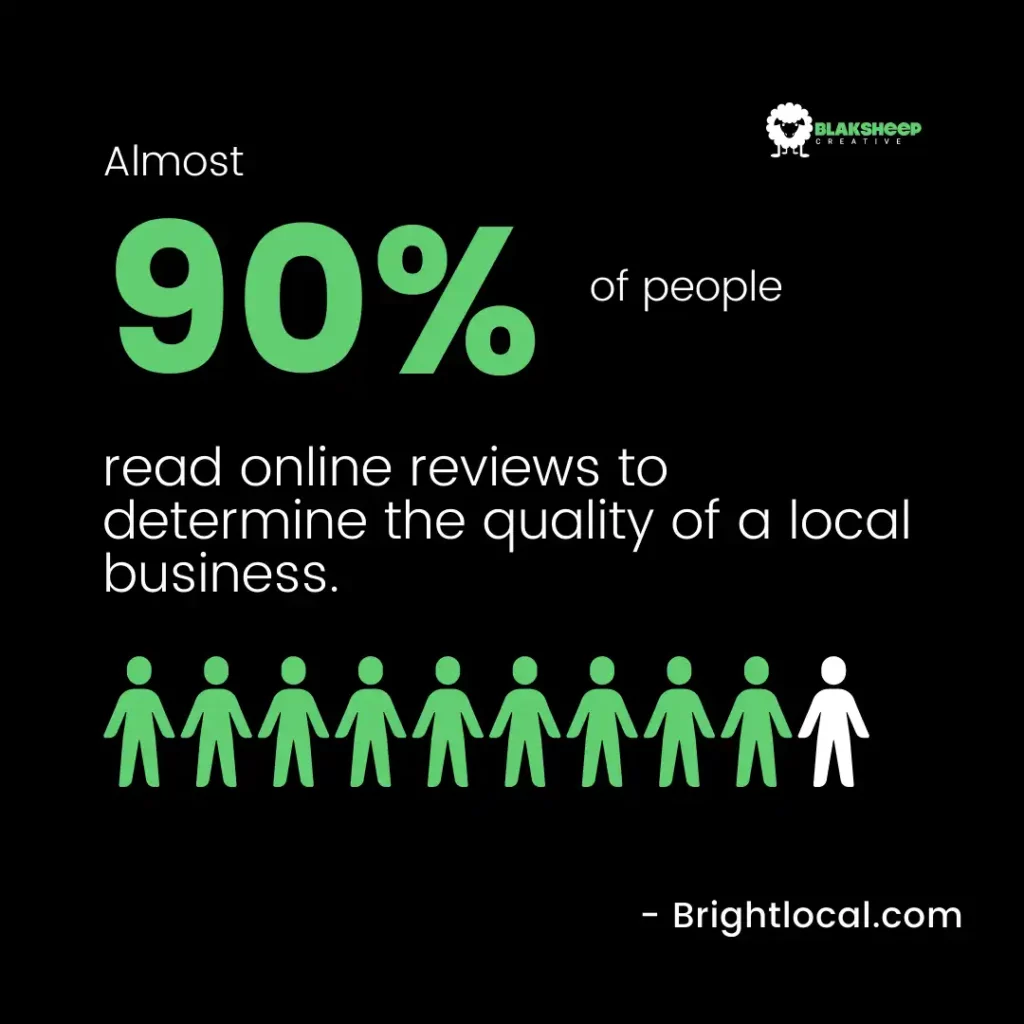
Plus, they may not be the only people reading the review. In fact, a study from BrightLocal found that 88% of consumers read online reviews to determine the quality of a local business.
Positive Reviews
Thank the customer for their feedback and let them know you’re happy to have them as a customer.

Negative Reviews
Apologize for the situation and try to resolve it with the customer. If the issue can’t be resolved, thank them for their feedback and let them know you’re always working to improve.
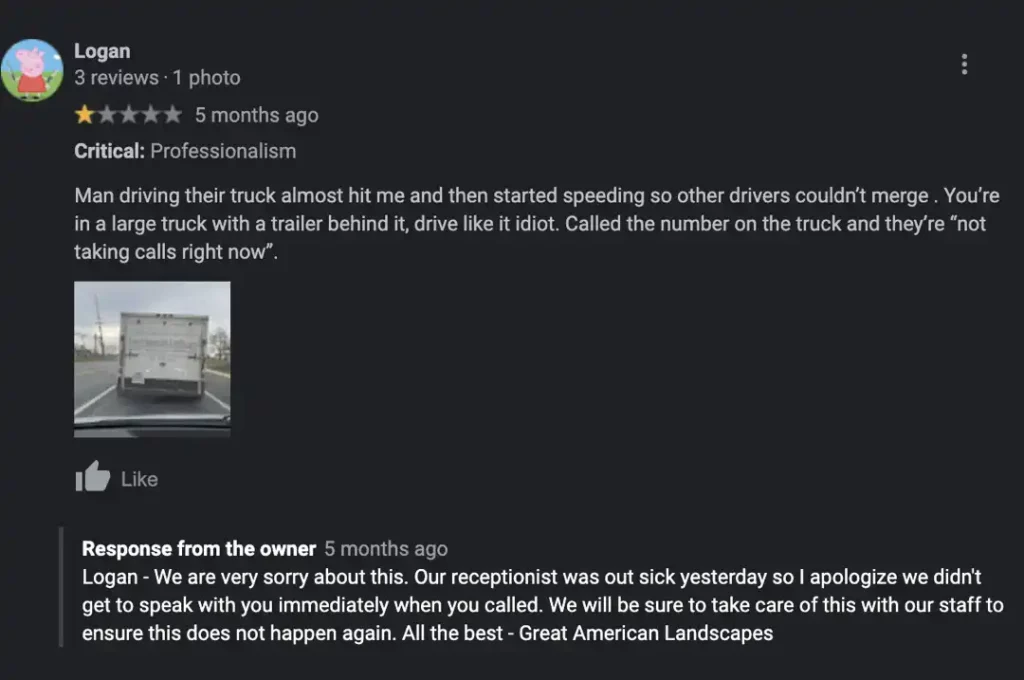
If you’re not responding to reviews, you’re missing out on an opportunity to improve your reputation.
3. Monitor what’s being said about you online.
You can’t manage your reputation if you don’t know what’s being said about you online.
There are several tools that you can use to track mentions of your business, and you can read about them in our article about, you guessed it, tracking your business’s online reputation.
Remember, people often take to social networks to complain about a negative experience, so it’s important to be active on sites like Twitter and Facebook.
4. Be proactive with your content.
In addition to monitoring what’s being said about you online, you should also be proactive with your content.
This means regularly publishing blog posts, infographics, images, and other types of content that will help you control the narrative about your brand and help you with brand awareness.
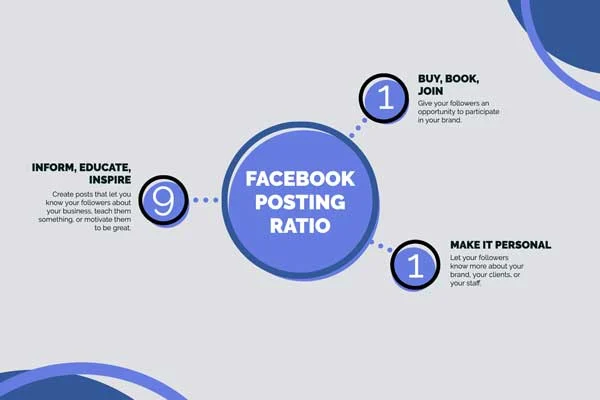
Here’s an example of an infographic that we did to show the proper Facebook posting ratio (yes we realize that the ratio is different than that in the actual post, that’s for a reason).
Controlling the Narrative
When you’re proactive with your content, you’re able to control the narrative about your brand. This is important because it allows you to dictate what potential customers will see when they search for you online.
Brand Awareness
Publishing high-quality content will also help you with brand awareness. The more times your content is shared, the more people will see it, and the more likely they are to remember your brand when they’re ready to make a purchase.
As you can see, being proactive with your content is an important part of online reputation management.
According to a Visual Objects study, more than 76% of consumers look at a company's online presence before visiting in person.
5. Address negative reviews and criticisms head-on.
When you receive a negative review, the best thing you can do is address it head-on. This doesn’t mean you should get into a fight with the reviewer, but you should take the time to respond thoughtfully and professionally.
6. Use social media to your advantage.
Social media is one of the most powerful tools you have for managing your online reputation.
Your social networks should be used for more than just content marketing. You should also use them to interact with your customers and create a positive customer experience.
Here’s one method I would highly discourage, however.
Interaction between Celsius Network CEO and one of his customers.$CEL customer: This might be my last night as a Celsian and I will probably never come back.
dharmafi (@dharmatrade) May 18, 2022
Mashinsky: Good! Good! You don’t want to be here? No problem. Leave. pic.twitter.com/xbSKZLvRb4
7. Encourage happy customers to leave reviews.
One of the best ways to improve your online reputation is to encourage happy customers to leave reviews.
There are many ways to do this, but one of the most effective is simply asking them.
“BlakSheep made me an Incredible website and they have even better customer service to make sure all my questions were answered.”
8. Be careful with what you share online.
Remember, everything you share online is permanent. You need to be careful with what you post, tweet, and share.
Before you hit publish, ask yourself if what you’re sharing could be perceived in a negative light. If there’s even a chance it could be misconstrued, it’s probably best to avoid sharing it altogether.
9. Keep an eye on your competitors’ online reputations.
Competitor analysis is essential for any business, but it’s important for online reputation management.
By keeping an eye on what’s being said about your competitors online, you can stay one step ahead and make sure your business’s reputation is always shining.
For example:
- How do they respond to a negative review?
- Do they have any content that’s performing exceptionally well?
- What are people saying about them on social media?
By monitoring your competitors, you can learn from their mistakes and always be one step ahead.
It’s essential to keep an eye on your competitor’s online reputation for several reasons:
Industry Insight
First, it can give you insights into what people are saying about your industry as a whole. You can learn about new trends, common complaints, and more.
Second, it can help you identify any common complaints about your competitors. If you see a pattern emerging, you can take steps to make sure that your business doesn’t make the same mistake.
Third, it can give you ideas for how to improve your own online reputation. If you see that your competitors are doing a great job of responding to reviews, for example, you can take steps to improve your own review response rate.
In short, monitoring your competitor’s online reputations can give you a leg up in the industry.
Competitor Insight
We touched on this briefly in the last section. Still, it’s worth repeating: monitoring your competitor’s online reputation can give you insights into their business.
This is useful for several reasons.
First, it can help you identify any weaknesses in their business. Suppose you see that they’re not doing a great job of responding to customer complaints. In that case, you can make sure that your business is doing a better job.
Second, it can help you identify any areas where they’re excelling. Suppose you see that they’re getting a lot of positive reviews, for example. In that case, you can take steps to improve your own online reputation.
Third, you can analyze their reviews to determine new products, services, or features that you can offer. If you see that they’re getting a lot of complaints about not having a specific product or service, you can fill that void in the market.
You can use a tool like SEMRush’s Brand Monitoring Tool to spy on what’s being said about them online.
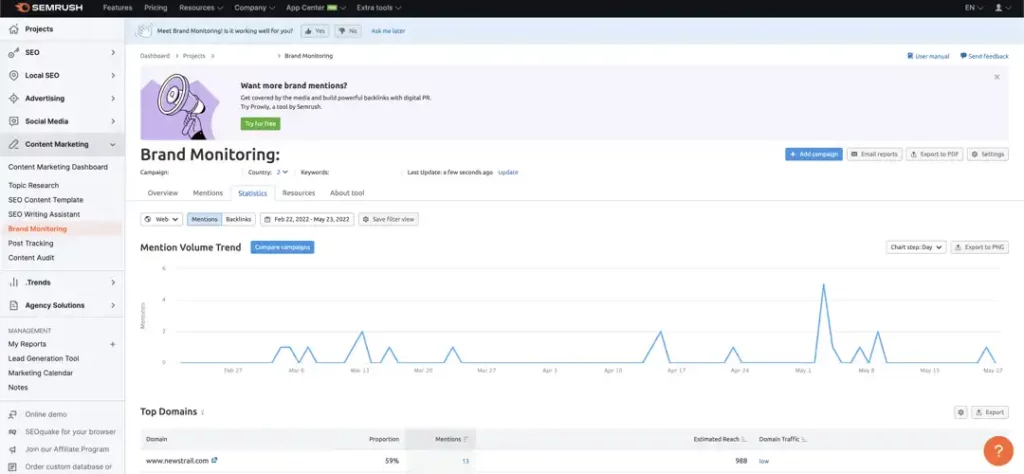
In short, monitoring your competitor’s online reputation can give you a wealth of information about their business – information that you can use to improve your own business and increase your online presence.
10. Get help from an online reputation management service company.
If you’re struggling to manage your online reputation on your own, you may want to consider working with a reputation management company.
A good reputation management company can help you track mentions of your brand, proactively improve your online presence, and address negative feedback, reviews, and criticisms.
At BlakSheep Creative, we can help you take control of your online reputation. We’ll work with you to track your brand’s online presence, identify any negative sentiment, and take steps to improve your online reputation.
We can help you increase your positive reviews, manage your social media presence, and more. Contact us today to learn why we’re the leading online reputation management company for your small business.
Remember, no business is perfect, and even the best businesses will receive negative reviews from time to time. The key is to manage those reviews effectively.
If you’re interested in learning more about our services, contact us today.
Conclusion
Online reputation management is a important part of any business. By following these 10 rules, you can make sure that your business has a positive online presence.
If you need help managing your online reputation, contact BlakSheep Creative today. We’re here to help!
We can help you with:
- Competitor analysis
- Review management
- Social media management
- Online presence management
- Content creation
- And more!
Contact us today to learn more or visit our services page to see what we offer.
Want a structured review-request system that doesn’t rely on luck? Book a Discovery Call and we’ll show you what’s working.
About the author

Founder & Lead Developer · Denham Springs, LA
Clint has built and marketed websites for 26 years, since founding BlakSheep Creative in 2000. He is also a 29-year firefighter and a 23-year member of IAFF Local 557, which is where the bias toward plain answers over sales copy comes from.
- Veteran-owned
- Firefighter-owned
- IAFF Local 557
Common Questions About Online Reputation Management
Short answers to the questions that come up most on this topic.
What is online reputation management for a business?
Should a business respond to negative reviews?
How do I monitor what people say about my business online?
How can a business get more positive reviews?
Why should I watch my competitors' online reputations?
When should a business hire a reputation management company?

Your next step, without the guesswork
No surprises, clear next steps, and a fixed price before anything starts.