A Four-Phase Diagnostic for Understanding Why You’re Not Being Cited
Short answer:
AI answer engines ignore most sites, not because the content is bad, but because it’s unusable. If an answer engine can’t access, extract, attribute, and verify your content cleanly, it won’t cite it, no matter how well written it is.
For a focused look at how these AI selection challenges play out in local search, including voice search and near me queries, see Local AEO for Voice Search and Near Me AI Queries, which explains how AI selects a single local business as the answer instead of multiple ranked links.
This shift is precisely what Answer Engine Optimization: Unlocking 2025’s Search Dominance addresses, and why traditional SEO alone is no longer enough.
TL;DR — The Real Reasons You’re Not Being Cited
- AI engines select usable answers, not “good writing”
- Citation fails when content breaks one of four tests
- Rankings ≠ citations
- Ambiguity is the enemy
- Optimization today is about removing friction, not adding words
The Shift Most People Still Haven’t Accepted
Here’s the uncomfortable truth.
Modern answer engines are not reading your content the way humans do.
They don’t reward narrative flow.
They don’t care how comprehensive your guide is.
They don’t care how persuasive your copy sounds.
They reward content that is:
- Accessible
- Extractable
- Attributable
- Verifiable
If your site isn’t being cited, it’s failing one of those—usually more than one.
And no, this isn’t random.
It’s diagnostic.
The Four-Phase Diagnostic Framework
When an AI answer engine ignores a site, it almost always fails one of four tests:
- Technical visibility
- Structural extractability
- Source authority
- Measurement clarity
Let’s break them down the way the engines actually see them.
Phase 1: Technical Visibility
Can answer engines access your content without friction?
Direct answer:
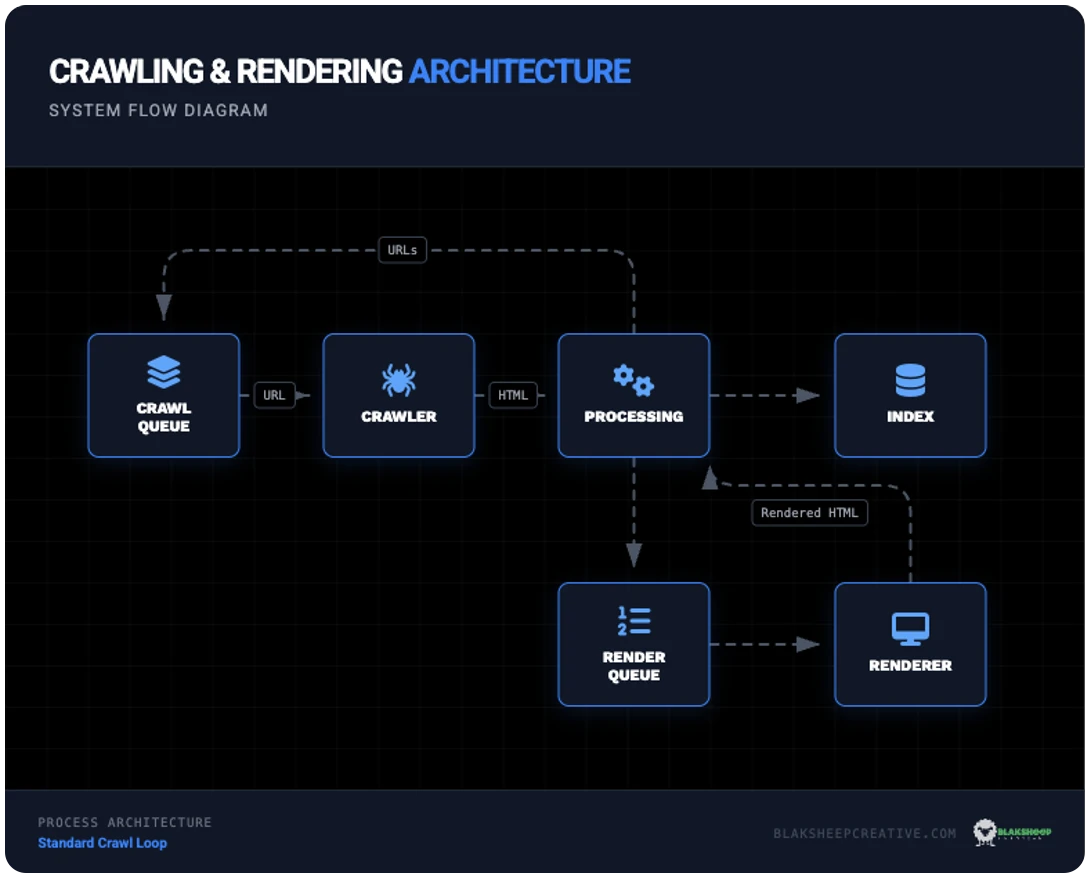
If an answer engine can’t crawl, parse, and retrieve your content efficiently, it will never cite it.
This phase is binary.
Partial access is functionally identical to invisibility.
When AI can’t reliably access or render your content, no amount of optimization matters.

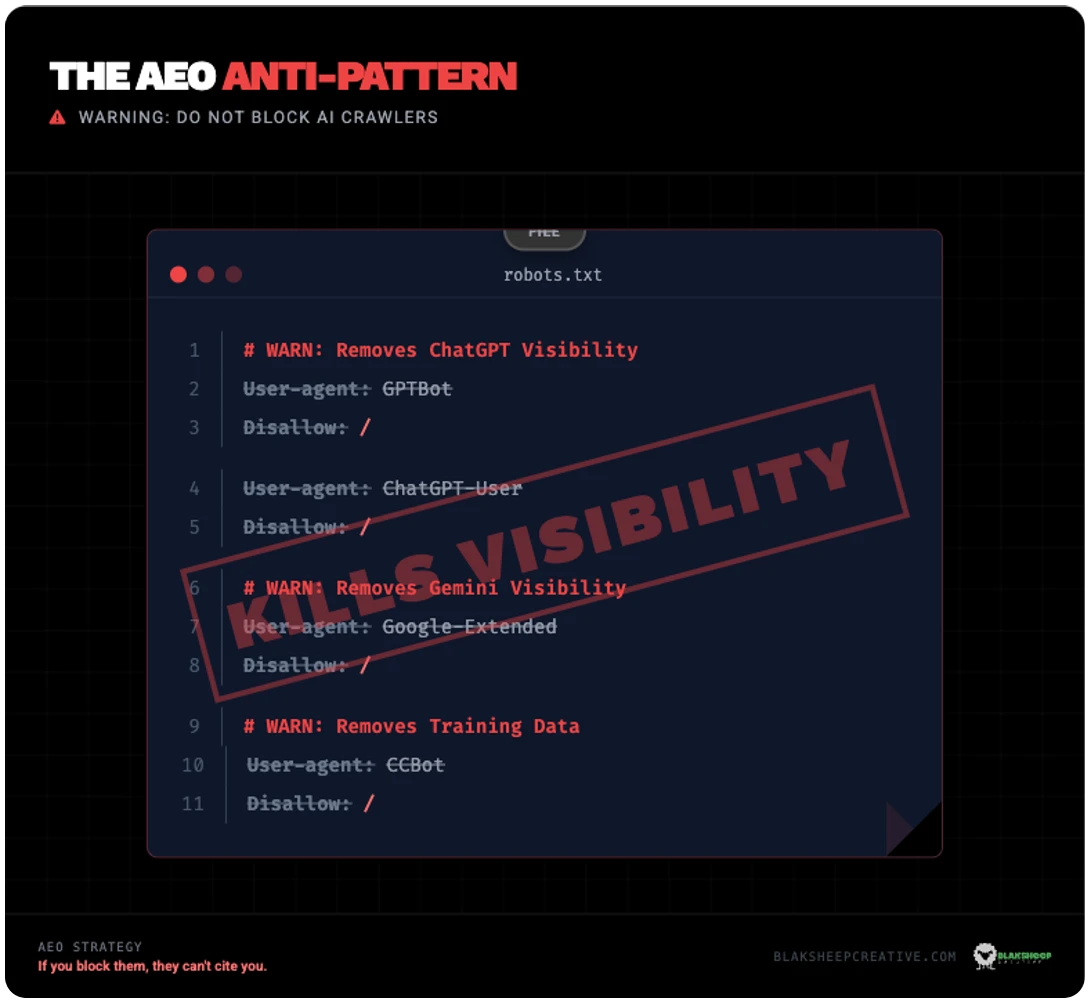
When AI can’t access or render your content efficiently, visibility fails. This is why AEO demands a different technical baseline.
What This Phase Actually Determines
Target system clarity
Different answer engines ingest content differently. Some rely heavily on static crawl data. Others blend live retrieval with indexed summaries. Optimizing “generically for AI” guarantees inconsistent results.
Unattributed usage vs. access failure
If your information appears in answers without a citation, access isn’t the issue. Weak source signaling is. That’s Phase 3—not Phase 1.
Ingestion blockers
I still see sites unknowingly blocking AI ingestion through:
- robots.txt exclusions
- noai or experimental directives
- overly aggressive bot filtering
These override every other optimization effort.
Retrievability bias
Answer engines strongly prefer:
- Static HTML
- Clean DOM structures
- Immediately readable content
If your answers require:
- JavaScript execution
- Click-to-expand elements
- Interface interaction
…they’re often skipped entirely.
Phase 2: Content Structure & Extractability
Can an answer engine extract a complete answer without interpretation?
Direct answer:
If an answer cannot be extracted cleanly and independently, it will not be cited.
Answer engines don’t “understand” pages the way people do.
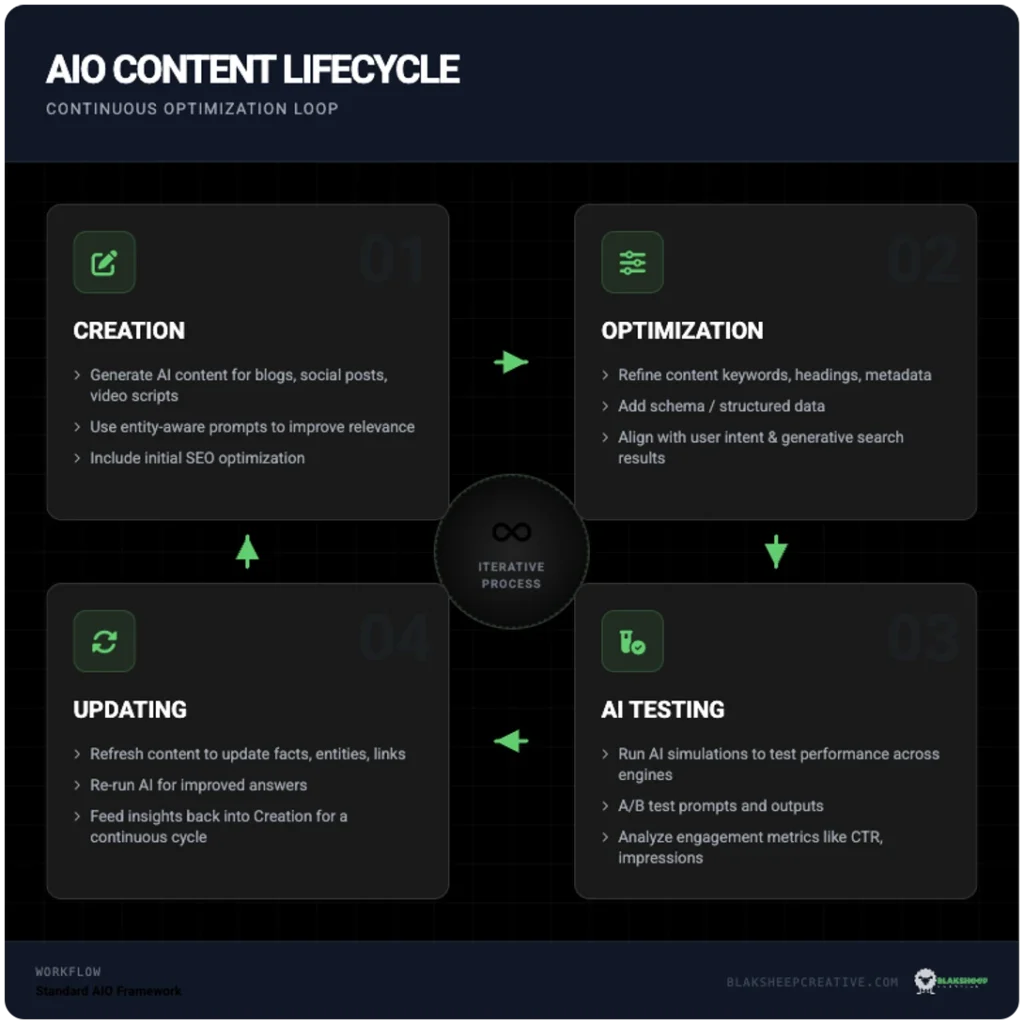
They extract discrete answer units.

Many agencies still optimize as if crawl behavior hasn’t changed, which is why outdated SEO practices quietly break AI visibility.

What This Phase Determines
Immediate answers win
Every core question must be answered in one to two sentences, directly beneath the relevant heading. No throat-clearing. No scene-setting.
Retrieval-aligned headings
Headings must describe the question being answered, not the theme being discussed.
Bad:
Understanding Technical Visibility
Good:
Can AI Answer Engines Crawl Your Site Without Friction?
Single-intent sections
Each section must resolve one question completely. Mixed intent breaks extraction reliability.
Internal authority signaling
Internal links aren’t just navigation. They tell answer engines which page is the primary explanation for a topic. Competing internal pages dilute selection.
This structural alignment is the core of Answer Engine Optimization—not keywords, not length.
Phase 3: Authority & Source Selection
Why should an answer engine choose your site over alternatives?
Direct answer:
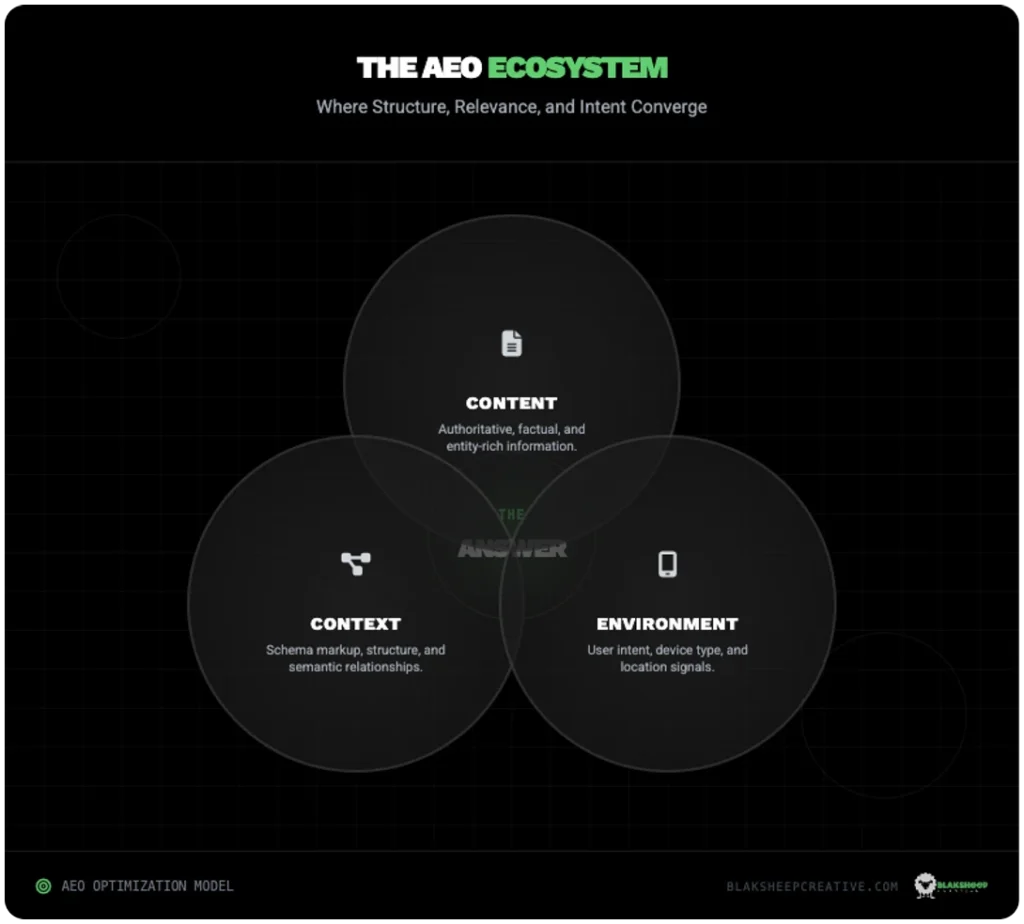
Answer engines cite sources that appear primary, decisive, and attributable.
Accuracy is table stakes.
Ownership is the differentiator.
If your content requires interpretation instead of extraction, this breakdown shows how to structure content so that AI actually uses it.
What This Phase Determines
Origination beats summarization
Original frameworks, definitions, and first-hand analysis outperform derivative “best practices” every time.
Your four-phase diagnostic?
That’s precisely the kind of structure answer engines prefer.
Entity recognition
Clear authorship, consistent brand signals, and focused topical coverage allow systems to recognize you as a known source—not just another page.
Competitive clarity
Here’s something most people miss:
Answer engines prefer assertive explanations over hedged ones.
A clear stance beats a cautious one—even when both are correct.
Phase 4: Measurement & Accountability
How do you know whether optimization is working?
Direct answer:
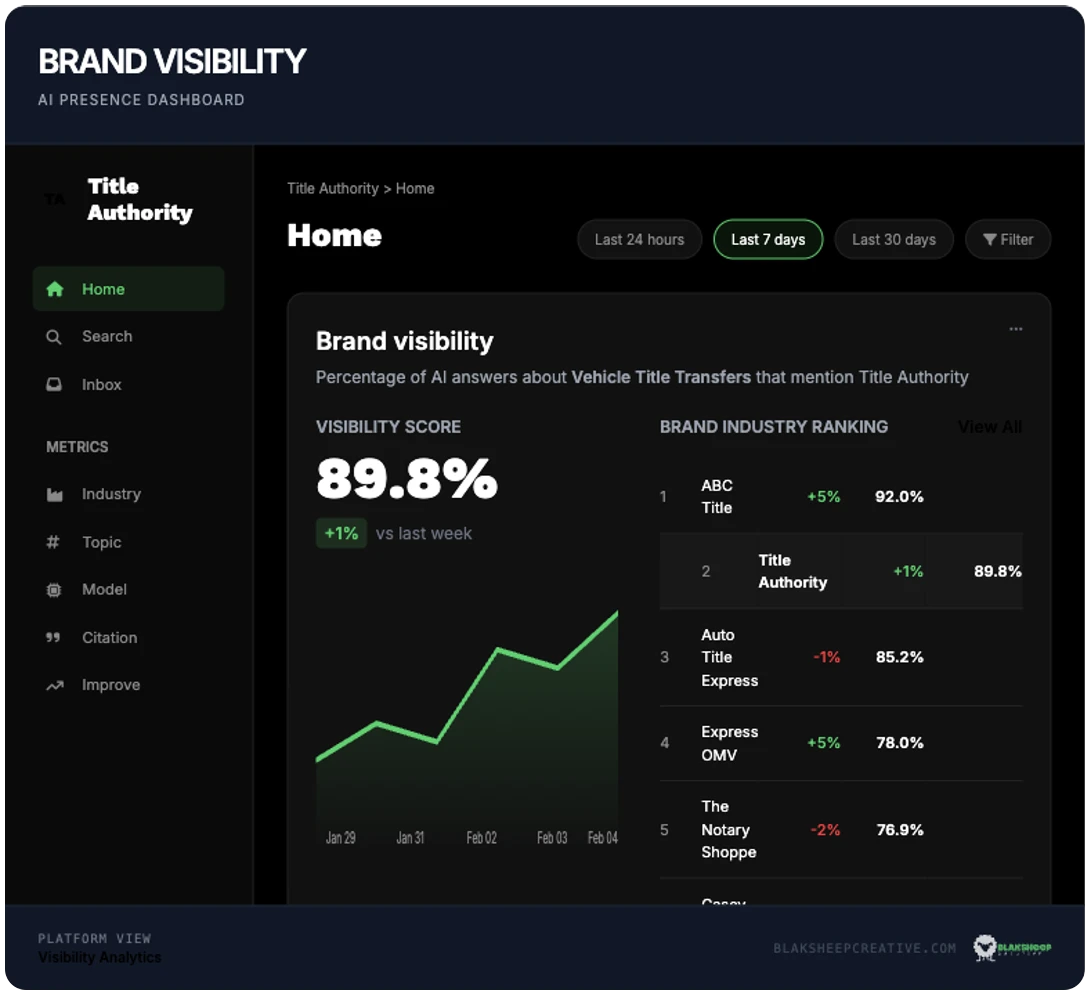
If you aren’t measuring citation presence inside answer engines, you aren’t measuring success.
Search rankings and citation selection are related—but not interchangeable.
As explained in Unlock ChatGPT Visibility, being cited by AI tools depends on the same authority signals that drive online visibility.

What This Phase Determines
Citation tracking
You must monitor whether your site appears as a cited source in the answer engines themselves.
Expectation sequencing
- Technical fixes surface first
- Structural improvements follow
- Authority recognition develops last
People quit too early because they expect authority signals on day one.
Red Flags That Signal Misdiagnosis
If you hear any of these, the diagnosis is wrong:
- “AI citations are unpredictable”
- “We just need longer content”
- “Let’s focus on rankings first”
- “It’s probably a quality issue”
- Inability to explain why a page isn’t cited
None of those address usability.
The Bottom Line
Answer engines are not evaluating your effort.
They are evaluating your usability.
If your site isn’t being cited, it’s because your content is:
- Inaccessible
- Structurally ambiguous
- Non-primary
- Or unmeasured
Modern optimization isn’t about persuading algorithms.
It’s about removing ambiguity so systems can select your content without hesitation.
That’s how citation is earned.
If your site isn’t being cited, guessing won’t fix it.
Our Answer Engine Optimization services identify exactly which phase is blocking AI selection and fix the structural, technical, and authority gaps preventing citation.