Most pest control owners do not wake up thinking about their website. They think about routes, callbacks, tech schedules, reviews, and whether the phone is ringing enough. The website typically becomes a focus only when something feels off. Calls slow down, leads feel inconsistent, or customers say they found you online but still chose someone else.
In pest control, the website often determines who gets the job long before a conversation occurs. Homeowners make fast decisions under stress, usually on their phone, and they judge credibility in seconds. That is why the same questions keep coming up as pest control businesses take their websites seriously.
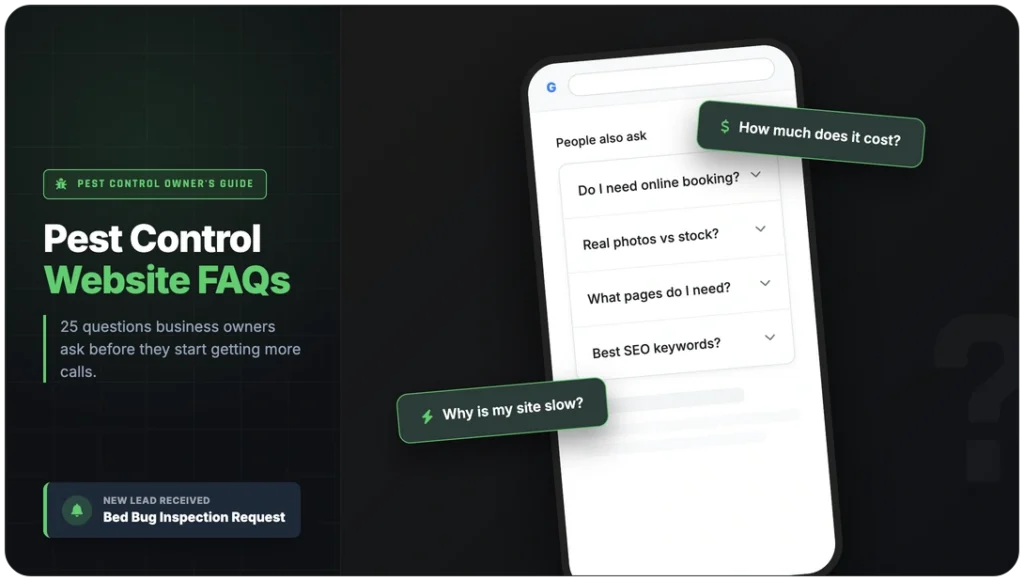
Many of these questions also appear directly in Google’s People Also Ask results, which means homeowners and business owners alike are searching for the same answers. Below are clear, practical responses to the most common website questions pest control companies ask before they start getting more calls.
How much does a pest control website cost?
This is usually the first question owners ask. The cost of a pest control website varies based on what the site is expected to do. Basic template sites cost less but often fail to convert. Conversion-focused websites cost more because they are built around mobile speed, lead capture, and trust signals that directly affect revenue.
How long does it take to build a pest control website
Most professionally built pest control websites take several weeks to complete. Time is spent planning structure, writing clear service content, designing for mobile use, and testing performance. Faster builds are possible, but rushing often leads to missed conversion issues that surface later.
Do I need to provide my own photos and content?
You do not need to provide everything, but real photos make a significant difference. Homeowners want proof that a company is local and active. Real job photos, technicians, trucks, and reviews build trust much faster than generic stock images.
What pages should a pest control website have?
At a minimum, a pest control website should include a clear homepage, service pages for core offerings, a service area or location section, an about page that builds credibility, and an easy-to-find contact or booking page. More pages do not help if the core pages are unclear.
What is the best homepage structure for a local pest control company?
The homepage should answer three things immediately. What services you offer, where you operate, and how to contact you right now. Reviews, proof, and credibility markers should appear early to build trust before the visitor scrolls too far.
Should pest control companies offer online booking?
Online booking reduces friction, especially for inspections and estimates. Even if full scheduling is not possible, a simple request form helps capture leads when homeowners are ready to act and may be contacting several companies at once.
What is the best call to action for a pest control website?
The best calls to action are clear and immediate. Tap to call, request service, or schedule an inspection matches how homeowners think when pests appear. Vague or passive calls to action often underperform.
How can I increase calls to my pest control website?
Most improvements come from removing friction. Faster load times, visible phone numbers, simple layouts, and trust signals near calls to action all increase the likelihood that a visitor will choose to call rather than leave.
How does a new website help my pest control business grow?
A new website captures more of the existing demand. Instead of relying only on more traffic or more ads, it converts a higher percentage of current visitors into real leads and booked jobs.
Why is my pest control website slow on mobile?
Oversized images, outdated code, or poor hosting often cause slow mobile performance. Many older websites were never designed for mobile-first use, which creates problems as most searches now happen on phones.
What is a good website load time for local service businesses?
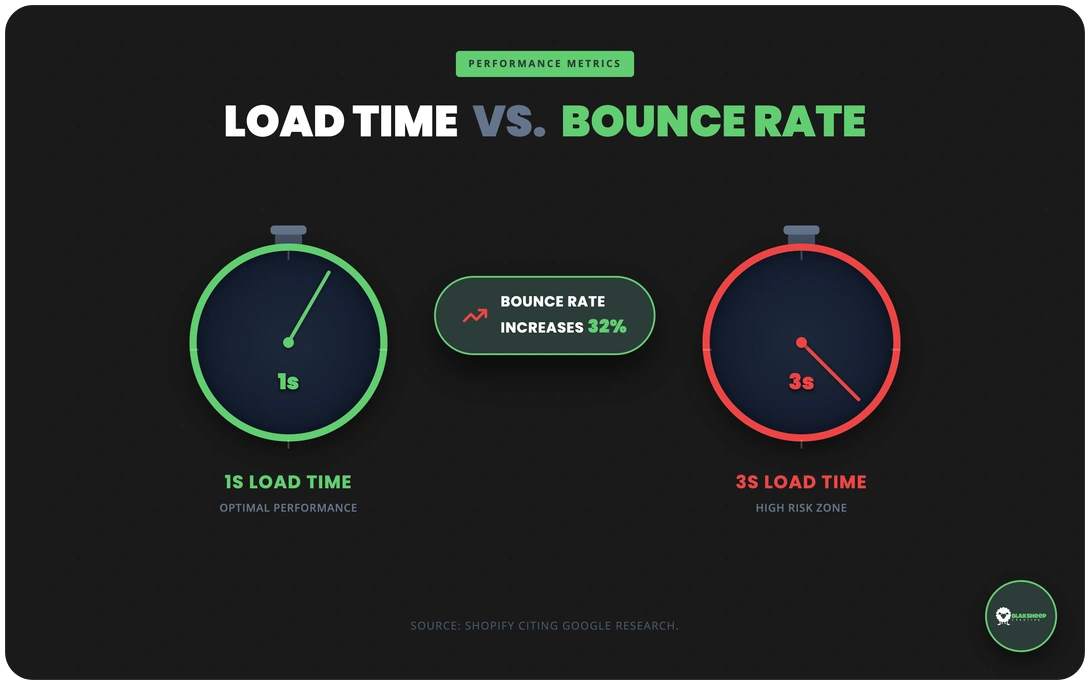
For pest control websites, faster is always better. Quick load times reduce abandonment and improve perceived professionalism, especially during urgent searches.
Does website speed affect pest control leads?
Yes. Website speed affects trust and behavior. Slow sites feel unreliable, and homeowners often associate technical problems with service problems. Faster sites consistently convert better.
What are the biggest reasons people leave a pest control website?
Common reasons include unclear service offerings, hard-to-find contact information, slow performance, and layouts that are difficult to use on a phone. When answers are not obvious, homeowners rarely wait.
How do I make my website easier to use on a phone?
Mobile-friendly design prioritizes readability, large buttons, minimal scrolling, and obvious actions. Everything should work with one hand and minimal effort.
What trust signals should a pest control website include?
Reviews, licenses, insurance mentions, years of experience, and real photos all help build confidence. These should appear near decision points, not hidden on separate pages. Many companies support this trust layer further through consistent pest control social media marketing that shows real activity.
Where should I put reviews on my pest control website?
Reviews work best near service descriptions and calls to action. Seeing proof at the moment of decision reduces hesitation.
Do before-and-after photos help pest control websites convert?
Yes. Real job photos show proof of work and help homeowners visualize results, reinforcing credibility.
Should pest control websites show licenses and insurance?
Proactively displaying licenses and insurance information addresses common concerns and signals professionalism.
Is it better to use real photos or stock photos on a service website?
Real photos almost always perform better. Stock images can make a business feel generic or disconnected from the local market.
Should I have separate pages for each pest control service?
Separate service pages help with clarity and search visibility. They allow homeowners to confirm that you can quickly address their specific problem and support stronger SEO for pest control companies.
Should I create location pages for each city I serve?
Location pages can help when done correctly. They should clearly explain service areas without creating confusion or thin content.
How do I explain my service area on my website?
Service area information should be easy to find and written in plain language. Maps, lists, and brief explanations help homeowners quickly confirm coverage.
What keywords should a pest control website target
The best keywords reflect real intent, such as pest types, services, and locations. Keyword strategy should support clarity first and optimization second.
These questions recur because they reflect real decision points for pest control businesses seeking to grow. A website that answers them clearly does more than look good. It removes doubt, accelerates decision-making, and captures more of the existing demand.
At BlakSheep Creative, these questions shape how pest control websites are designed and built. The goal is not to add complexity, but to create a site that works the way homeowners think when they need help now.
If you’re ready to find out whether your website is helping or quietly costing you jobs, fill out the form below to request a free review of your pest control website. We’ll take a quick look and tell you what’s working, what’s hurting conversions, and what you can change first to get more calls.