
Reputation Management
Reputation Management for Law Firms, Approval First.
A custody matter closes the way custody matters close, and two days later a one-star review names your attorney. Someone in the office replies with the facts of the case. Now there are two problems. We time requests to the close, triage reviews the same day, and draft replies your attorney approves.

- ABA Formal Opinion 496 concludes a negative review alone does not open the door to disclosure in self-defense. Every reply is drafted for counsel, not posted by us.
- The request goes out at the close, not during. A request mid-matter can read as pressure from the client's own attorney.
- A first-name or initials review still counts on Google. Telling clients they do not need to give details removes the biggest objection.
What keeps the phone quiet
Why review advice built for plumbers gets law firms in trouble.
The losing side writes the review
A custody matter ends the way custody matters end. Two days later there is a one-star review naming the attorney. The marketing intern replies with the facts of the case. Now there are two problems.
Clients will not use their name
Happy clients say they would rather not review a law firm in public. Nobody told them they can use initials and skip the details. The firm has eleven reviews and three of them are from opposing parties.
An agency claiming to handle bar compliance
The last vendor said they would take care of the advertising rules. They were not lawyers, and they were not your lawyers. Nobody at an agency can carry that, and any agency that says it can is a warning.
“BlakSheep Creative is amazing with the ability to take an idea from a conversation and bring it to life! From custom logo to website design, call BlakSheep!”

What you get
Built to book the job.
Requests timed to the close
The hour the case resolves, the funds clear, or the documents are signed. Worded in a way your firm approves, sent to every client, not only the ones you expect to be happy. With Grow the request fires from the pipeline when the matter closes.
Same-day triage
Every new review is flagged the day it lands, sorted by whether it needs counsel, a report to the platform, or a short thank-you.
Response drafts for approval
We draft. You and your counsel decide. Nothing posts without approval, and anything you flag comes down.
Policy reports, not legal threats
A review that violates the platform's own policy gets reported, which sometimes works and often does not. We do not use legal threats to pressure a reviewer.
Reviews where clients look first
The firm's Google Business Profile is where the rating is seen most. Its categories, address rules, and practitioner listings are a separate job. Google Business Profile for law firms
Part of the firm's ranking work
Review flow runs beside the practice-area pages and the technical work, which is included with every plan. SEO for law firms
Job marked complete
Invoice paid · today
The business: Thanks again for your business! If we did right by you, would you mind leaving a quick review? It really helps.
Sent automatically when the job closes.
Want this priced for your business?
How it works
Fixed quote. Fixed timeline. Yours when it’s done.
- 01
15-minute call
Practice areas, how matters close, who at the firm approves public statements, and where reviews sit today.
- 02
Price in writing
Review management comes with Grow Pro, month to month. One number, the work listed under it.
- 03
Set up the ask and the approval loop
Request timing wired to matter close, wording approved by the firm, a reply queue your attorney signs off on.
- 04
Run it every month
Requests go out, new reviews get triaged the same day, approved replies go up, and you get a five-minute readout.

Trusted by the businesses we build for.
























Proof beats promises
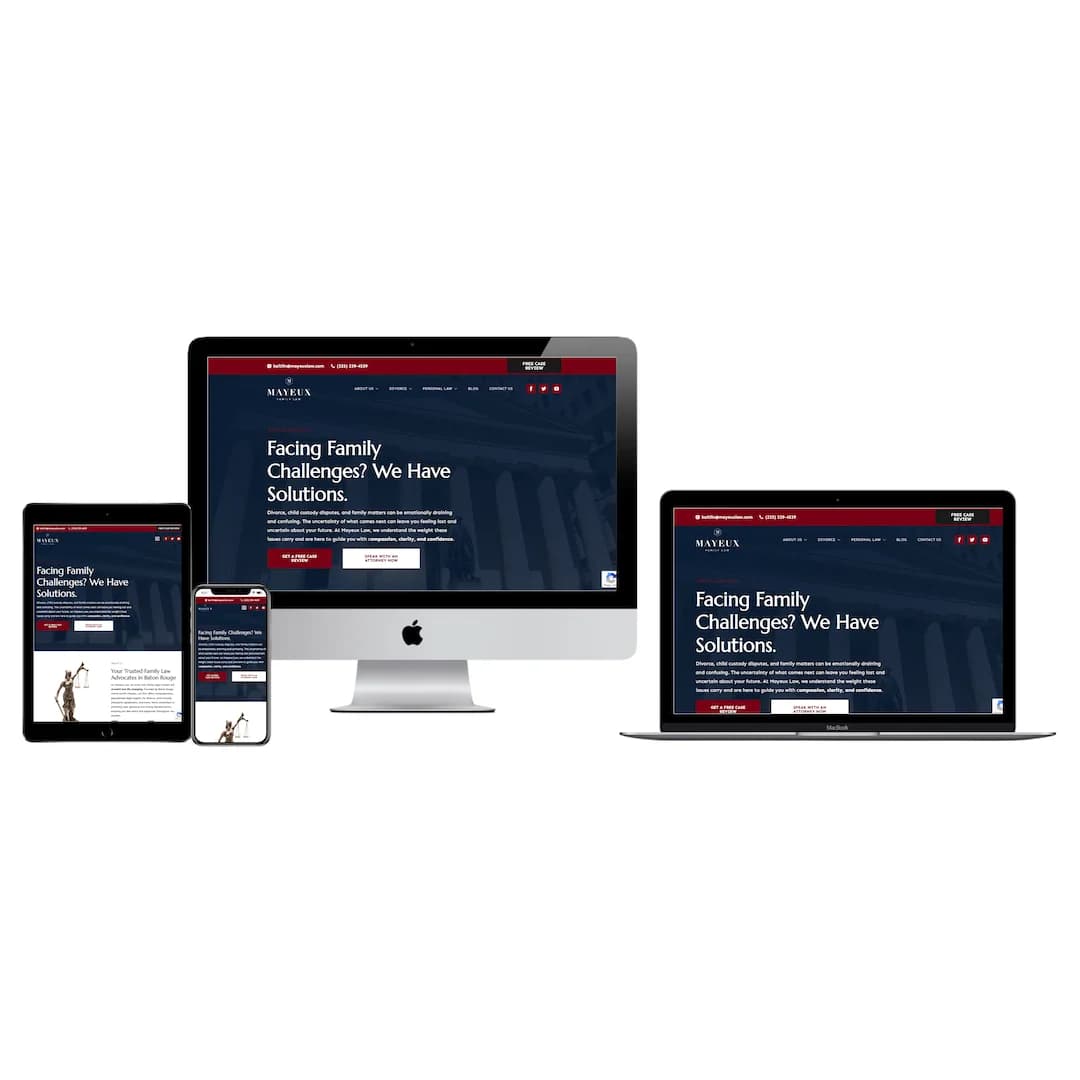
Mayeux Law Firm Website Redesign
See how BlakSheep Creative redesigned Mayeux Law’s website with a modern, mobile-first approach tailored for family law conversions.

Lawyer Website Design Project
An employment lawyer in Nashville, TN wanted to create a more modern design for his website. Read the project brief to learn what we did.
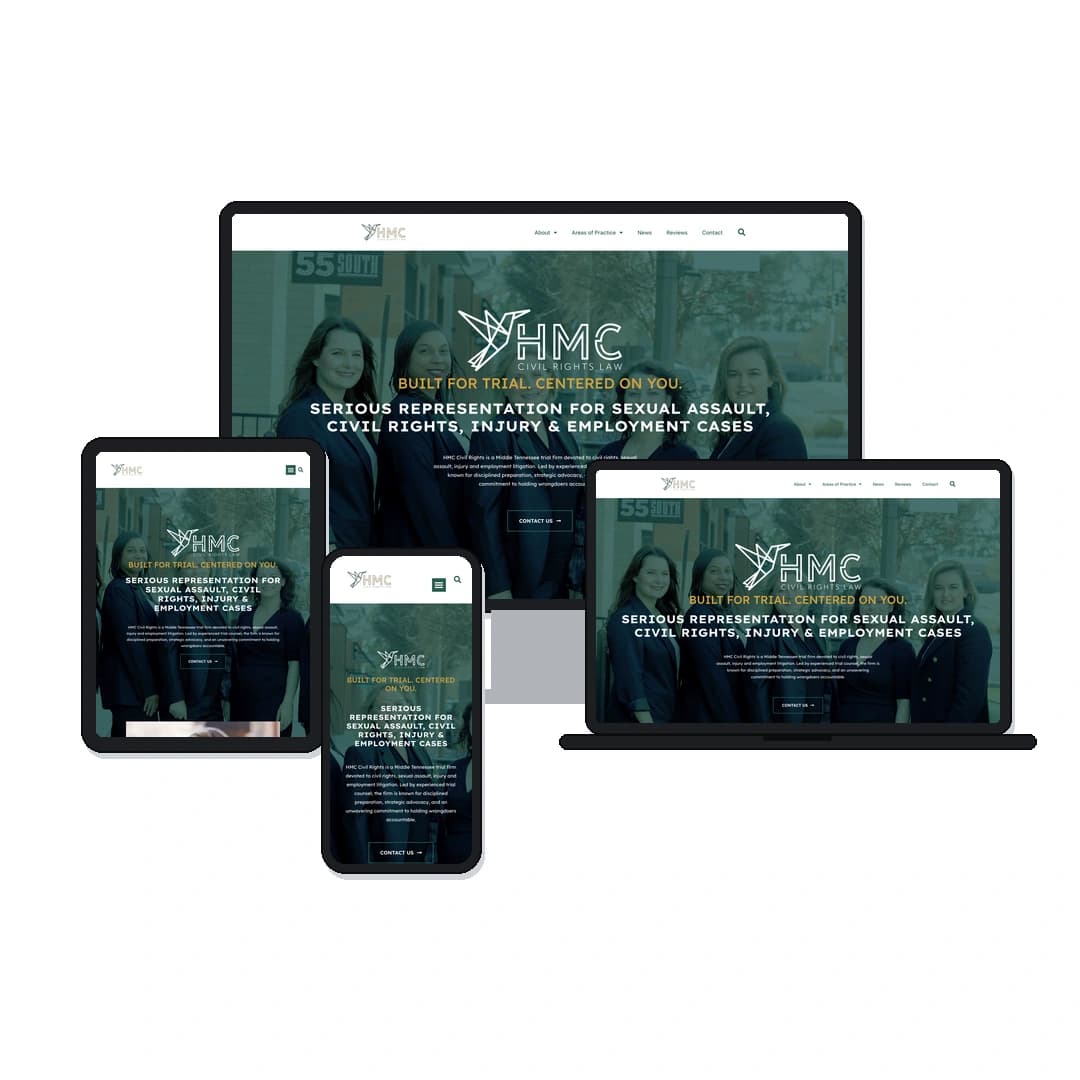
HMC Civil Rights Law Firm Website Design
When it comes to website redesigns, two heads are better than one. See how our team worked with Lisa M. Gale to create an amazing website for a civil rights emp
Google reviews
What clients actually said.
Real Google reviews, five stars, with the year each was left.
Scroll for more →
“Exceptional service from an exceptional group!”
Zach SonnierGoogle review, 2026 “Mr clint is an amazing guy who is extremely professional and responsive, when it comes to the service he provides. His website building and promoting skills are top tier.”
nicholas mcdowellGoogle review, 2026 “We had a great experience working with BlakSheep Creative! Clint was professional, responsive, and easy to work with throughout the entire process. He was always willing to help and made sure everything was taken care of. We truly appreciate his work and would definitely recommend BlakSheep Creative to anyone looking for a great website company!”
alejandra serranoGoogle review, 2026 “Clint took my company's project much further than I ever expected. His tech experience was fantastic, but even more than that, he guided me in directions I hadn't anticipated. We hadn't planned on some of the changes he suggested, but he made it all bigger, better and bolder.”
Christy GilfourGoogle review, 2026 “Clint and the team at Blaksheep have truly exceeded our expectations. From day one, the communication was clear, prompt, and professional. We were never left guessing where things stood. The work they've done on our website and social media presence has been outstanding.it looks great, functions seamlessly, and really captures the essence of our brand. We're so grateful to have found a team that combines creative talent with such reliability and responsiveness. We're genuinely excited to continue growing with Blaksheep and can't recommend them highly enough!"”
Brandon CurryGoogle review, 2026 “Shoutout to our IT wizard for fixing our work email and saving us all from a slow descent into chaos, carrier pigeons, and “did you get my message?” debates. He calmly swooped in, pushed some mysterious buttons only he understands, and—like magic—emails started working again. No dramatic sighs. No eye-rolling (at least not where we could see it). Just quiet competence and the subtle confidence of someone who knows we would’ve absolutely made it worse if we tried ourselves. Emails are flowing. Productivity is restored. Sanity levels have stabilized.”
Becky WardGoogle review, 2026 “I cannot RAVE and PRAISE enough about who Clint is as a person AND the amount of talent he holds. Genuine, funny, relaxed, and could not have asked for a better graphic designer to work with. When everyone else didn’t meet the expectations I needed for a really personal project, Clint exceeded above and beyond. THANK YOU to this man and the quality work he resulted me with. I will FOREVER use him in any and all design projects going forward!!!”
Megan TheriotGoogle review, 2026 ““BlakSheep Creative has completely changed how customers find my business.” Before working with Clint and the team, we were basically invisible online. Now we rank at the top of Google for all our core services — brush clearing, forestry mulching, land development — you name it. The leads we get are not just more frequent, they’re better quality. They took the time to understand our business, explained what they were doing in plain English, and followed through with results that speak for themselves. Couldn’t be happier with the service and support. If you own a service business in Livingston Parish and want to grow, this is the crew to call. – Adam Hodges Owner, Hodges Land Management Livingston, Louisiana”
Adam HodgesGoogle review, 2025




Fixed quote in writing, before any work starts.
How you can buy it
By the project, or one monthly plan.
By the project
One job, scoped and priced in writing before work starts: a website, a profile cleanup, a link campaign, a press release. You pay for the work, and everything we build is yours.
The monthly plan
$500 a month · 12-month plan, website build fee waived
Get found
- Your website, built, hosted and maintained
- Google Business Profile optimization, with 3 posts a week
- Local SEO: on-page work, technical fixes and schema
- Keyword research, and rank tracking on up to 100 keywords
- 75+ citations on Google, Bing, Apple Maps and directories
- AI search visibility, so assistants can name you
Get trusted
- 4 SEO articles a month, guaranteed
- 6 guest-post backlinks a month from relevant sites
- 1 press release a month, written and distributed
- Review requests after every job, and a reply to every review
- Social media posting on 3 platforms
Stay in the loop
- A monthly report on rankings, traffic and leads
- A monthly strategy call, direct with the people doing the work
- You own the site, domain and content
Pay-per-click ads are managed separately, and ad spend stays in your own account.
Text-back on every missed call, automatic follow-up and call tracking come with Grow, our platform. See Grow.
If the price is what stands between you and getting started, tell us your story. Pennies on the dollar when we can.
Why businesses hire us
- Veteran-owned, in Denham Springs since 2000.
- Fixed quote before we start. No hourly surprises.
- You talk to the people who do the work.
- Published pricing and a free 15-minute discovery call.
- Tight budget? Tell us your story. We listen before we decide what is possible.


The short answer
Every other industry is told to answer every review publicly and fast. For a law firm that advice ranges from useless to a bar complaint, because half of litigation has a losing side and that side writes reviews. Our reputation management for law firms sends the request at the close of a matter, triages every new review the day it lands, and drafts responses that your attorney approves before anything posts. We do not write reviews, buy them, or threaten reviewers to remove them. Your counsel decides what may be published. We implement what you approve.
Common questions about reputation management for law firms
Someone left a false one-star review. Can we respond and set the record straight?
Can you get a bad review removed?
Is it acceptable to ask clients for reviews at all?
Our clients will not use their real names. Does an anonymous review still count?
Do you write or post reviews for clients?
Are you handling our bar compliance around reviews?

More for law firms
Reputation Management for other industries and cities
From the blog
Read Before You Hire Anyone.
Plain answers to the questions owners ask us most, written by the people who do the work.
HMC Civil Rights Case Study: 11,000 Clicks for a Nashville Trial Firm
HMC Civil Rights in real Search Console numbers: 11,031 clicks, 1,154,775 impressions and 2,698 non-branded searches on page one.
Read the article →
Why Your Law Firm’s Website Isn’t Attracting Clients, and How to Fix It
Why a law firm website loses clients: slow pages, no mobile layout, no consultation button, no SEO, no trust signals. What to fix and what one redesign did.
Read the article →