
Reputation Management
HVAC Reputation Management That Doesn’t Go Quiet in April.
In July your reviews pour in after every compressor failure. By February the newest one is months old, and a homeowner scrolling the map reads your stale profile as a closed business. The tune-up route ran all winter and nobody asked. We ask before the truck leaves, on every visit, and answer every review specifically.

- The moment to ask is in the house that finally feels right, before the tech leaves. Three days later the request lands next to the invoice.
- Recency is a ranking input and a trust signal. Spacing requests into the shoulder season keeps the newest review from being six months old.
- Several reviews in one summer that name the arrival window instead of the repair is a dispatch problem, not a reply problem.
What keeps the phone quiet
Why HVAC reviews come in bursts and then stop.
The ask is tied to emergency calls only
Every review came from a July compressor failure. In a mild October there are no emergencies, so there are no reviews, and by February the newest one is four months old. The tune-up route ran the whole time and nobody asked.
A request sent three days later
The house was 84 degrees and now it is 72. That relief lasts about as long as the tech's walk to the truck. The request that goes out Thursday arrives beside the invoice, and the response rate shows it.
Every reply is the same paragraph
Twelve reviews in a row answered with the identical thank-you. Homeowners notice templated replies and it puts them off. The bad review about the arrival window got the same paragraph too.
“Clint was incredible to work with! He was everything you need - quick to communicate from beginning to end, professional, flexible when I had questions and asked for extra options, and SO fast on his turnaround time. I would recommend Blaksheep Creative to everyone!”

What you get
Built to book the job.
The ask before the truck leaves
A text with a link that opens the Google review box directly, sent while the customer is still standing in a house that works. With Grow it fires when the job closes in the pipeline.
Shoulder-season pacing
Requests on maintenance visits and tune-ups, and peak-season requests deliberately spaced into the quiet weeks so recency never gaps.
Every review answered, specifically
Short replies that name the job. Positive reviews within a day. Bad ones answered once, calmly, with an offer to sort it out offline.
Bad reviews read as data
If several reviews in one summer name the arrival window, we tell you it is a dispatch and communication change, not a wording change.
Reviews where the map pack shows them
The rating lives on your Google Business Profile, next to the category and service area that decide whether you show at all. That profile work is its own job. Google Business Profile for HVAC companies
Reviews pay into three channels
Map pack ranking, the homeowner's choice between three listings, and Local Services Ads, which read them too. Review work runs alongside the rest of the HVAC plan. Digital marketing for HVAC companies
Job marked complete
Invoice paid · today
The business: Thanks again for your business! If we did right by you, would you mind leaving a quick review? It really helps.
Sent automatically when the job closes.
Want this priced for your business?
How it works
Fixed quote. Fixed timeline. Yours when it’s done.
- 01
15-minute call
Your rating, count, and how old the newest review is. How jobs get closed out in the truck. What the maintenance route looks like.
- 02
Price in writing
Review management comes with Grow Pro, month to month. One number, the work listed under it.
- 03
Set up the ask
Request wired to job completion, tune-up requests added, reply templates in your voice, monitoring on.
- 04
Run it through the calendar
Requests go out year round, replies go up, and you get a five-minute readout of count, rating, and recency each month.

Trusted by the businesses we build for.



























Proof beats promises
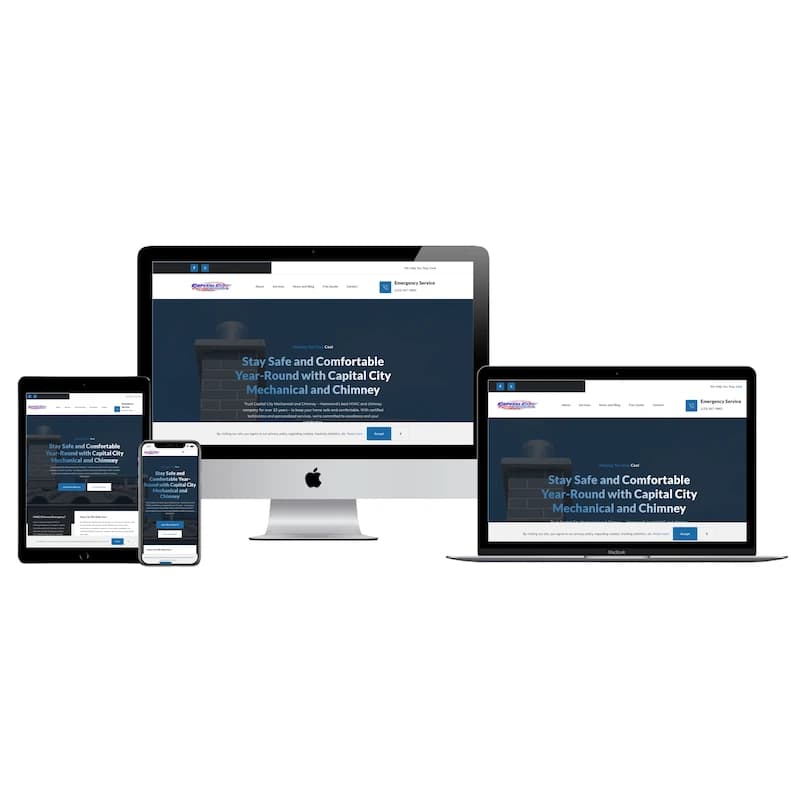
Capital City Mechanical and Chimney Website Redesign
Learn more about how BlakSheep Creative redesigned the Capital City Mechanical and Chimney website to improve user engagement, increase online presence, and sho
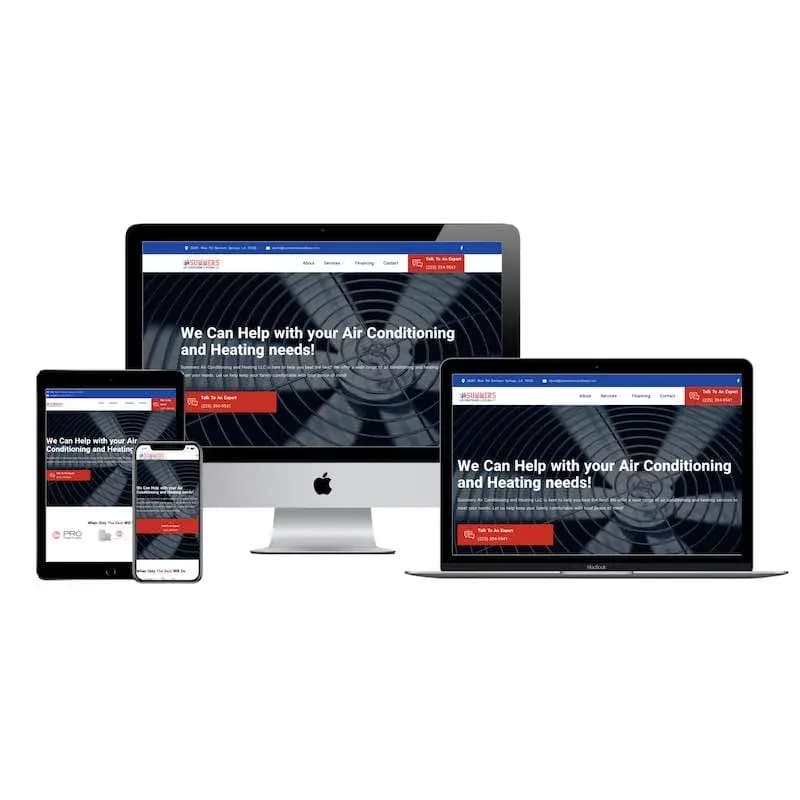
Summers Heating & Air Conditioning LLC. Website Design
Check out our latest website design project for Summers Heating & Air Conditioning LLC. We created a responsive website that is easy to navigate and looks great
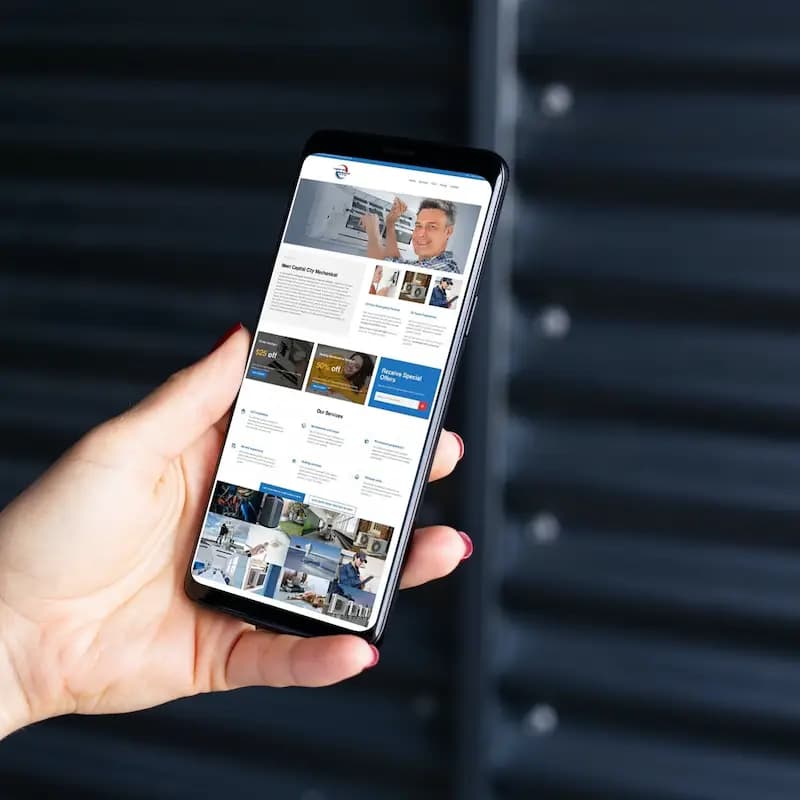
Capital City Mechanical and AC Company Website Development
Completely custom HVAC and mechanical contractor website for a Hammond, Louisiana based company - Capital City Mechanical and AC.
Google reviews
What clients actually said.
Real Google reviews, five stars, with the year each was left.
Scroll for more →
“Exceptional service from an exceptional group!”
Zach SonnierGoogle review, 2026 “Mr clint is an amazing guy who is extremely professional and responsive, when it comes to the service he provides. His website building and promoting skills are top tier.”
nicholas mcdowellGoogle review, 2026 “We had a great experience working with BlakSheep Creative! Clint was professional, responsive, and easy to work with throughout the entire process. He was always willing to help and made sure everything was taken care of. We truly appreciate his work and would definitely recommend BlakSheep Creative to anyone looking for a great website company!”
alejandra serranoGoogle review, 2026 “Clint took my company's project much further than I ever expected. His tech experience was fantastic, but even more than that, he guided me in directions I hadn't anticipated. We hadn't planned on some of the changes he suggested, but he made it all bigger, better and bolder.”
Christy GilfourGoogle review, 2026 “Clint and the team at Blaksheep have truly exceeded our expectations. From day one, the communication was clear, prompt, and professional. We were never left guessing where things stood. The work they've done on our website and social media presence has been outstanding.it looks great, functions seamlessly, and really captures the essence of our brand. We're so grateful to have found a team that combines creative talent with such reliability and responsiveness. We're genuinely excited to continue growing with Blaksheep and can't recommend them highly enough!"”
Brandon CurryGoogle review, 2026 “Shoutout to our IT wizard for fixing our work email and saving us all from a slow descent into chaos, carrier pigeons, and “did you get my message?” debates. He calmly swooped in, pushed some mysterious buttons only he understands, and—like magic—emails started working again. No dramatic sighs. No eye-rolling (at least not where we could see it). Just quiet competence and the subtle confidence of someone who knows we would’ve absolutely made it worse if we tried ourselves. Emails are flowing. Productivity is restored. Sanity levels have stabilized.”
Becky WardGoogle review, 2026 “I cannot RAVE and PRAISE enough about who Clint is as a person AND the amount of talent he holds. Genuine, funny, relaxed, and could not have asked for a better graphic designer to work with. When everyone else didn’t meet the expectations I needed for a really personal project, Clint exceeded above and beyond. THANK YOU to this man and the quality work he resulted me with. I will FOREVER use him in any and all design projects going forward!!!”
Megan TheriotGoogle review, 2026 ““BlakSheep Creative has completely changed how customers find my business.” Before working with Clint and the team, we were basically invisible online. Now we rank at the top of Google for all our core services — brush clearing, forestry mulching, land development — you name it. The leads we get are not just more frequent, they’re better quality. They took the time to understand our business, explained what they were doing in plain English, and followed through with results that speak for themselves. Couldn’t be happier with the service and support. If you own a service business in Livingston Parish and want to grow, this is the crew to call. – Adam Hodges Owner, Hodges Land Management Livingston, Louisiana”
Adam HodgesGoogle review, 2025




Fixed quote in writing, before any work starts.
How you can buy it
By the project, or one monthly plan.
By the project
One job, scoped and priced in writing before work starts: a website, a profile cleanup, a link campaign, a press release. You pay for the work, and everything we build is yours.
The monthly plan
$500 a month · 12-month plan, website build fee waived
Get found
- Your website, built, hosted and maintained
- Google Business Profile optimization, with 3 posts a week
- Local SEO: on-page work, technical fixes and schema
- Keyword research, and rank tracking on up to 100 keywords
- 75+ citations on Google, Bing, Apple Maps and directories
- AI search visibility, so assistants can name you
Get trusted
- 4 SEO articles a month, guaranteed
- 6 guest-post backlinks a month from relevant sites
- 1 press release a month, written and distributed
- Review requests after every job, and a reply to every review
- Social media posting on 3 platforms
Stay in the loop
- A monthly report on rankings, traffic and leads
- A monthly strategy call, direct with the people doing the work
- You own the site, domain and content
Pay-per-click ads are managed separately, and ad spend stays in your own account.
Text-back on every missed call, automatic follow-up and call tracking come with Grow, our platform. See Grow.
If the price is what stands between you and getting started, tell us your story. Pennies on the dollar when we can.
Why businesses hire us
- Veteran-owned, in Denham Springs since 2000.
- Fixed quote before we start. No hourly surprises.
- You talk to the people who do the work.
- Published pricing and a free 15-minute discovery call.
- Tight budget? Tell us your story. We listen before we decide what is possible.


The short answer
Your review count spikes in July, spikes again after the first freeze, and flatlines in between. That pattern does more damage than the occasional one-star, because a homeowner scrolling the map pack reads a stale profile as a closed business. Our reputation management for HVAC companies asks before the tech leaves the driveway, asks on maintenance visits and tune-ups so the quiet months still produce reviews, answers every review with something specific to the job, and treats a bad summer review as dispatch data rather than a wording problem. Price in writing, month to month.