
Google Business Profile
HVAC Google Business Profile for the Late-Night Search.
It’s 9pm and the house is at 84 degrees. The homeowner opens the map, reads three listings, and dials one. Yours says Contractor, shows six old photos, and claims all-night hours nobody answers. We pick your category against your job mix, set an honest service area, and keep real photos coming.

- Residential repair and install shops usually land on HVAC Contractor. A cooling-only operation may do better under Air Conditioning Repair Service. Pick against the job mix.
- Google's guidance is that the service area should not extend past about two hours of driving from your base. A tight area outranks a sprawling one in every town inside it.
- Open 24 hours only if someone answers at 3am. Unanswered emergency calls are the ones that become one-star reviews.
What keeps the phone quiet
Why the map shows three other contractors.
Listed under the wrong category
The company does mostly AC repair and the profile says Contractor, because that was the first option that came up. Google files you where the category says. The searches that pay never see you.
Open 24 hours, answered at 8am
The profile says round the clock. A homeowner calls at 2am with a dead compressor and hits voicemail. That is the worst moment of their week, and the review they leave at 7am says so.
Six photos from 2021
The listing has the logo, a truck, and four photos from the day it was made. To Google and to a homeowner it looks abandoned. A tech with a phone could fix it in ninety seconds a week and nobody asked him to.
“It’s been a blessing working with Clint over the years on website projects. He always makes it look better than I had pictured in my mind.”
What you get
Built to book the job.
Primary category against the job mix
HVAC Contractor, Air Conditioning Repair Service, or a heating category, chosen from what you actually run, with secondaries that cover the rest without weakening the primary.
An honest service area
The towns you truly serve, inside about two hours of driving from your base, and no fake listings in towns where you have no staffed location. Cover those towns with real pages on your website instead. HVAC web design with city pages
Address and hours done right
Shop or home-dispatch address hidden if customers do not come to you. Posted hours you actually cover, with the emergency line noted separately.
A full services list and monthly photos
Every service listed and described. A handful of install shots, a crew photo, and a truck at a job site every month, from a tech with a phone.
Messaging only if someone owns it
Turned on when a person watches it during business hours. Turned off during the summer rush if nobody can. With Grow, messages and missed calls get a text back within seconds. Part of Grow
Review flow started the same day
Profile fixes move in weeks. Review volume takes longer, so the ask starts at the same time rather than after. That is its own job. Reputation management for HVAC companies
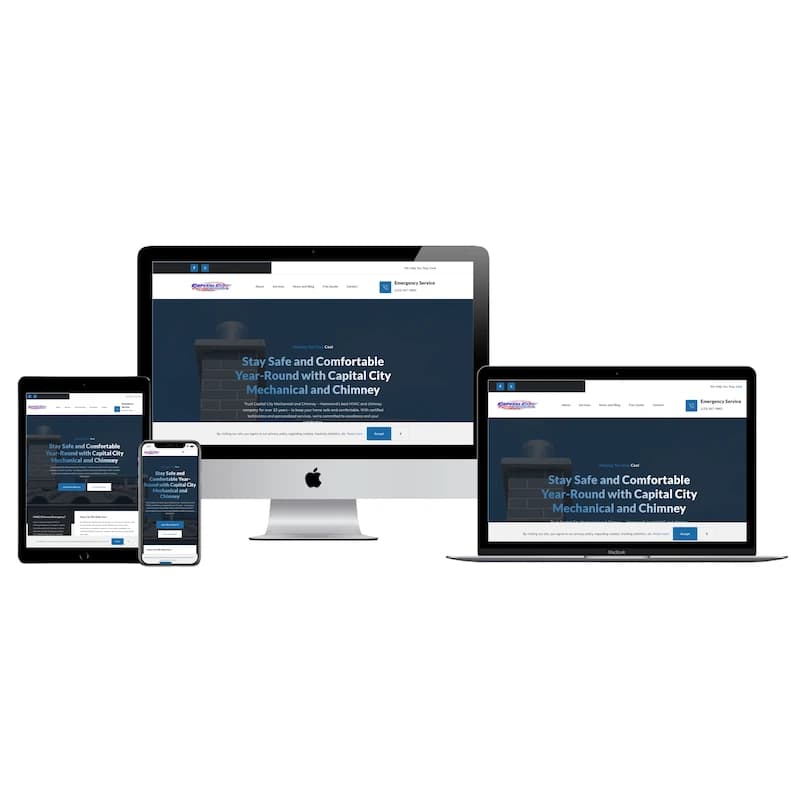
Work we shipped
Capital City Mechanical and Chimney Website Redesign
See the project →
Want this priced for your business?
How it works
Fixed quote. Fixed timeline. Yours when it’s done.
- 01
15-minute call
Your job mix, the towns you roll trucks to, where you dispatch from, and who answers the phone after hours.
- 02
Audit
Category, service area, address setting, hours, photos, services, and who holds the three listings in your towns today.
- 03
Price in writing
Setup is a one-time project, and monthly upkeep comes with the 12-month plan. Included with every site plan.
- 04
Fix, then keep it active
Category and service area corrections first, then photos, posts, and a monthly readout of calls and direction requests from the profile.

Trusted by the businesses we build for.

























Proof beats promises
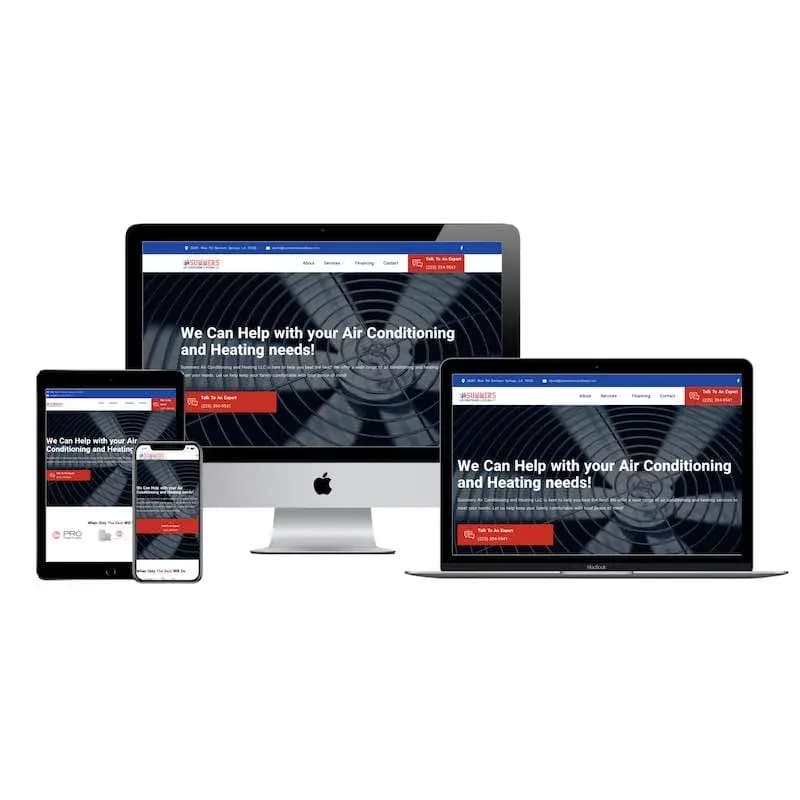
Summers Heating & Air Conditioning LLC. Website Design
Check out our latest website design project for Summers Heating & Air Conditioning LLC. We created a responsive website that is easy to navigate and looks great
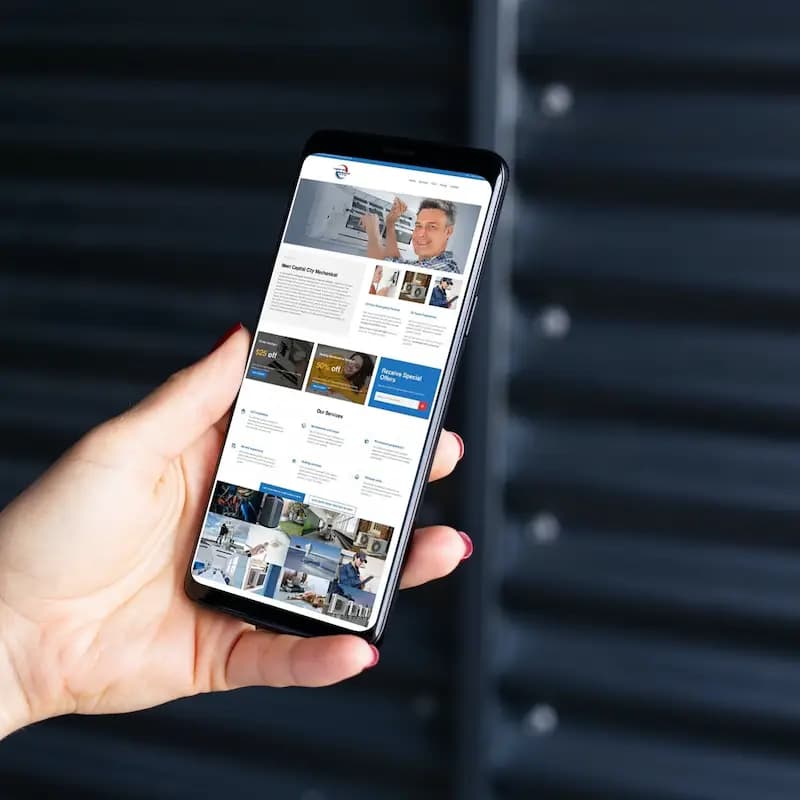
Capital City Mechanical and AC Company Website Development
Completely custom HVAC and mechanical contractor website for a Hammond, Louisiana based company - Capital City Mechanical and AC.
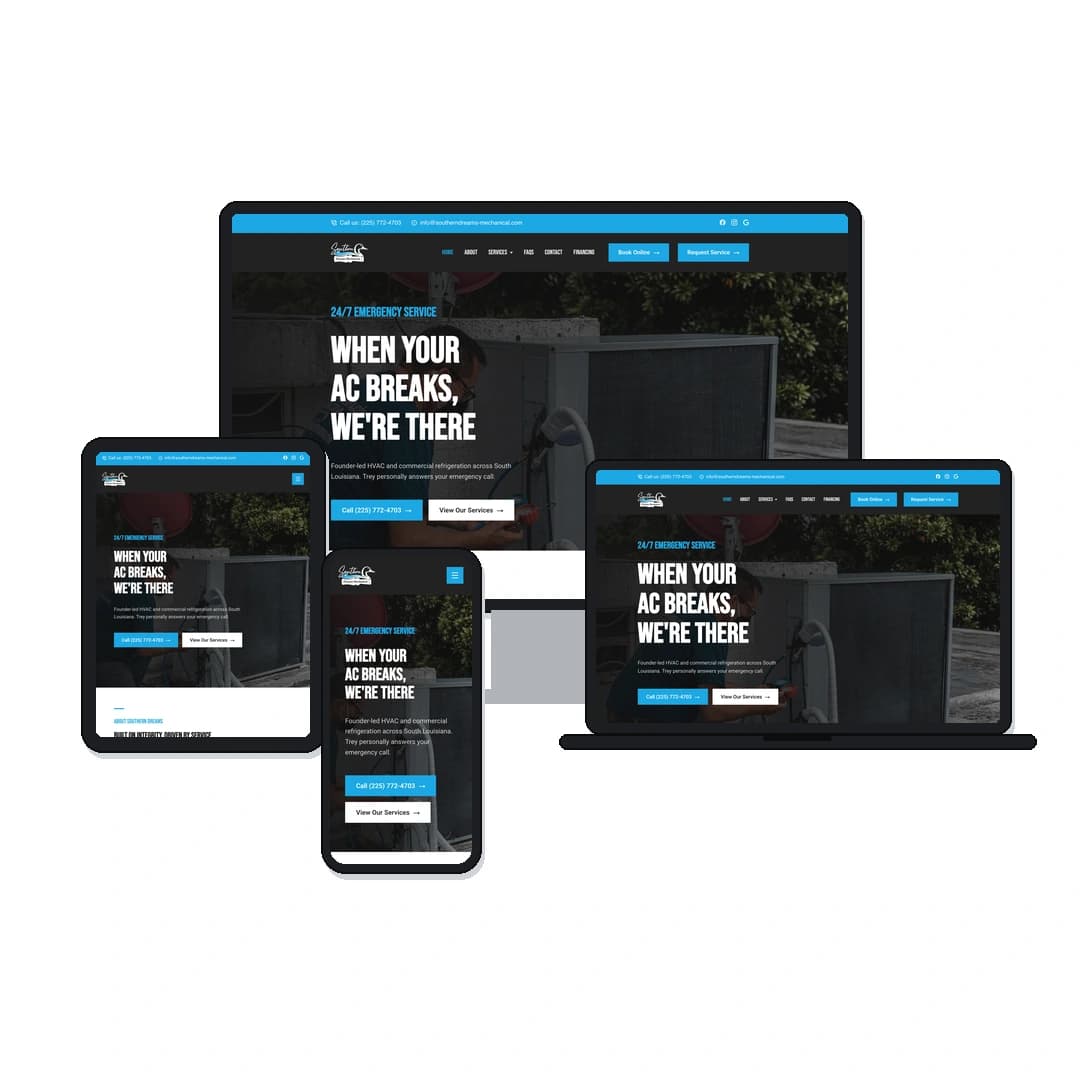
Southern Dreams Mechanical HVAC Website Design
Google reviews
What clients actually said.
Real Google reviews, five stars, with the year each was left.
Scroll for more →
“Exceptional service from an exceptional group!”
Zach SonnierGoogle review, 2026 “Mr clint is an amazing guy who is extremely professional and responsive, when it comes to the service he provides. His website building and promoting skills are top tier.”
nicholas mcdowellGoogle review, 2026 “We had a great experience working with BlakSheep Creative! Clint was professional, responsive, and easy to work with throughout the entire process. He was always willing to help and made sure everything was taken care of. We truly appreciate his work and would definitely recommend BlakSheep Creative to anyone looking for a great website company!”
alejandra serranoGoogle review, 2026 “Clint took my company's project much further than I ever expected. His tech experience was fantastic, but even more than that, he guided me in directions I hadn't anticipated. We hadn't planned on some of the changes he suggested, but he made it all bigger, better and bolder.”
Christy GilfourGoogle review, 2026 “Clint and the team at Blaksheep have truly exceeded our expectations. From day one, the communication was clear, prompt, and professional. We were never left guessing where things stood. The work they've done on our website and social media presence has been outstanding.it looks great, functions seamlessly, and really captures the essence of our brand. We're so grateful to have found a team that combines creative talent with such reliability and responsiveness. We're genuinely excited to continue growing with Blaksheep and can't recommend them highly enough!"”
Brandon CurryGoogle review, 2026 “Shoutout to our IT wizard for fixing our work email and saving us all from a slow descent into chaos, carrier pigeons, and “did you get my message?” debates. He calmly swooped in, pushed some mysterious buttons only he understands, and—like magic—emails started working again. No dramatic sighs. No eye-rolling (at least not where we could see it). Just quiet competence and the subtle confidence of someone who knows we would’ve absolutely made it worse if we tried ourselves. Emails are flowing. Productivity is restored. Sanity levels have stabilized.”
Becky WardGoogle review, 2026 “I cannot RAVE and PRAISE enough about who Clint is as a person AND the amount of talent he holds. Genuine, funny, relaxed, and could not have asked for a better graphic designer to work with. When everyone else didn’t meet the expectations I needed for a really personal project, Clint exceeded above and beyond. THANK YOU to this man and the quality work he resulted me with. I will FOREVER use him in any and all design projects going forward!!!”
Megan TheriotGoogle review, 2026 ““BlakSheep Creative has completely changed how customers find my business.” Before working with Clint and the team, we were basically invisible online. Now we rank at the top of Google for all our core services — brush clearing, forestry mulching, land development — you name it. The leads we get are not just more frequent, they’re better quality. They took the time to understand our business, explained what they were doing in plain English, and followed through with results that speak for themselves. Couldn’t be happier with the service and support. If you own a service business in Livingston Parish and want to grow, this is the crew to call. – Adam Hodges Owner, Hodges Land Management Livingston, Louisiana”
Adam HodgesGoogle review, 2025




Fixed quote in writing, before any work starts.
How you can buy it
By the project, or one monthly plan.
By the project
One job, scoped and priced in writing before work starts: a website, a profile cleanup, a link campaign, a press release. You pay for the work, and everything we build is yours.
The monthly plan
$500 a month · 12-month plan, website build fee waived
Get found
- Your website, built, hosted and maintained
- Google Business Profile optimization, with 3 posts a week
- Local SEO: on-page work, technical fixes and schema
- Keyword research, and rank tracking on up to 100 keywords
- 75+ citations on Google, Bing, Apple Maps and directories
- AI search visibility, so assistants can name you
Get trusted
- 4 SEO articles a month, guaranteed
- 6 guest-post backlinks a month from relevant sites
- 1 press release a month, written and distributed
- Review requests after every job, and a reply to every review
- Social media posting on 3 platforms
Stay in the loop
- A monthly report on rankings, traffic and leads
- A monthly strategy call, direct with the people doing the work
- You own the site, domain and content
Pay-per-click ads are managed separately, and ad spend stays in your own account.
Text-back on every missed call, automatic follow-up and call tracking come with Grow, our platform. See Grow.
If the price is what stands between you and getting started, tell us your story. Pennies on the dollar when we can.
Why businesses hire us
- Veteran-owned, in Denham Springs since 2000.
- Fixed quote before we start. No hourly surprises.
- You talk to the people who do the work.
- Published pricing and a free 15-minute discovery call.
- Tight budget? Tell us your story. We listen before we decide what is possible.


The short answer
At 9pm with the house at 84 degrees, nobody opens your website. They open the map, read three listings, and dial one. Our Google Business Profile management for HVAC companies decides what those three listings say about you: a primary category picked against your job mix rather than your business name, a service area that covers the towns you truly serve and no further, the shop address hidden if customers never come to it, hours that are honest about 3am, a monthly habit of real install photos, and a review flow started at the same time. Category and service area fixes can shift position within a few weeks.