By Clint Sanchez · Published · Updated · 5 min read
Quick answer
Website copy that repeats we, us, and our makes the company the hero and the customer an afterthought, and readers leave because nobody cares about a company life story. The fix is five steps: throw out the mirror and look through the window at the customer, drop jargon and use you more than we, play the guide rather than the hero, lead with benefits over features, and write calls to action about the reader.
Key takeaways
- Excessive use of we and us on a website makes the company the protagonist instead of the customer, which is a fundamental flaw in engaging potential clients.
- Donald Miller's StoryBrand framework treats the customer as the hero and the business as the guide, Yoda to their Luke Skywalker.
- Use you more often than we, and replace corporate jargon with plain language people actually use.
- Nobody cares about a state-of-the-art hammer until you explain how it makes their life easier; sell benefits, not features.
- A call to action should read as an invitation to solve the reader's problem, not a command from the company.
- Credentials still matter, but reframe them: We are the best becomes You deserve the best, and awards become award-winning service you benefit from.
- Testimonials and case studies let satisfied customers make the credibility argument for you.

Want this handled instead of DIY?
A 15-minute call, no script, no pressure — you leave with a plan either way.
Oh, joy. Another website that reads like a diary from the Narcissus Fan Club. You know the type: “We have the best team,” “We offer unparalleled services,” “We, We, We…” And let’s not forget the honorary mentions of “Me, Me, Me…” in those thinly veiled About Us sections that could double as memoirs. It’s as if the digital world has become an echo chamber of self-admiration. But here’s the million-dollar spoiler: Nobody cares. Shocking, I know.
Now, before you retreat into the comforting arms of denial, let’s get one thing straight. Your audience is not there to swipe right on your brand’s ego. They have problems, needs, and, dare we say, desires that don’t include hearing your company’s life story. So, how do you pivot from being the digital equivalent of a toddler clamoring for attention to becoming the suave conversationalist that captivates your audience? Buckle up, buttercup. It’s time for a reality check and a makeover.
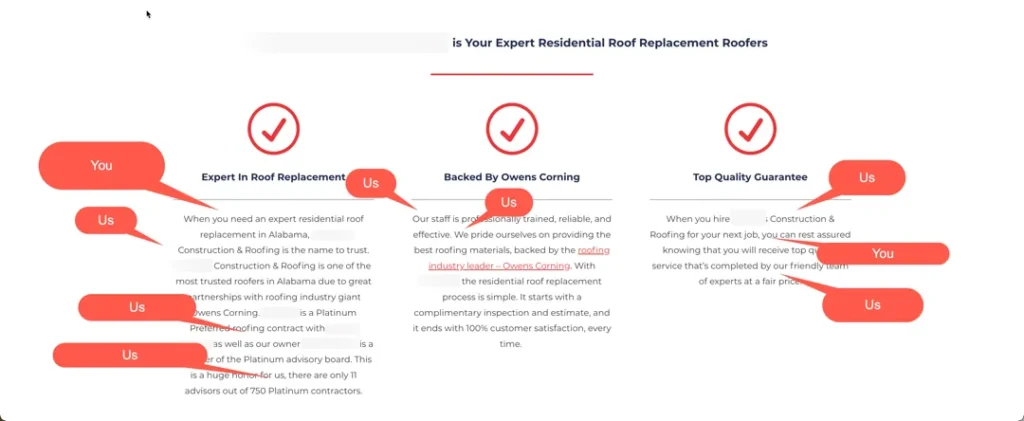
Looking at the provided image, it’s clear that the website content falls into the self-centered trap we’ve been discussing. The excessive use of “Us” and “We” positions the company as the protagonist rather than the customer. This isn’t just a faux pas; it’s a fundamental flaw in engaging potential clients who are more interested in what you can do for them than in your company’s accolades.
Want this handled for you? We build and market websites for Louisiana businesses, and we will tell you honestly if you do not need us.
The Story of ‘You’: Crafting a Customer-Centric Narrative
Before we get into the thick of it, let’s pause and reflect, literally. If your website’s story is a monotonous monologue focused on self-praise, you’re missing out on connecting with your audience on a meaningful level. The key? Shift the narrative to highlight the customer’s path, much like the captivating tales outlined in Donald Miller’s Storybrand framework.
Equipped with the understanding that your customers are the true protagonists of your business saga, let’s now explore the critical first step in reshaping your website’s narrative:
Step 1: Throw Out the Mirror
First things first, let’s address the elephant in the room, your obsession with yourself. It’s time to throw out the mirror and start looking through the window. Your customers are out there, not in your boardroom. Switch from the “We are the champions” tune to “What can I do for you?” Your website should be less of a trophy case and more of a treasure map, guiding visitors to the X that marks the spot: solutions to their problems.
Step 2: Speak Their Language
Drop the jargon and corporate speak. No one wants to wade through a swamp of buzzwords and industry slang. You’re not impressing anyone; you’re confusing them. Talk to your audience like they’re human beings, because, surprise, they are. Use “you” more than “we.” Make them the hero of your story, not the sidekick.
Step 3: Be the Guide, Not the Hero
Remember, in every customer’s path, they’re Luke Skywalker; you’re Yoda. You’re there to guide, advise, and assist. Your website should be a beacon of hope, not a monument to your ego. Highlight how your services or products fit into their epic saga of need or desire fulfillment.
Excessive use of we and us on a website makes the company the protagonist instead of the customer, which is a fundamental flaw in engaging potential clients.
Step 4: Benefits Over Features
Nobody cares about your state-of-the-art hammer unless you explain how it will make their life easier or better. Will it help them build the metaphorical or literal house of their dreams faster, stronger, and better? That’s what they want to know. Focus on the benefits, not the features.
Step 5: Call to Action – Make it About Them
Your call to action shouldn’t read like a command from on high. It should be an irresistible invitation to an exclusive party where their problems are solved and their dreams come true. Make it clear, make it exciting, and most importantly, make it about them.

The Balancing Act: Flaunt Your Credentials Without Alienating Your Audience
It’s a tightrope walk, really. On one side, you have your company’s achievements and expertise clamoring for the spotlight. On the other, there’s your audience, with a single question on their minds: “What’s in it for me?” The website in our crosshairs today shows just how dizzying that height can be. With an ‘Us’ here and a ‘We’ there, it’s a veritable farmyard of self-praise that forgets who’s actually feeding the animals.
Here’s the deal: It’s not that you shouldn’t strut your stuff. You’ve worked hard for those credentials, and they do matter. They’re proof of your prowess. But, and this is a big but, your potential clients are looking for a mirror, not a billboard. They want to see themselves in your story, their problems in your solutions, and their success in your services.
So, how do you strike that perfect balance?
Shift the Spotlight: Every “We are the best” can be rephrased to “You deserve the best.” It’s not just a linguistic trick; it’s a perspective shift.
Show, Don’t Tell: Instead of saying, “We have awards,” show how those awards translate into better service: “You benefit from award-winning service.”
Testimonials Are Golden: Let your satisfied customers do the talking. “Our clients say they love our reliable service” speaks volumes more than “We are reliable.”
The Proof Is in the Pudding: Provide case studies. “See how we solved problems for people just like you.”
By weaving these elements into your narrative, you maintain credibility without coming off as a braggart. It’s time to take a step back from the ‘Me, Me, Me’ and make your website a welcoming place for ‘You, You, You.’
So, let’s retire the “We, We, We, Me, Me, Me…” narrative. It’s time to transform your website from a self-absorbed monologue to a customer-centric dialog. After all, in the grand scheme of things, it’s not about you; it’s about them. And the sooner you realize that, the sooner you’ll start seeing the engagement, conversions, and loyalty you’ve been dreaming about.
But hey, if reinventing your digital dialog feels like deciphering hieroglyphics, don’t sweat it. BlakSheep Creative is here to translate. Set in the heart of Denham Springs, LA, we’re a digital marketing agency with a knack for turning self-centered soliloquies into compelling customer conversations. Ready to make your website about “You” instead of “We”? Use the form below to drop us a line. Let’s create something that not only you’ll love, but your customers will, too. After all, it’s their applause that matters.
Thinking about a new website, redesign, or rebuild? Talk through the project before you spend a dollar, 15 minutes, no sales pitch.
About the author
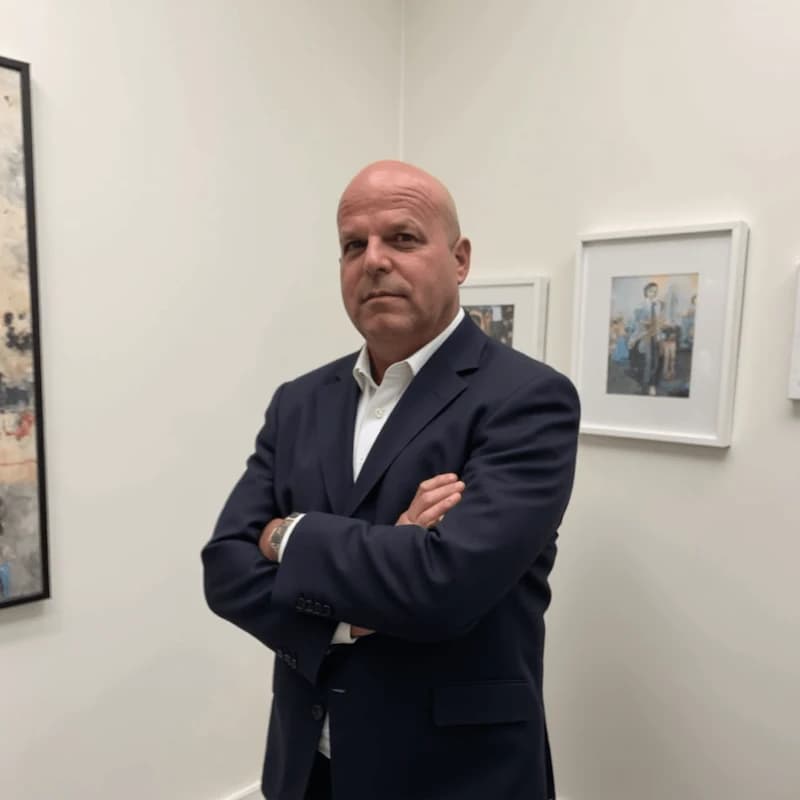
Founder & Lead Developer · Denham Springs, LA
Clint has built and marketed websites for 26 years, since founding BlakSheep Creative in 2000. He is also a 29-year firefighter and a 23-year member of IAFF Local 557, which is where the bias toward plain answers over sales copy comes from.
- Veteran-owned
- Firefighter-owned
- IAFF Local 557
Common questions about digital marketing
How do I tell if my website is too self-focused?
What is the StoryBrand approach to website copy?
How do I show credentials without sounding like a braggart?
What is the difference between benefits and features in web copy?
How should a call to action be written?

Your next step, without the guesswork
No surprises, clear next steps, and a fixed price before anything starts.