By Clint Sanchez · Published · Updated · 7 min read
Quick answer
White label web design is when one shop builds the site and another agency delivers it under its own name. To choose a provider, compare them on who owns the code and the client relationship, the fixed price and revision policy, how many people are actually on the team, the turnaround, what happens after launch, and if they will sign a non-disclosure agreement before you send a brief.
Key takeaways
- In a real white label deal your agency owns the client, sets the price, and appears as the builder; the partner never contacts the end client.
- Price the alternative honestly first. BLS puts the median wage for web developers and digital designers at $99,520 as of May 2025, before payroll tax, benefits, and software.
- Judge a provider on total cost per delivered site, including your own management hours, not on the quoted build fee alone.
- Get four things in writing: the client owns the site at launch, you hold admin access, hosting is separable from the build, and licenses transfer.
- WordPress runs 40.7% of all websites as of September 2026, which is why it is the safer default than a proprietary builder that locks the site to one vendor.
- A mutual NDA belongs before the brief goes out, along with rules on client contact and whether the partner may use the site in their own portfolio.
- Buy one small project at full price as a trial and judge the process, not just the design. Never make your biggest client the test.
Most of the agencies we build for are nowhere near Denham Springs, and that is the point: a white label partner is judged on whether the quote holds and the reply comes back, not on the drive. The Louisiana agencies we do work with locally get the same fixed quote in writing that a shop in another time zone gets.

Want this handled instead of DIY?
A 15-minute call, no script, no pressure. You leave with a plan either way.
White label web design is when one shop builds the site and another agency delivers it under its own name. To choose a provider, compare them on six things: who owns the code and the client relationship, what the fixed price and revision policy are, how many people are actually on the team, what the turnaround looks like, what happens after launch, and if they will sign a non-disclosure agreement before you send them a brief.
What white label web design is, and what it is not
In a white label arrangement, your agency sells the website, sets the price, and owns the client. The build partner works behind your brand: no logo on the footer, no name in the CMS admin, no email to your client. Some people call it private label web design; the arrangement is identical.
It is not the same as subcontracting a freelancer under a handshake, and it is not a reseller program where the platform keeps the customer. The distinction that matters is who the client believes they hired. In a real white label deal, the answer is you, and the paperwork says so.
Agencies reach for it for one of three reasons: they sell more sites than they can build, they took a project outside their stack, or they want to add website design and development to a service list without hiring. We wrote more about the model in why white label is where web development is heading.
In-house, freelance, or white label
Before you shop for a partner, price the alternative honestly. Hiring is the expensive option, and the number is public. The Bureau of Labor Statistics puts the median annual wage for web developers and digital designers at $99,520 as of May 2025, with web developers alone at $92,650. Add a designer, and the BLS median for graphic designers was $62,960 in the same period. Salary is before payroll tax, benefits, software, and the months a new hire spends learning your process.
The three options break down like this:
| Model | Best when | The real risk |
|---|---|---|
| In-house team | You sell 3+ sites a month steadily and want full control | Fixed cost that does not shrink when the pipeline dries up |
| Freelancer | One-off projects, or a specialist skill you rarely need | No bench. One illness or better offer and your deadline is gone |
| White label partner | Uneven volume, or you want to sell websites without owning production | You are one step removed from the work, so vetting matters more |
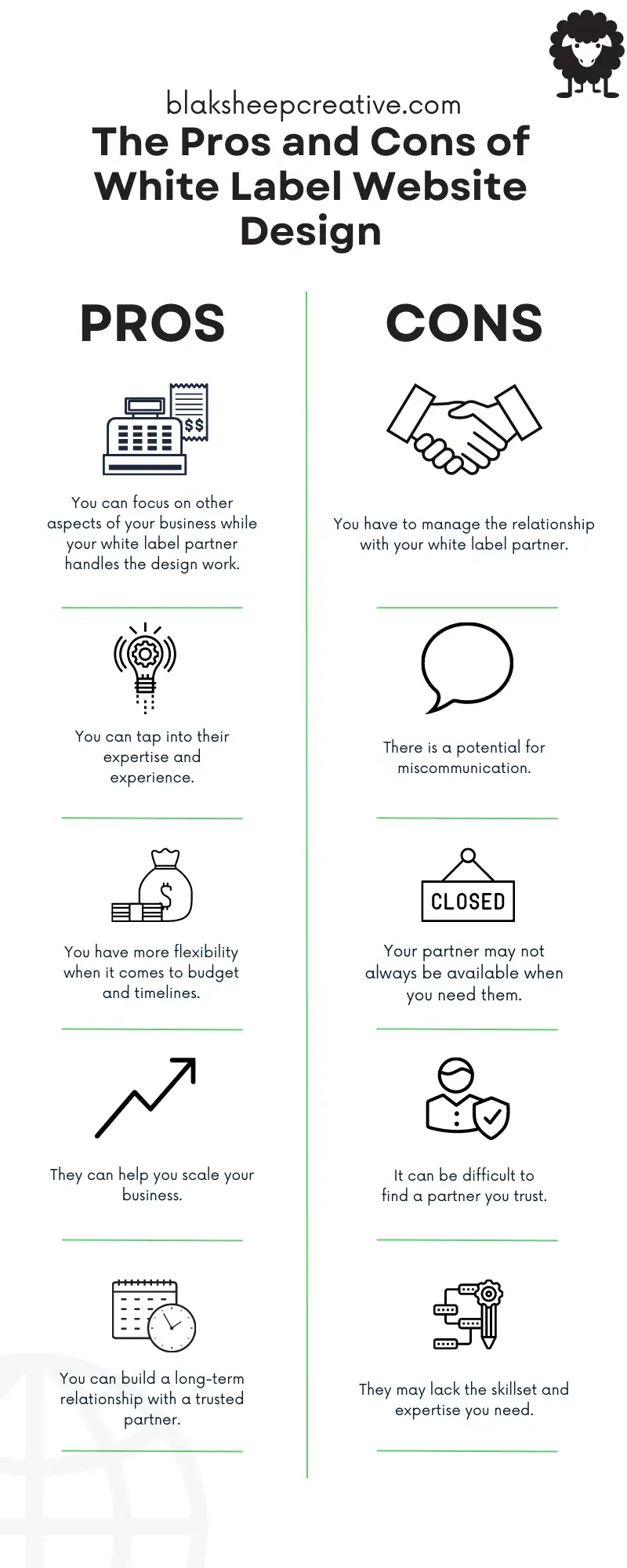
Most agencies end up with a mix: a designer on staff, a white label partner for build capacity, and a freelancer for the odd thing neither covers. There is no single right answer, only the one that matches how lumpy your pipeline is. The same logic applies to the client side of the equation, which we covered in the mistakes agencies and owners make going it alone.
The questions that separate partners from vendors
Ten minutes of specific questions will tell you more than any sales deck. Ask these, and pay attention less to the answer itself than to how fast and how concretely it comes back.
| Ask | A good answer sounds like | Walk away if |
|---|---|---|
| Who is on the team? | Named roles, and who covers each if someone is out | "We have a team" with no names or numbers |
| What is the price for this scope? | A fixed number in writing before work starts | Hourly with an open ceiling, or a price that changes after the brief |
| How many revision rounds? | A specific count, and what counts as a round | "Unlimited revisions," which usually means an unlimited timeline |
| What is the turnaround? | Calendar days per phase, with your dependencies listed | A single number with no mention of what they need from you |
| Will you sign an NDA? | Yes, send it over | Hesitation, or a demand to use their one-way version only |
| Who owns the finished site? | Your client does, code and content, at launch | Ownership stays with the builder, or is tied to a hosting contract |
| Do you contact my client? | Never, unless you invite us onto a call under your brand | Any answer involving direct emails to the end client |
| What happens after launch? | A written support window, then a monthly plan or handover | Silence, or support quoted only when something breaks |
One more that gets skipped: ask what happens when they are wrong. A partner who can describe a project that went badly and what they changed afterwards is telling you their process is real. A partner with no failures has either not built much or is not being straight with you.
Pricing, margin, and why cheapest costs the most
Your margin is the gap between what you charge and what the build costs you, minus the hours your team spends managing it. That last part is where cheap partners get expensive. A build that comes back wrong three times can eat more account-manager time than the discount was worth.
Price the partnership on total cost per delivered site, not on the quoted build fee. Track four numbers across your first few projects:
- Quoted build fee. The number on the invoice, which should be fixed before work starts.
- Your internal hours. Briefing, review, chasing, and client communication. Multiply by your own rate.
- Rework rounds beyond the agreed count. Whoever pays for these should be named in the agreement.
- Days late. Not because a slip is fatal, but because a pattern is.
If you are selling ongoing work rather than one-off builds, ask if the partner supports a monthly model. Recurring revenue changes the maths considerably for both sides, which is the thinking behind our own monthly website plans. It also removes the argument where a client wants a redesign and nobody wants to quote it.
In a real white label deal your agency owns the client, sets the price, and appears as the builder; the partner never contacts the end client.
Platform, ownership, and the handoff
Ask what the site will be built on and be sure you can support it after launch. As of September 2026, W3Techs reports WordPress running 40.7% of all websites and 58.9% of sites whose CMS is known. That share is why WordPress is the safe default for a white label build: your client can find another developer, and so can you.
A proprietary builder locks the site to one vendor. That may be fine if the vendor is you, and it is a problem the day your client leaves or your partner folds. Ask directly if the site can be exported and hosted anywhere.
Get these four in writing before the first payment:
- The client owns the site, the domain, and the content at launch, with no license to revoke.
- You receive admin credentials and the ability to create and remove users.
- Hosting is separable from the build, so moving hosts does not mean rebuilding. Ours is month to month for exactly that reason; see our hosting terms.
- Any third-party licenses used in the build are transferable or accounted for.
If the partner also sells search or content services, decide up front if you are buying those too. Bolting search work or content marketing onto a build later, from a different vendor, is where handoffs usually go wrong.
Confidentiality and client contact
The reason agencies get nervous about white label is simple: your partner now knows who your clients are and what you charge. A mutual NDA signed before the brief goes out is the baseline, not a formality you get to after the first invoice.
Beyond the NDA, put the operating rules in the same agreement. Name who may contact the client and under what circumstances, whose email address appears in the CMS and on system notifications, what happens to project files if either side ends the relationship, and if the partner may use the site in their own portfolio. That last one catches people. A build partner who quietly publishes your client's site as their own work has ended the arrangement, and they usually do it without meaning any harm.
Run a paid trial before you commit
Never make your biggest client the test. Buy one small, real project at full price and watch how the partner behaves under normal conditions.
Judge the trial on process, not just the finished design. Did the fixed quote hold? Did they ask good questions about the client's business, or just take the brief and disappear? How long did a reply take on a Tuesday afternoon? What happened when you asked for a change outside scope? Did the handoff include documentation, or a login and good luck?
A partner who handles a small job cleanly will usually handle a large one. A partner who needs chasing on a five-page site will need more chasing on a fifty-page one. Case studies and testimonials are useful context, but one paid project tells you more than a dozen of them, and that is the same standard we ask clients to hold us to in what we think earns trust with a website.
Where to start
Write down the scope of one upcoming project, send the eight questions above to two or three providers, and compare how the answers come back. The provider who gives you a fixed number, a named team, and a signed NDA within a day or two is usually the one to trial. If you want to see how we structure it, our white label website design service lays out the terms, and the argument for the model in general is in the benefits of working with a white label partner.
About the author
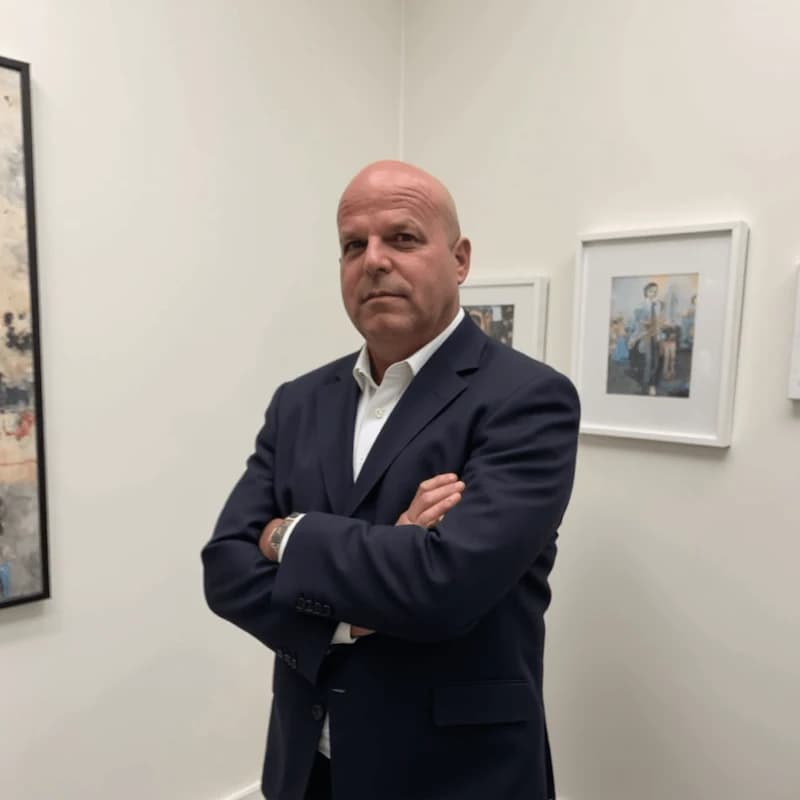
Founder & Lead Developer · Denham Springs, LA
Clint has built and marketed websites for 26 years, since founding BlakSheep Creative in 2000. He is also a 29-year firefighter and a 23-year member of IAFF Local 557, which is where the bias toward plain answers over sales copy comes from.
- Veteran-owned
- Firefighter-owned
- IAFF Local 557
Common Questions About Choosing a White Label Provider
Short answers to the questions that come up most on this topic.
What is the difference between white label and private label web design?
Should an agency hire a developer or use a white label partner?
What should a white label agreement cover?
How do I check a white label provider is real before signing?
What platform should a white label partner build on?
Can a white label provider contact my client directly?

Your next step, without the guesswork
No surprises, clear next steps, and a fixed price before anything starts.