By Clint Sanchez · Published · Updated · 4 min read
Quick answer
A Why Choose Us page works when it gives a visitor something they can check. Stanford's web credibility research, built on more than 4,500 people, found people judge a site on visible proof: a real organization, named people, verifiable expertise, and working contact details. Adjectives about passion and dedication are not proof, and every competitor has already used them.
Key takeaways
- By the time someone opens a Why Choose Us page they are looking for a reason to rule you out, because ruling out is faster than choosing.
- Stanford's Web Credibility Project, based on over 4,500 people across three years, found people check for a real organization, named people, verifiable expertise, and easy contact.
- Stanford's simplest credibility recommendation is listing a physical address, and its research treats visible contact details as a direct trust signal.
- Baymard Institute research found 53 percent of users actively look for negative reviews, and sites showing the bad ones are trusted more than sites showing only praise.
- Cut any claim a competitor could copy word for word and have it stay equally true, such as passionate, affordable, or full-service.
- Saying what you do not do is usually the most persuasive line on the page, because nobody fakes a limitation.
- Keep a dedicated page for people who go looking, but put the two or three strongest proofs on the service, pricing, and contact pages where the decision happens.
Most of our clients are in Denham Springs, Walker, Baton Rouge, and the towns along I-12, and many of them found us because another owner in Livingston Parish gave them our number. That is why we answer the phone during a storm and talk in plain English: in a parish this size, a bad job follows you.
A Why Choose Us page works when it gives a visitor something they can check. Stanford's web credibility research, built on more than 4,500 people over three years, found people judge a site on visible proof: a real organization, named people, verifiable expertise, and contact details that work. Adjectives about passion and dedication are not proof, and every competitor has already used them.
What the page is actually for
By the time someone opens your Why Choose Us page they have already decided you might be able to do the job. They are not looking for a pitch. They are looking for a reason to rule you out, because ruling out is faster than choosing.
That changes what belongs on it. The page should answer the objections a buyer is carrying: are these people real, have they done this before, what happens if it goes wrong, and what is this going to cost me in ways the quote does not say. A page that only lists virtues answers none of those.
It is also the page most businesses write last and think about least, which is why so many read the same. If you have written that you are passionate, dedicated, professional, and customer-focused, you have written what your three closest competitors have written.
What the research says people check
The Stanford Web Credibility Project published ten guidelines from research covering over 4,500 people. Four of them are effectively a brief for this page.
- Show a real organization is behind the site. Stanford's simplest recommendation is listing a physical address. A business with no address reads as a business that might not be there next year.
- Highlight expertise. Not claimed expertise. Credentials, certifications, published work, years doing the specific thing.
- Show honest people stand behind it. Names and faces of the people who will actually do the work, not stock photography of a boardroom.
- Make it easy to contact you. Phone number, physical address, email address. Visible, not buried behind a form.
There is a related finding worth sitting with. Baymard Institute research found that 53 percent of users actively look for negative reviews, and that sites which show the bad ones are trusted more than sites which show only praise. A page of five-star quotes reads as curated, because it is.
The claims worth cutting
Each of these fails the same test: your competitor can copy it word for word and it stays equally true.
| What most pages say | Why it does nothing |
|---|---|
| We are passionate about what we do | Unfalsifiable, and the reader has no way to check it |
| Quality work at affordable prices | Every business claims both; neither is a number |
| We treat every client like family | Says nothing about what happens when a deadline slips |
| Years of combined experience | Combined experience is a way of making a small team sound large |
| We are a full-service agency | Tells a buyer you do everything, which reads as specializing in nothing |
What to write instead
Replace each claim with something a stranger could verify in under a minute.
- Name the people. Who does the work, what they do, and what they did before. A real name is checkable on LinkedIn. "Our team" is not.
- Put the address and the phone number on the page. Not only in the footer.
- Cite the credential, and link it. A certification is worth listing only if the reader can click through to the issuing body.
- Give one number you can defend. Years in business, projects delivered, response time. One real figure beats five vague superlatives.
- Say what you do not do. This is the single most persuasive line on most Why Choose Us pages, because nobody fakes a limitation.
- State the terms. What the client owns, what happens if they leave, what is not included. Buyers are carrying that question already.
If you are working on the wider site at the same time, our list of web design mistakes to avoid covers the structural problems that undercut a good trust page.
By the time someone opens a Why Choose Us page they are looking for a reason to rule you out, because ruling out is faster than choosing.
A worked example
Ours reads roughly like this, and it is a useful shape because each line is checkable rather than admirable.
BlakSheep Creative is veteran and firefighter owned, based in Denham Springs and working across Baton Rouge, Livingston Parish, and nationally. Clint Sanchez does the strategy, the search work, and the build, and has been in the fire service for 29 years.
You get a fixed quote in writing before anything starts. You own the site, the domain, and the content at launch. Hosting and maintenance are month to month, so staying is a choice rather than a contract. We will tell you when you do not need us, and we have.
None of that is flattering. All of it is falsifiable, which is the point. You can see the team on our about page, read unedited client feedback on the testimonials page, and check the work on the portfolio.
Where the page goes
Trust content works best distributed rather than quarantined. Keep a dedicated page for people who go looking, then place the strongest two or three proofs on the pages where the decision is actually made: the service page, the pricing page, and the contact form.
Link to it from the main navigation or the about page so it is reachable in one click. A trust page nothing links to gets crawled rarely and read less, which is the problem we cover in orphaned pages and how to fix them.
If you would rather someone else write it, that is part of what we do on every web design and development project. Call (225) 505-3834 or book a fifteen-minute discovery call and we will look at the page you have now.
About the author
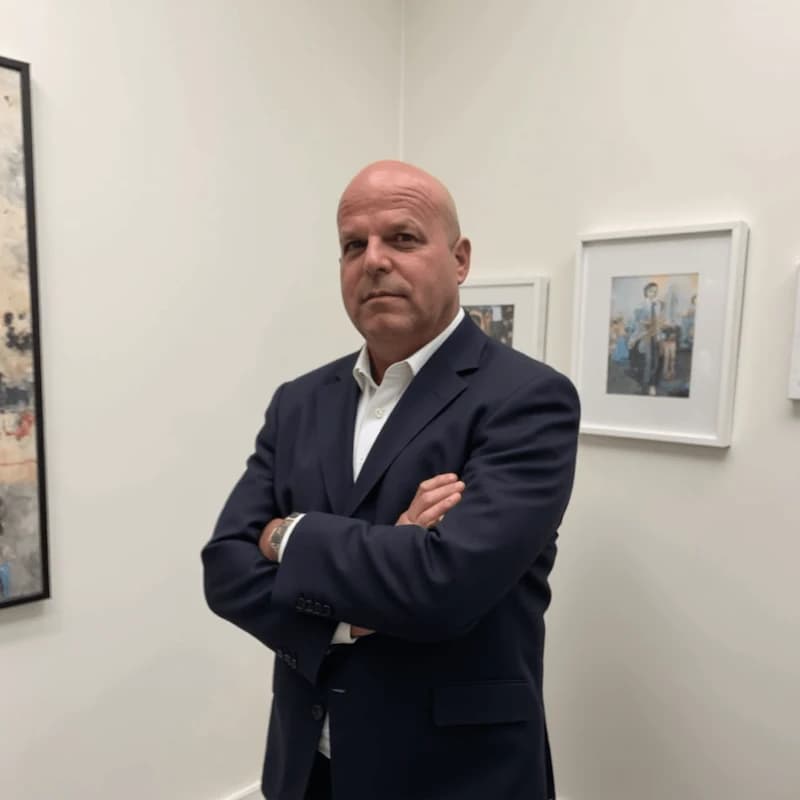
Founder & Lead Developer · Denham Springs, LA
Clint has built and marketed websites for 26 years, since founding BlakSheep Creative in 2000. He is also a 29-year firefighter and a 23-year member of IAFF Local 557, which is where the bias toward plain answers over sales copy comes from.
- Veteran-owned
- Firefighter-owned
- IAFF Local 557
Common questions about web design & development
What should a Why Choose Us page include?
How long should a Why Choose Us page be?
Should I use testimonials on the page?
Is Why Choose Us or About Us the better page?
Does a Why Choose Us page help SEO?
What is the most common mistake on these pages?

Your next step, without the guesswork
No surprises, clear next steps, and a fixed price before anything starts.