
By Clint Sanchez · Published · Updated · 8 min read

Quick answer
The best content marketing examples are programs rather than campaigns: Coca-Cola's Share a Coke personalization, Patagonia's Worn Wear repair editorial, The Daily from The New York Times, Netflix originals as an amortised asset, Uber's US Safety Report, and Airbnb's shift from paid clicks to brand and owned channels. Each rests on a decision a small business can copy.
Key takeaways
- Coca-Cola activated Share a Coke on roughly 10 billion bottles and cans across more than 120 countries in 2025, with over 30,000 localised names.
- The Daily was the number one podcast in the United States on Apple Podcasts in 2024, ahead of the entire entertainment field.
- Netflix treats programming as a capital asset amortised over as much as ten years, which is how to think about content that keeps earning.
- Uber has published three US Safety Reports since 2019, including the numbers that went the wrong way.
- Airbnb's CFO said in 2025 that 90 percent of its traffic still comes from direct and unpaid sources, which is why it spends less on performance marketing.
- Content relevance and quality was the top effectiveness driver at 64 percent in the Content Marketing Institute's 2026 enterprise research.
- The transferable pattern is a program held for years, not a campaign run for a quarter.
Around Baton Rouge and Livingston Parish, the version of these examples that works is documentation rather than production. A contractor who writes up one job a week with the neighborhood, the problem, and the real cost has built the Coca-Cola and Patagonia mechanic on a phone camera and thirty minutes.

Want this handled instead of DIY?
A 15-minute call, no script, no pressure — you leave with a plan either way.
The best content marketing examples are not clever campaigns. They are assets a company keeps publishing until the audience comes back on its own: Coca-Cola's personalized packaging, Patagonia's repair program, The Daily from The New York Times, Netflix originals, Uber's safety reporting, and Airbnb's decision to fund brand content instead of paid clicks. Each one is copyable at small-business scale.
What follows is what each brand actually publishes, the number that proves it worked, and the version a plumber, a law firm, or an architecture practice in Louisiana can run on a normal budget. If your program feels busy but flat, our list of 11 fatal flaws in a content marketing plan is a useful companion read.
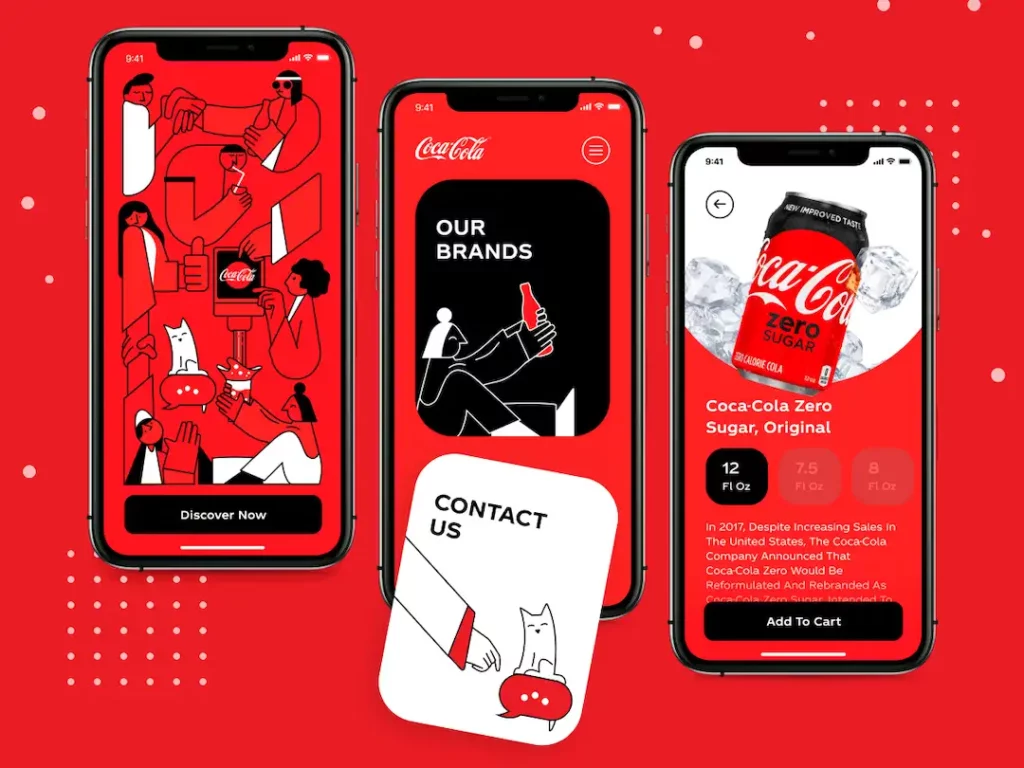
Coca-Cola: Share a Coke, personalization at ten billion units
Coca-Cola's most durable content idea was putting the customer's name on the product and letting the customer do the publishing. The company revived Share a Coke in 2025, and the scale is the point.
In its second quarter 2025 results, Coca-Cola reported the campaign was activated with approximately 10 billion bottles and cans in more than 120 countries, carrying over 30,000 names tailored to local markets. The company credited it with contributing to single-serve transaction growth for the category. Cans that could not be found in store pointed to a QR code and a digital hub, so the physical package became the distribution channel for the digital content.
The mechanic is older than social media and it still works because it hands the audience a reason to make something. Nobody photographs a soda can. People photograph a soda can with their sister's name on it.
Copy this by naming the customer in the content. A roofing company that publishes a short project write-up for every job, with the neighborhood, the shingle, and the homeowner's own words, has built the same loop at a fraction of the cost. The customer shares it because it is about them.
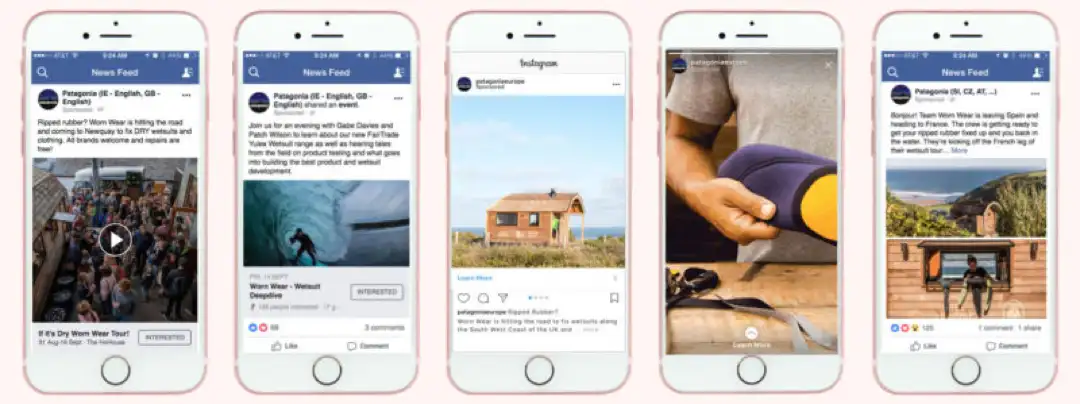
Patagonia: content that argues against buying more
Patagonia runs Worn Wear, a repair, trade-in and resale program with its own site, its own films, and its own editorial. The content tells you to buy less of what Patagonia sells.
On the Worn Wear site, the company leads with an EPA figure that 85 percent of clothing ends up in landfills or incinerated, then argues the best thing a customer can do is keep gear in use longer, repair more, and trade in what they no longer need. Every repair guide and gear story sits inside that argument.
This is the most misread example on the list. The lesson is not sustainability. The lesson is that content earns trust in proportion to what it costs the publisher to say. A company willing to tell you not to buy is a company you believe when it tells you to.
Copy this by publishing the advice that loses you a sale. We tell prospects when they do not need a new site. An HVAC contractor who publishes an honest guide to repairing a ten-year-old unit instead of replacing it will get the replacement job three years later, from a reader who remembers who was straight with them.

The New York Times: The Daily as the front door
The New York Times sells subscriptions. The Daily gives away twenty minutes of the newsroom every weekday morning, free, and it has become the most reliable introduction to the paper that the paper has.
When Apple published its most popular podcasts of 2024, The Daily was the number one show in the United States, ahead of Crime Junkie and The Joe Rogan Experience. A newspaper's free daily audio product outranked the entire entertainment podcast field on the largest podcast platform.
The format matters less than the cadence. The Daily publishes every weekday without fail. That reliability is what converts a casual listener into someone who has the show in their morning routine, and someone with the show in their routine eventually pays for the paper.
Copy this by picking one format you can sustain forever and never missing. A weekly two-minute video answering one customer question beats a monthly production that slips. Our post on why your business needs a content calendar covers how to hold that cadence.
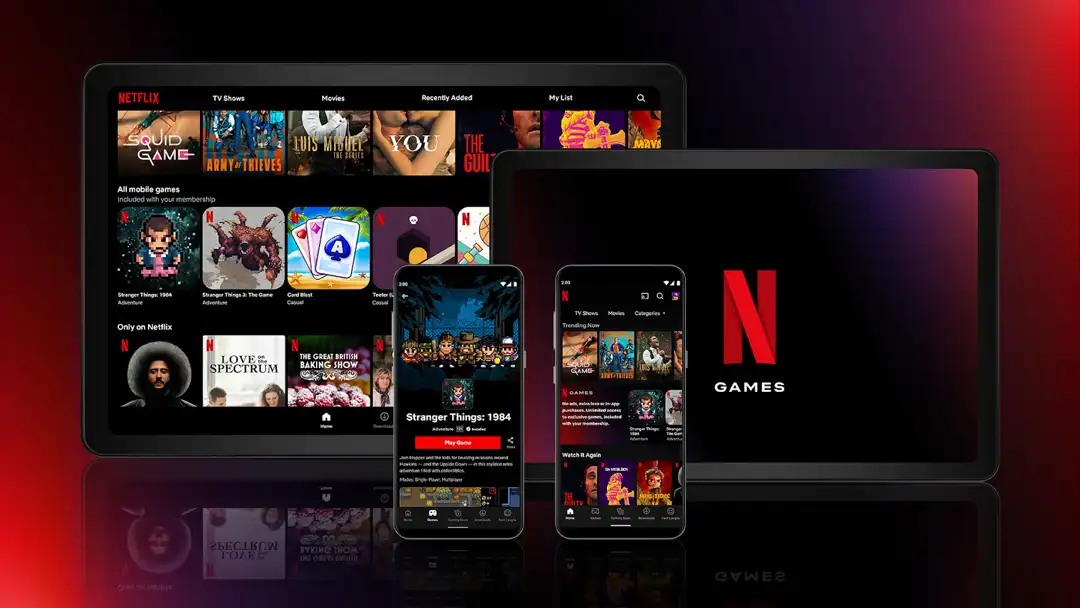
Netflix: when the content is the product and the marketing
Netflix is the edge case that clarifies the rule. Its content is not marketing for something else. It is the thing customers pay for, and it doubles as the only advertising the company genuinely needs.
The spend is disclosed in the company's SEC filings. Netflix guided to roughly 18 billion dollars of cash content spend for 2025, and its annual report on Form 10-K describes amortising content assets over the shorter of the licence window, the estimated period of use, or ten years, on an accelerated basis. Netflix treats programming as a capital asset with a depreciation schedule, not as a marketing expense.
That accounting choice is the real lesson. Content that keeps returning value for years belongs on the balance sheet in your head, not in this month's ad budget. A blog post that answers a buying question will still be answering it in 2029.
Copy this by separating the two lines in your own budget. Ads stop the day you stop paying. A well-built library of answers compounds. That is the argument behind our approach to building a content marketing strategy rather than running campaigns.

Coca-Cola activated Share a Coke on roughly 10 billion bottles and cans across more than 120 countries in 2025, with over 30,000 localised names.
Uber: publishing the numbers nobody wanted published
Uber's most consequential piece of content is a document its lawyers would rather not exist. The company publishes a US Safety Report covering the most serious incidents on its platform.
Uber says it released the industry-first US Safety Report in 2019, and has published three editions covering 2017 to 2018, 2019 to 2020, and 2021 to 2022. The reports disclose motor vehicle fatalities, fatal physical assaults, and sexual assault reports, including the years the totals rose. That is a company handing its critics a citable source.
Transparency content is the hardest kind to fake, which is exactly why it works. Competitors that do not publish the same numbers now look like they have a reason not to.
Copy this by publishing one number you would rather keep private. Real average response time, not the marketing one. Actual price ranges. The jobs you turn down and why. This is also the fastest way to earn the mentions that show up when someone monitors what is said about a brand online.
Airbnb: the company that stopped buying its own traffic
Airbnb is the clearest financial proof on this list that content and brand work reduce the rent you pay Google. The company cut performance marketing hard in 2020 and leaned on brand and owned channels instead.
The metric survived the strategy. On the company's second quarter 2025 earnings call, chief financial officer Ellie Mertz said 90 percent of Airbnb traffic coming from direct and unpaid sources "continues to be the state of the business, which allows us, obviously, to spend a lot less on performance marketing than others." On the same call, chief executive Brian Chesky described shifting advertising from television toward social, where the audience can be targeted and sent straight into the app.
Note the honesty in the pairing. Airbnb did not abandon paid media. It changed the ratio, and the direct traffic it built is what makes a smaller paid budget viable.
Copy this by tracking the same ratio. If every lead you get arrives through an ad, your marketing has no equity in it. Content, email, and social media marketing are how the unpaid share of that number grows.
What all six content marketing examples share
Line them up and the differences in budget stop mattering. The same four decisions repeat, and none of them require a Fortune 500 balance sheet.
| Brand | The content asset | The transferable decision |
|---|---|---|
| Coca-Cola | Share a Coke packaging and digital hub | Make the customer the subject |
| Patagonia | Worn Wear repair and resale editorial | Publish advice that costs you a sale |
| The New York Times | The Daily, every weekday | Pick a cadence you will never miss |
| Netflix | Original programming as an amortised asset | Budget content as an asset, not an expense |
| Uber | The US Safety Report | Publish a number you would rather hide |
| Airbnb | Brand and owned channels over paid clicks | Grow the unpaid share of your traffic |
There is also a fifth thread. Every one of these is a program, not a post. Coca-Cola ran Share a Coke, retired it, and brought it back a decade later. Uber has published three safety reports across six years of data. The compounding is in the repetition.

“Great to work with and has ideas for things you didn't even think about. Very impressed and pleased with their work. I'd definitely recommend them!”

What a small business version actually looks like
The gap between these examples and a twelve-person company in Denham Springs is production budget, not strategy. Here is the small-budget translation of each decision, in the order we would build them.
- Answer the ten questions you get on every sales call. One page each, written the way you actually answer them on the phone. This is the highest-return content any local business can publish, and it is usually free to make.
- Document one job a week. Photos, the problem, what it cost to solve, the customer's name if they agree. That is the Coca-Cola and Patagonia mechanic combined.
- Publish one uncomfortable number. A price range, a lead time, a job type you decline. Uber's move, scaled down.
- Hold the cadence for a year before judging it. The Daily is a habit product. So is a blog nobody has heard of yet.
- Measure the unpaid share. Track how many inquiries arrive without an ad click. That single ratio tells you if the content is building equity.
Quality is the variable that decides all of it. In the Content Marketing Institute's Enterprise Content and Marketing Trends: Insights for 2026, based on 296 enterprise marketers surveyed in mid-2025, content relevance and quality was the top driver of effectiveness at 64 percent, ahead of team skills at 54 percent and measurement at 51 percent. The same research found 95 percent now use AI marketing applications, which is precisely why the relevance and quality bar keeps rising rather than falling. Volume is cheap now. Being worth reading is not.
Where to start this month
Pick one asset from the list above, commit to a cadence you can hold with your current staffing, and give it a year. If you want a second pair of eyes on which of the ten questions to answer first, our content marketing services page explains how we scope that, and the search work is included with every plan we run.
About the author

Founder & Lead Developer · Denham Springs, LA
Clint has built and marketed websites for 26 years, since founding BlakSheep Creative in 2000. He is also a 29-year firefighter and a 23-year member of IAFF Local 557, which is where the bias toward plain answers over sales copy comes from.
- Veteran-owned
- Firefighter-owned
- IAFF Local 557
Common questions about digital marketing
What is the best content marketing example for a small business to copy?
Do these content marketing examples only work with a large budget?
How long before content marketing produces leads?
What makes a content marketing example successful rather than just famous?
Is AI content a shortcut to results like these?
How do I measure whether my content marketing is working?

Your next step, without the guesswork
No surprises, clear next steps, and a fixed price before anything starts.