SEO
SEO for Real Estate Agents That Skips the Portal Fight.
A seller searches your name after a referral, and the top result is your brokerage’s profile page. The neighborhood posts you wrote there earn authority for a site you might leave, while the portals own every city search. We build a domain in your name, subdivision pages from your closings, and seller answer pages.

- Anything you publish on the brokerage domain builds the brokerage. Change firms and the pages, links, and traffic stay behind.
- Five subdivision pages written from sales you actually closed beat fifty generated ones, and the generated ones can drag the whole domain down.
- IDX listings rarely rank. The data is identical on every site carrying the feed and it disappears the day the property closes.
What keeps the phone quiet
Why most agent websites never produce a listing appointment.
Chasing the portal keywords
Type your city plus homes for sale and count the results above the first agent website. That auction is held by portals with millions of listing pages. An agent site with an IDX feed bolted on does not enter it.
Built on the brokerage domain
The brokerage gave you a profile page and a template site. Every neighborhood post you write there earns authority for the brokerage. When you move, it all stays behind and your name returns their site.
Weekly market updates from a feed
The same vendor market report runs on hundreds of identical agent sites. Google ranks none of them. Meanwhile the seller question you answer out loud every week is not written down anywhere.
“Clint at BlakSheep Creative is the real deal. He gets it—fast, smart, and no fluff. Took my vision and made it sharper than I thought possible. If you want someone who understands branding, design, and execution on a next-level scale, Clint’s your guy. 5 stars all day.”
What you get
Built to book the job.
Your name, owned
A domain in your own name, your Person and Agent schema, consistent name data everywhere you appear, and the brokerage profile pointed at it, not the reverse. When someone searches you, you control the first page.
Subdivision pages from your closings
One page per neighborhood you have sold in, built from housing stock, geography, district data, and your sales history. As many as you can write honestly and no more.
Seller question pages
A small set of pages that each answer one seller question completely: what to fix before listing, how long each stage takes here, what the paperwork means now. Updated when the facts change.
IDX kept, indexing controlled
The feed stays for buyers. We control how much of it gets indexed so thin listing pages do not dilute the pages that can rank.
Reviews and follow-up in one place
Grow sends the review request after closing, texts back missed calls, and keeps every lead in one pipeline. A ranking that goes to voicemail is a referral you paid for and lost. Part of Grow
Marketing beyond search
Ranking is one channel. The follow-up, social, and referral side of an agent's business lives on our marketing page for real estate agents. Marketing for real estate agents
Work we shipped
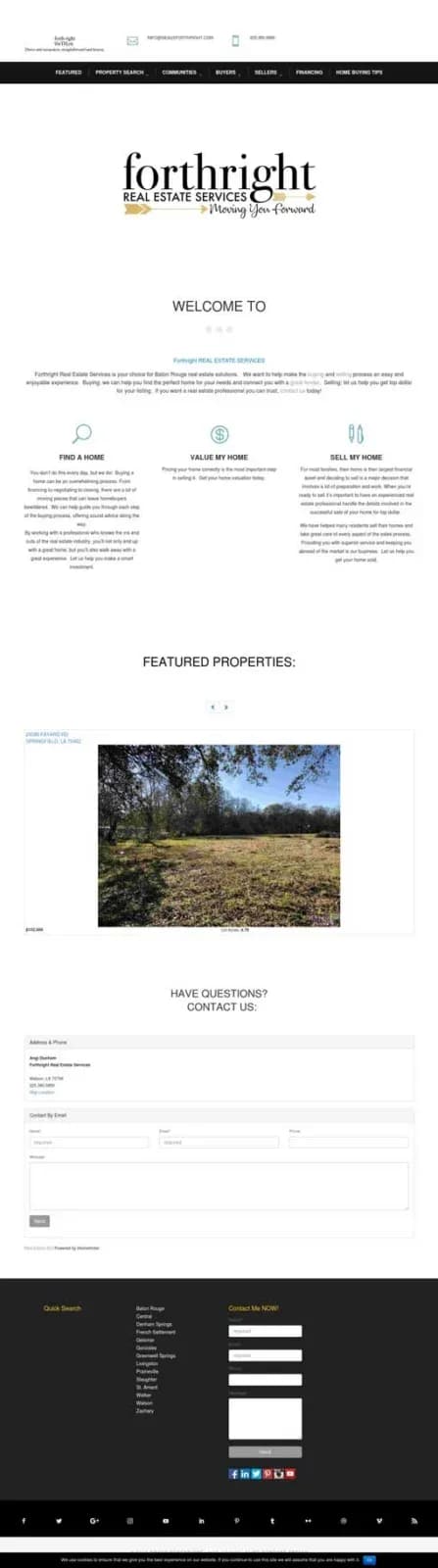
Forthright Real Estate Agency Website Development
See the project →
Want this priced for your business?
How it works
Fixed quote. Fixed timeline. Yours when it’s done.
- 01
15-minute call
What your name returns today, which pages live on your domain versus the brokerage's, and where last year's closings actually came from.
- 02
Audit
Name search results, domain ownership, duplicate feed content, and which subdivisions you can write about honestly.
- 03
Price in writing
Scoped to the pages that matter for you. Good for 30 days. No lock-in.
- 04
Build, publish, report
Name cleanup first, then subdivision and seller pages, with your broker reviewing every page before it goes live. Monthly report in leads and traffic.

Trusted by the businesses we build for.






















Proof beats promises
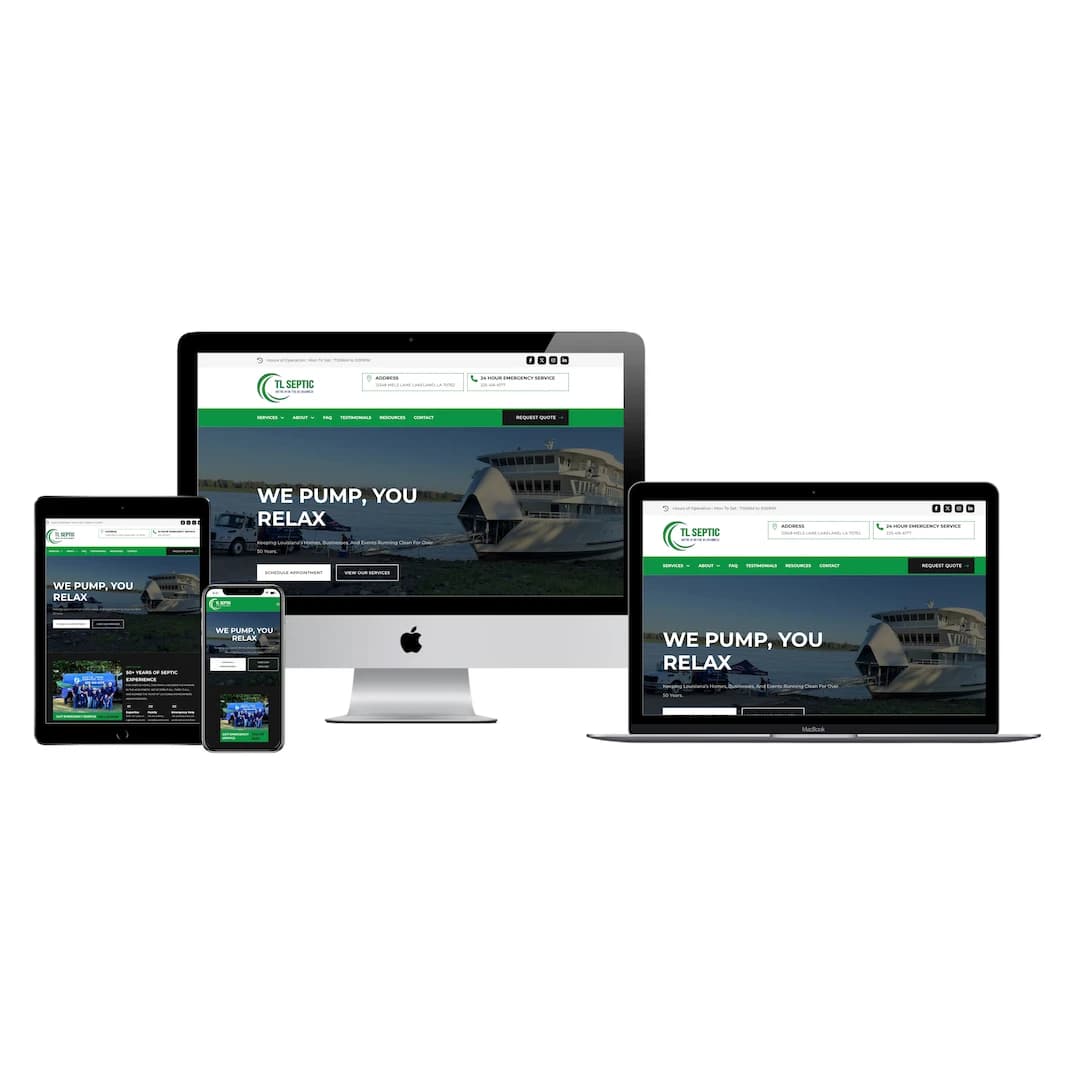
Website Redesign for TL Septic Services
See how we redesigned TL Septic’s website to triple leads, improve mobile UX, and boost local SEO across Louisiana.
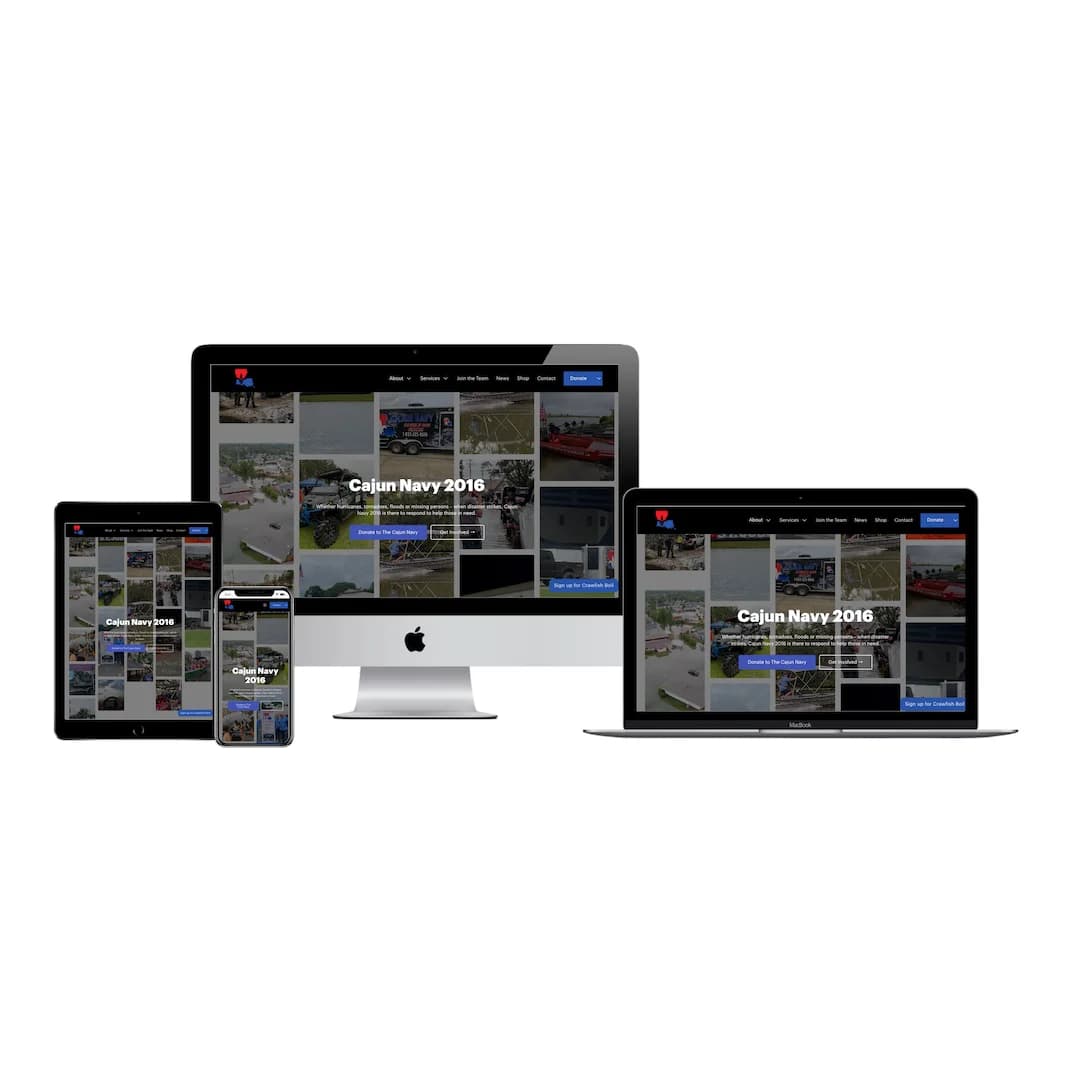
Cajun Navy 2016 Website Project
Discover how we built the Cajun Navy 2016 website, what happened after a takeover, and the SEO impact of poor management.
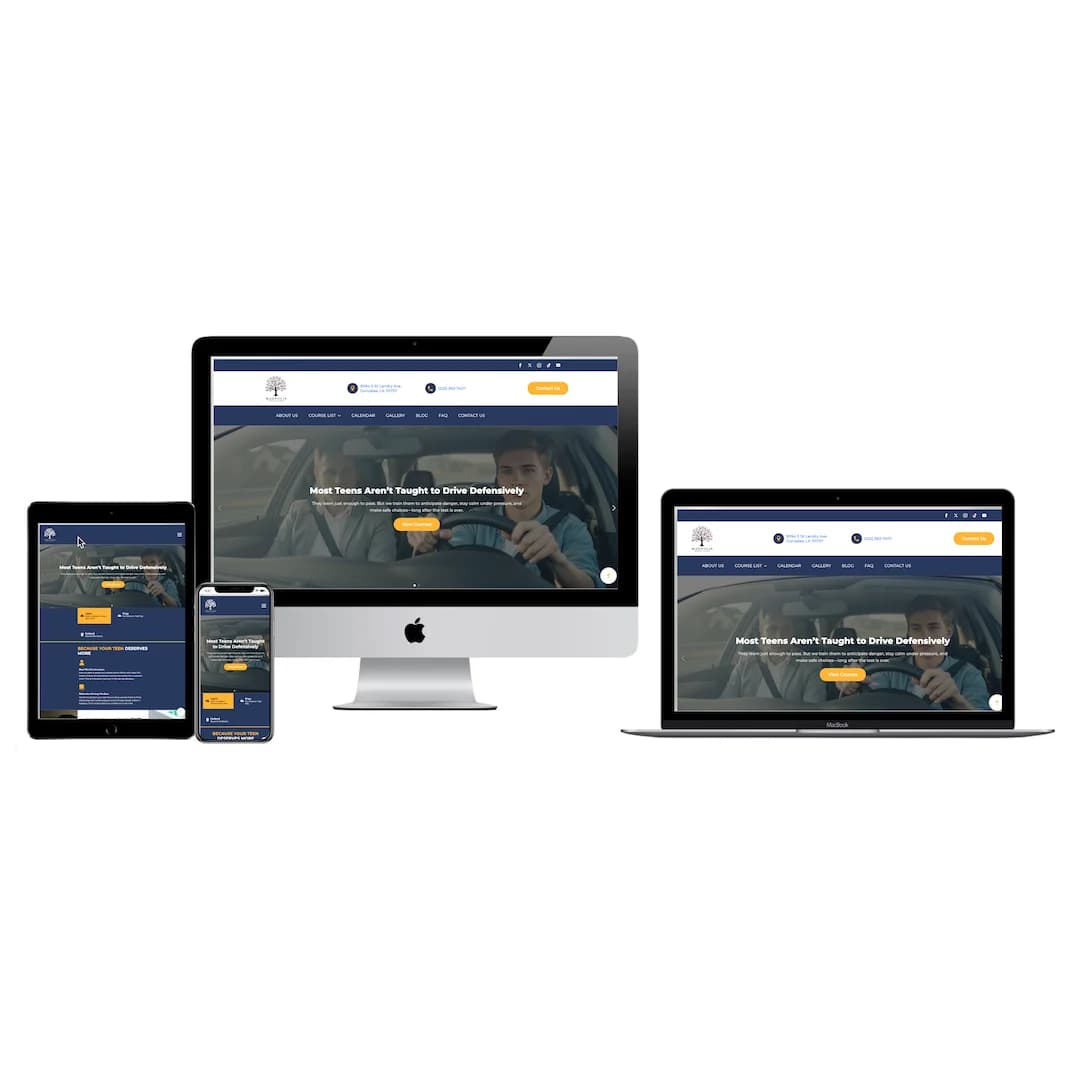
Magnolia Driving Academy: Brand Launch & Digital Foundation
See how we launched the Magnolia Driving Academy brand with a new website designed to build instant trust and generate students from day one. A case study.
Google reviews
What clients actually said.
Real Google reviews, five stars, with the year each was left.
Scroll for more →
“Clint and the team at Blaksheep have truly exceeded our expectations. From day one, the communication was clear, prompt, and professional. We were never left guessing where things stood. The work they've done on our website and social media presence has been outstanding.it looks great, functions seamlessly, and really captures the essence of our brand. We're so grateful to have found a team that combines creative talent with such reliability and responsiveness. We're genuinely excited to continue growing with Blaksheep and can't recommend them highly enough!"”
Brandon CurryGoogle review, 2026 “I cannot RAVE and PRAISE enough about who Clint is as a person AND the amount of talent he holds. Genuine, funny, relaxed, and could not have asked for a better graphic designer to work with. When everyone else didn’t meet the expectations I needed for a really personal project, Clint exceeded above and beyond. THANK YOU to this man and the quality work he resulted me with. I will FOREVER use him in any and all design projects going forward!!!”
Megan TheriotGoogle review, 2026 “We couldn’t be happier with the website blaksheep built for our fire department. From start to finish, their team was professional, responsive, and truly understood our mission and community needs. They created a site that’s not only visually appealing but also easy for residents to navigate and access important information quickly. Their attention to detail, quick turnaround, and commitment to excellence really set them apart. We’ve received great feedback from the community, and the new site has made it much easier to share updates, safety information, and event announcements. Highly recommend blaksheep to any organization looking for a reliable, talented, and community-minded IT partner! — Independence Volunteer Fire Department”
Tommie SpencerGoogle review, 2025 “Clint is the man! Not only is he a real life web wizard, he’s an awesome human!”
Lindsey RielGoogle review, 2025 “BlakSheep Creative rocks! Clint was super helpful in putting together our website and offered suggestions that really put us on the right track. If you are looking for help with any of your "creative" needs look no further.”
David AnnisonGoogle review, 2022 “BlakSheep Creative has been a huge blessing to our podcast website. Clint has gone above and beyond to produce an amazing custom website. Not only did Clint work night and day, he had a quick turn around time. He connected 3 different websites into 1 seamless site, he connected all of our social media, itunes reviews, Patreon account, shop and collected analytic (SEO) information. I really will not do justice in describing what all he did for because there are many words and skills I definitely do not understand. What I do understand is his level of professionalism, knowledge and dependability. BlakSHeep Creative is highly recommended by Real Life Real Crime. Thank you for everything!”
Cyndi OvertonGoogle review, 2020 “Exceptional service from an exceptional group!”
Zach SonnierGoogle review, 2026



Fixed quote in writing, before any work starts.
How you can buy it
By the project, or one monthly plan.
By the project
One job, scoped and priced in writing before work starts: a website, a profile cleanup, a link campaign, a press release. You pay for the work, and everything we build is yours.
The monthly plan
$500 a month · 12-month plan, website build fee waived
Get found
- Your website, built, hosted and maintained
- Google Business Profile optimization, with 3 posts a week
- Local SEO: on-page work, technical fixes and schema
- Keyword research, and rank tracking on up to 100 keywords
- 75+ citations on Google, Bing, Apple Maps and directories
- AI search visibility, so assistants can name you
Get trusted
- 4 SEO articles a month, guaranteed
- 6 guest-post backlinks a month from relevant sites
- 1 press release a month, written and distributed
- Review requests after every job, and a reply to every review
- Social media posting on 3 platforms
Stay in the loop
- A monthly report on rankings, traffic and leads
- A monthly strategy call, direct with the people doing the work
- You own the site, domain and content
Pay-per-click ads are managed separately, and ad spend stays in your own account.
Text-back on every missed call, automatic follow-up and call tracking come with Grow, our platform. See Grow.
If the price is what stands between you and getting started, tell us your story. Pennies on the dollar when we can.
Why businesses hire us
- Veteran-owned, in Denham Springs since 2000.
- Fixed quote before we start. No hourly surprises.
- You talk to the people who do the work.
- Published pricing and a free 15-minute discovery call.
- Tight budget? Tell us your story. We listen before we decide what is possible.


The short answer
SEO for a real estate agent means owning three things the portals do not: your own name, the subdivisions you have actually sold in, and the seller questions people type before they pick an agent. Zillow and Realtor.com hold the city-level listing searches and we will not sell you a plan to beat them. Your budget goes to a domain in your name, neighborhood pages written from your closings, and answer pages for sellers. Ranking work is included with every plan, and you see it reported monthly in leads and traffic.