By Clint Sanchez · Published · 13 min read
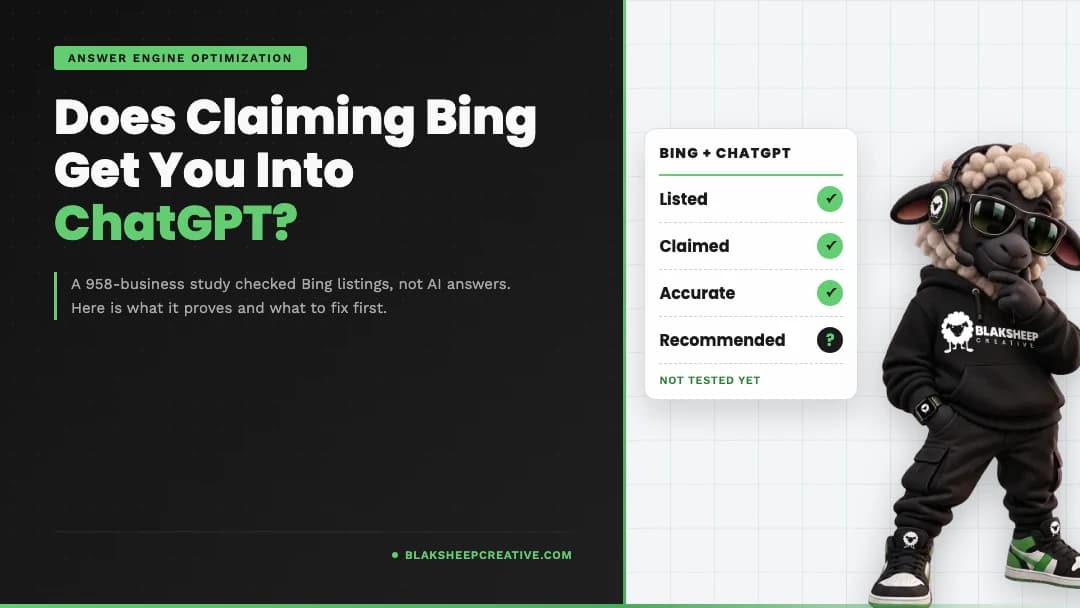
Does Claiming Bing Places Get You Into ChatGPT?
Quick answer
Claim it, because it lets you control what Bing shows about your business. But claiming is not a proven route into ChatGPT. The study behind the current buzz checked Bing listings, not AI answers. OpenAI says ChatGPT search can send queries to Bing, and it also says placement is not guaranteed. Claim the listing, fix the facts, then measure AI visibility separately.
Key takeaways
- In a November 2026 study of 958 independent New Jersey businesses, 886 (92%) already had a Bing listing.
- Bing's verified badge showed on roughly one listing in four. Badge status is an observation, not proof of who did or didn't claim it.
- The researchers state that no AI tool was queried, so the study cannot show that claiming Bing changes ChatGPT answers.
- OpenAI documents Bing in parts of ChatGPT search, alongside other providers, and says placement is not guaranteed.
- 55 of 886 Bing listings (6%) disagreed with Google on at least one field. A disagreement is not proof that Bing is the one that's wrong.
- Microsoft's free Bing Places tool can import your Google Business Profile, but you still have to check what came across.
- Measure AI visibility with repeated, logged prompts, and judge it by calls and booked jobs, not badges.
If you run a service business anywhere in the U.S., you have probably been told to "get on Bing so ChatGPT can find you." There is a real task buried in that pitch, and it costs nothing. There is also a promise in it that no study has tested. Here is how to separate the two.
Want this handled instead of DIY?
A 15-minute call, no script, no pressure. You leave with a plan either way.
A new listing study is making the rounds, and the headline is easy to repeat: Bing already lists most small businesses, almost nobody has claimed theirs, and ChatGPT searches Bing. The advice that follows is good. The leap some people make from it is not.
Bing listings are worth your time. The trouble is that "claim your listing" and "get recommended by ChatGPT" are being sold as the same step, and the evidence only supports the first one.
Sources checked November 8, 2026. Product help pages change, so we will update this post if OpenAI, Microsoft or Google change what they document.
A Listing, a Claim, Accurate Facts and a Recommendation Are Four Different Things
Most of the confusion comes from blending four separate questions into one. Pull them apart and the advice gets much clearer.
- Listed. Bing has a record for your business. You usually don't have to do anything for this to happen, because Bing builds listings from data suppliers and other websites.
- Claimed. An owner or representative has verified control of that listing in Bing Places for Business.
- Accurate. The name, phone, address, website and hours match how your business actually runs today.
- Recommended. An AI tool names your business when a real customer asks a real question.
Two more labels get mixed in. Bing Places manages your local business listing on Bing Search and Bing Maps. Bing Webmaster Tools is a different product that shows how Bing crawls and indexes your website. Neither one is a sign-up form for ChatGPT.
What the New Jersey Study Actually Found
The study was published in November 2026 by a New Jersey marketing agency. Researchers started from 1,003 Google Business Profile listings across all 21 New Jersey counties and 16 business types, removed 45 chains and franchises, and checked the remaining 958 independent businesses on Bing between October 31 and November 1, 2026.
Here is what they reported:
- 886 of 958 (92%) had a Bing listing.
- About 1 in 4 showed Bing's verified "claimed" badge, about two thirds were listed without it, and 8% weren't found.
- Of 570 businesses "set up on Google" (a claimed profile, at least one review and posted hours), 360 (63%) were not observed as claimed on Bing.
- Among 164 businesses with 100 or more Google reviews, 66 (40%) were not observed as claimed.
- 55 of 886 (6%) Bing listings disagreed with Google on name, phone, address, website or hours, and 32 of 689 businesses posting hours on both showed different hours.
The numbers hold up. We recomputed each percentage from the published counts, and they match, give or take rounding. The authors were also more careful than some of the posts sharing their work. They wrote that "No AI tool was queried for this study," and that an unclaimed Bing listing "does not make a business invisible to AI." Credit where it's due.
What Those Numbers Cannot Tell You
A study can only answer the question it measured. This one measured Bing listings, so a few popular readings of it go further than the data.
It Never Checked an AI Answer
No prompts were run, and no ChatGPT answers were collected. So nothing in the data shows that claimed businesses appear in ChatGPT more often, or that claiming changed anyone's visibility. That may turn out to be true. It just hasn't been tested here.
"Never Claimed" Is Stronger Than What Was Observed
Claim status came from Bing's public verified badge. The researchers noted that the badge doesn't show on every page load, so they reread each listing up to five times, on two passes hours apart. That is a good safeguard. It still measures what the public page showed on those two days, not an owner's history. "Not observed as claimed" is the accurate phrase.
A Disagreement With Google Is Not an Error Count
Google was used as the comparison point, and Google isn't a neutral audit. Google says its business profiles are compiled from crawled websites, licensed third-party data, user contributions and owner edits, and Google can update a profile itself when sources report a change. When Bing and Google disagree, either one could be out of date. The only real answer key is how your business actually operates.
The Drift Explanation Is a Guess
Claimed listings disagreed with Google more often than unclaimed ones, about 10% versus 5%. The study suggests a claimed listing that nobody updates "can drift" as the Google profile changes. That is plausible, but the snapshot can't show which came first. Businesses that change their hours or move may also be more likely to claim a listing in the first place.
The Sample Is Structured, Not Random
Businesses were drawn by quota, three per county and business type, which is a sensible way to cover a state but not the same as a random sample of every business in it. The reported 90% interval of 60% to 66% around the 63% figure describes sampling noise, not badge misreads or how the quota was set. Treat the results as a strong snapshot of New Jersey Main Street businesses, not a national rate.
The business-type breakdown is the most shareable part and the shakiest. Most groups hold fewer than 100 businesses, so an 81% versus 79% gap between salons and gyms is a tie, not a ranking.
Does ChatGPT Use Bing?
Yes, in some situations, and the details matter. OpenAI's help article on searching the web with ChatGPT says ChatGPT search "sometimes partners with other search providers," rewrites your question into targeted queries it sends to them, and may share your general location with "trusted third-party providers" for local results such as "nearby business listings."
OpenAI's page on ChatGPT search for Enterprise and Edu names Bing directly: ChatGPT "may share disassociated search queries with the Bing search engine to return web results." The same page notes that ChatGPT for Healthcare workspaces don't use Bing at all, which is a good reminder that behavior varies by product.
Two things don't follow from that. Using Bing as a source is not the same as rewarding a claimed Bing Places listing, and no OpenAI page describes claim status as a factor. And OpenAI is blunt about outcomes: ChatGPT ranks results "using multiple factors," and "Placement is not guaranteed." For a deeper look at how AI tools pick sources, see our breakdown of the AI citation myths worth ignoring.
In a November 2026 study of 958 independent New Jersey businesses, 886 (92%) already had a Bing listing.
Google Work Can Carry Over, but Only if You Check It
One common line is that doing the work on Google doesn't carry over to Bing. That is true if you mean it happens on its own. It isn't true if you use the tools Microsoft built for it.
When Microsoft relaunched Bing Places for Business on October 3, 2025, it described the product as free and said the new import flow from Google is "faster, more reliable, and better at preserving key attributes like business name, hours, and contact details." That is an import you run, not a live sync you can forget about.
Google profiles also change without you. Google's help page on updates to your Business Profile says Google may apply user-suggested edits without prior review, and may publish a suggested edit if you don't respond within 4 days and other public information supports it. So "copy Google to Bing" only works if the Google profile was right to begin with. Our guide to keeping your business facts consistent for AI search goes deeper on that.
What Business Owners Should Do Now
None of this is a reason to skip Bing. It's a reason to do the job in the right order and stop expecting a badge to do more than it does.
- Write down your real facts first. Legal business name, main phone, website, address or service area, regular hours, holiday hours and primary category. This is your answer key.
- Search for yourself on Bing Maps. Look for your listing, duplicates and old locations.
- Claim the listing in Bing Places. It's free. Import from Google if that's easier, then read every imported field.
- Fix anything that doesn't match your answer key, on Bing and on Google.
- Check the public listing a few days later. Make sure the edits actually show.
- Recheck after every change. New hours, a new phone number or a move means updating every listing, not just one.
If you run a service-area business from home, don't publish your home address just to make listings match. Consistency means the same facts everywhere, not more facts everywhere. We cover the other places your business details live in our post on building a find us online page.
A simple sheet keeps this honest. Use one row per fact:
| Field | Real value | Website | Bing | Fixed on | Recheck | |
|---|---|---|---|---|---|---|
| Business name | ||||||
| Main phone | ||||||
| Website URL | ||||||
| Address or service area | ||||||
| Regular hours | ||||||
| Holiday hours | ||||||
| Primary category |
Measure Recommendations, Not Just Badges
A badge tells you who controls a listing. It doesn't tell you if ChatGPT mentions you, gets your details right or sends you a single call. You have to check that directly.
Keep the test small and repeatable:
- Pick five prompts a real customer would type, without your business name. For example: "Who offers emergency water heater repair in [your city]?" or "Compare local options for [your service] in [your city] and cite your sources."
- Run each one three times on the same day, and repeat monthly. AI answers shift from run to run, so one screenshot proves very little.
- Log everything: the date, the product and model shown, if search was on, if you were signed in, the exact prompt, if you were mentioned or recommended, the cited links and any wrong facts.
- Keep branded prompts separate. "Is [your business] any good?" measures something different from "Who should I hire?"
Then tie it back to money. Mentions are a leading signal at best. Calls, form fills and booked jobs are the score. Our guide to tracking AI visibility lays out a fuller version of this log, and our post on questions to ask before you buy AEO services covers what an honest report should include.
“Working with Clint is an absolute delight! He is very knowledgable, a great communicator, has wonderful and creative ideas, and is so easy to collaborate with. 10/10 would recommend working with BlakSheep Creative!!”

We're Fixing Our Own Older Advice Too
Holding a study to this standard means holding ourselves to it. An older post of ours on getting small business sites noticed by ChatGPT said Bing was "the map ChatGPT reads before it recommends anyone" and called Bing Webmaster Tools a must. Both went further than the evidence. We've rewritten those lines to match what OpenAI and Microsoft actually document.
The Bottom Line on Bing Places and ChatGPT
Claim your Bing listing. It is free, and it puts you in charge of information customers and search tools can see. Then make it accurate, because a claimed listing with the wrong hours helps no one.
Just don't confuse that chore with proof that ChatGPT will recommend you. Nobody has shown that yet, including the study everyone is quoting. Measure AI visibility on its own, and judge all of it by the calls it brings in.
If you want help with the parts that do move the needle, our SEO services cover listings, your website and honest reporting, or you can start with a free website and SEO audit.
Ready to put this to work?
Talk to the people who would actually build it.
About the author
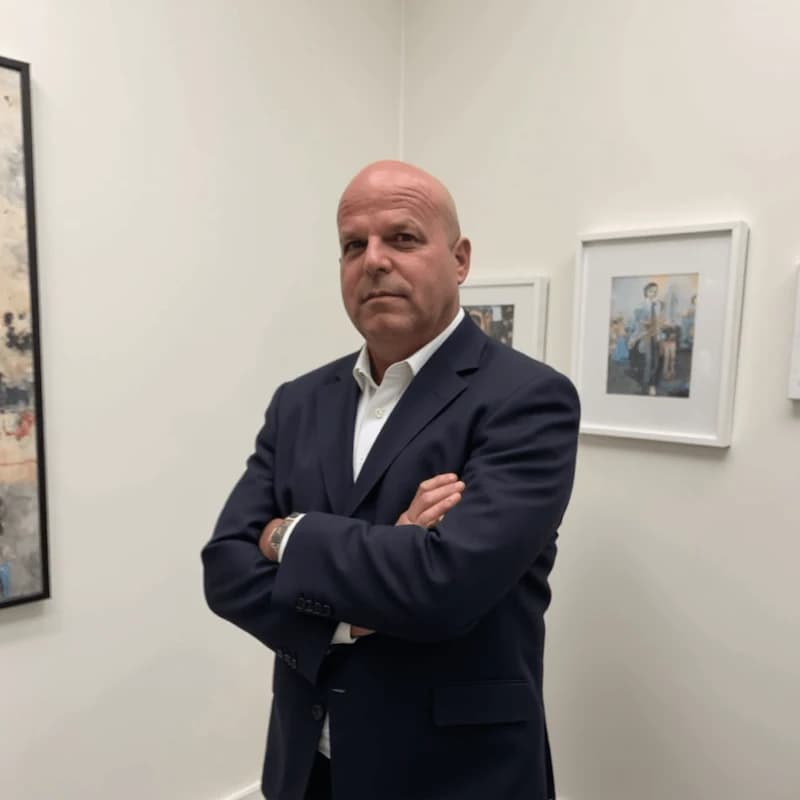
Co-Founder & Lead Developer · Denham Springs, LA
Clint has been designing for clients since 2008 and co-founded BlakSheep Creative in 2018. He is also a 29-year firefighter and a 23-year member of IAFF Local 557, which is where the bias toward plain answers over sales copy comes from.
- Veteran-owned
- Firefighter-owned
- IAFF Local 557
What Business Owners Ask About Bing Places and ChatGPT
These are the questions we hear most when owners see the study. Short answers first, with the reasoning behind them.
Is Bing Places free?
Does claiming Bing Places guarantee ChatGPT recommendations?
Can an unclaimed business still appear in ChatGPT?
Can I import my Google Business Profile into Bing?
Is a Bing Places listing the same as being indexed in Bing?
If Bing and Google disagree, is Bing wrong?
How do I check if ChatGPT recommends my business?
Your next step, without the guesswork
No surprises, clear next steps, and a fixed price before anything starts.